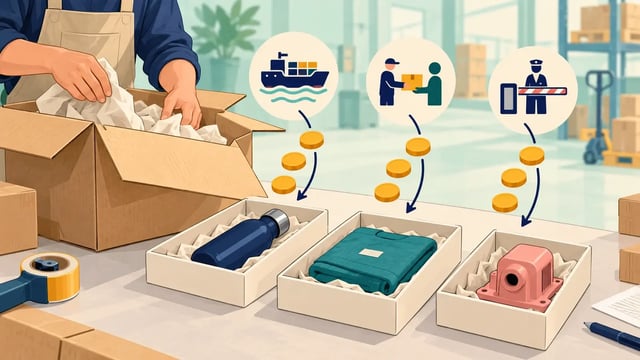
Choose a NetSuite inventory transfer when a simple one-step location movement matches the business event. Choose a transfer order when you need separate shipment, in-transit and receipt stages. When goods move between subsidiaries, evaluate the ownership and accounting model before selecting the intercompany process.
Oracle distinguishes basic transfers, staged transfer orders and OneWorld intercompany transfer orders. The choice affects how operations explains goods between sites and how finance reconciles ownership at a reporting cutoff. It should not be made solely on which entry screen is fastest.
Establish who owns the goods
Start with the source legal entity, source location, destination legal entity and destination location. Ask whether the movement changes legal ownership or merely relocates stock belonging to the same entity. Include contractual delivery terms and any external logistics provider.
If a cross-entity movement is intended to be a commercial sale and purchase, assess the corresponding intercompany trade process with finance and tax advisers. A non-arm's-length inventory transfer workflow should not be assumed to satisfy every invoicing, transfer-pricing or customs requirement.
Keep the physical carrier leg separate from the legal conclusion. A truck crossing a border does not by itself specify when title transfers or how the entities should account for it.
Decide whether an in-transit stage is necessary
A one-step inventory transfer can fit a movement where simultaneous decrease and increase reflect the controlled operational event. It is harder to explain when stock leaves one warehouse on Friday and arrives at another on Tuesday.
A transfer order supports separate fulfillment and receipt events. Define the person who confirms dispatch, the expected arrival and the evidence the receiving site must retain. The destination should not record a receipt merely because the source marked the goods shipped.
Set an escalation rule for overdue transfers. A visible in-transit quantity without a responsible owner can remain unresolved for months. Make the source or logistics team responsible for transport investigation and the destination responsible for timely receipt confirmation.
Validate the item and access model
For intercompany transfer orders, Oracle identifies requirements around item availability to both subsidiaries and permissions covering source and destination entities and locations. Test the real operating roles, not only an administrator.
Check units, lot or serial detail, inventory status where used and packaging references. Agree whether the destination uses the same item identity. If it maintains a different catalogue code, validate the supported mapping rather than substituting an unrelated item on receipt.
Review costing preferences and the supported transfer-cost behavior with the controller. This guide does not prescribe a transfer price. The correct treatment depends on the selected transaction model, costing configuration and legal requirements.
Create and process a transfer order
For a standard same-subsidiary transfer order, confirm Multi-Location Inventory, role access and finance-approved cost and ownership settings before entering the movement.
- Open Transactions > Inventory > Enter Transfer Orders. Select the subsidiary where applicable, destination and source locations, and approved date. Add the items, quantities, units and relevant inventory detail.
- Review the transfer-cost preference, transfer prices, ownership term and approval status before saving. The source location is required before approval and fulfillment; do not choose cost settings solely to make the form save.
- Complete the required approval, record fulfillment at dispatch and record receipt when the destination confirms arrival. Reconcile partial receipts and remaining in-transit quantities rather than treating order creation as physical movement.
A cross-subsidiary movement needs the separately validated intercompany route.
Design partial and damaged receipts
A transfer can arrive in several deliveries. Keep each receipt linked to the appropriate shipped quantity and preserve the remaining in-transit balance. Avoid closing the remainder just to remove it from a queue unless the business has confirmed its disposition.
For damage, shortage or the wrong lot, retain dispatch evidence, carrier information and the receiving discrepancy. Decide who approves a claim, adjustment or return movement. The destination should not silently receive the full quantity and use an unexplained adjustment to hide a transport difference.
Include cancellation before dispatch and cancellation after dispatch in the design. Once physical goods are moving, changing an order status is not enough to reverse the real event. The recovery process must account for where the stock actually is.
Hypothetical period-end transfer
A company dispatches 100 units from Warehouse East on September 29. Warehouse West receives 96 on October 2 and reports four missing. The process needs to explain all 100 units across the cutoff rather than recording 100 as available at both sites or losing them entirely.
The September close retains supported in-transit evidence under the approved accounting model. In October, the receipt records the confirmed 96 and leaves the remaining four for investigation or an authorized resolution. The warehouse teams reconcile quantities while finance confirms valuation and any loss treatment.
If the two warehouses belong to different subsidiaries, the same physical facts still need an approved intercompany accounting design. This hypothetical example does not determine title transfer, tax or journal entries; those conclusions require the actual agreement and account configuration.
A transfer design checklist
For each movement type, record:
- Source and destination entity and location
- Ownership and delivery terms
- One-step or staged transaction model
- Dispatch, carrier and receipt evidence
- Item, unit, lot and serial requirements
- Transfer-cost and accounting policy
- Partial receipt and discrepancy treatment
- Aging owner and closure authority
Add a report that groups open transfers by dispatch date, expected arrival and unresolved quantity. Review unusual negative or residual positions before close rather than waiting for an annual stocktake.
Test the complete movement
Acceptance testing should include an ordinary shipment, two partial receipts, a quantity discrepancy, a wrong identifier and a cancellation after release. Where a 3PL sends confirmations, replay a message and prove that the stock movement is not duplicated.
Finance should trace a sample from dispatch through in-transit reporting to final receipt and cost. Operations should demonstrate how an employee finds the next action without asking the implementation team.
The right transfer design keeps ownership, physical location and transaction status consistent enough to explain the stock at any point in its journey. Choose the process that reflects those facts, and make incomplete movements an actively managed queue rather than an accounting surprise.
Related resources