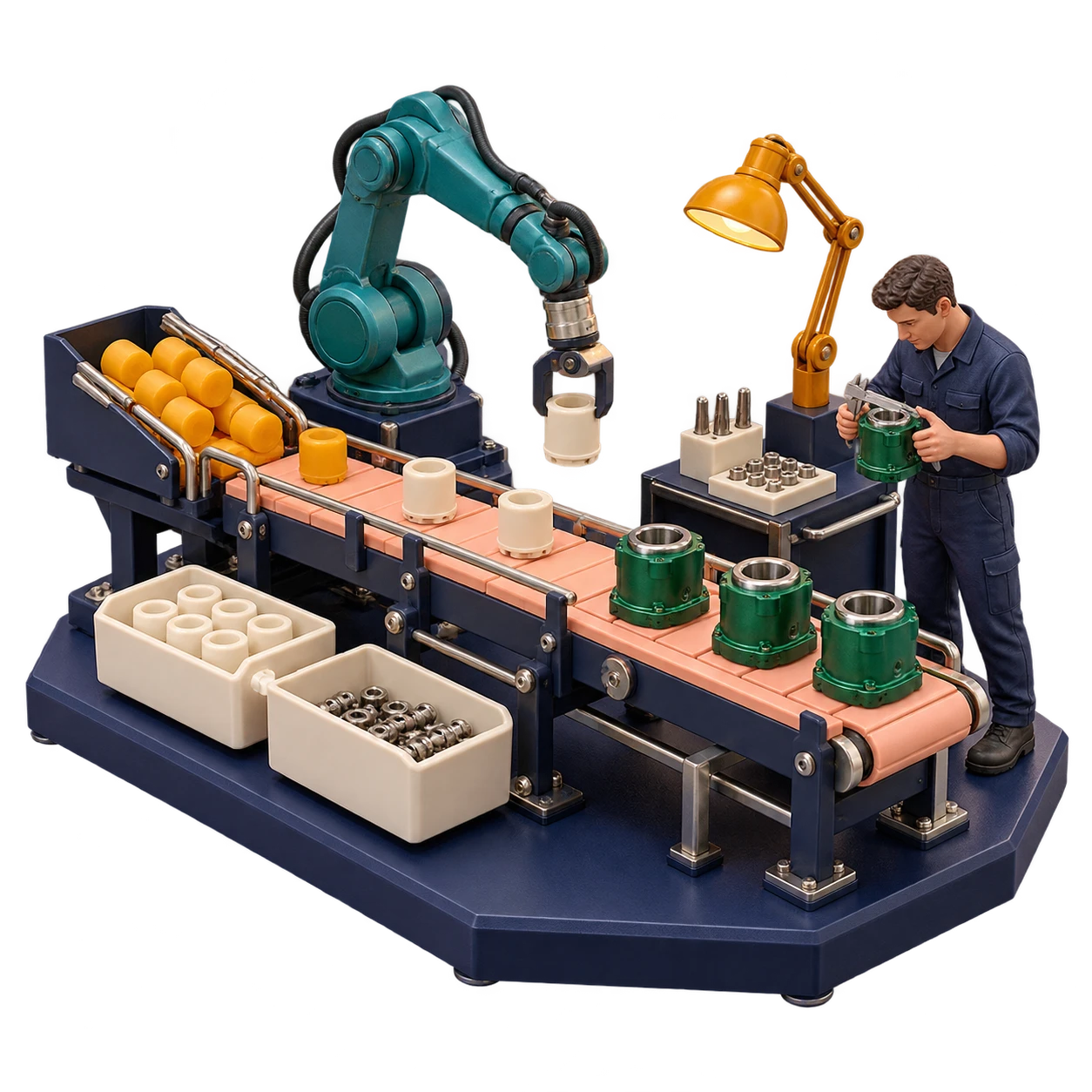
Check the inputs behind the production plan
An out-of-date bill of materials, an unreliable lead time or unrecorded shop-floor activity can make a precise-looking plan misleading. The first task is to understand which assumptions the business uses and which events confirm or change them.
We first establish how production is organised: made to stock, made to order, assembly, outsourced work or a mix. Then we follow a representative product through demand, material movement and completion. The points where ownership or cost changes determine the required records and controls.
Build around four connected disciplines
- 01
Product definition
Agree item structures, bills of materials, revisions, substitutions and units of measure. Decide how engineering changes become approved production information.
- 02
Material planning
Review demand sources, lead times, safety stock and purchase or production recommendations. Identify the human decision that turns a recommendation into a commitment.
- 03
Production execution
Define the evidence needed for issue, completion, scrap, rework and outsourced activity. Capture what operators can reliably record during the actual job.
- 04
Cost and finance
Establish costing assumptions and the treatment of variances with finance. Connect operational quantities to the financial review rather than reconciling them only at period end.
Prove the design with a representative product
Choose a product that exposes the important complexity without making the first test unmanageable. Follow it from demand through materials, work activity, completion and shipment. Include a shortage, a change and a quality exception.
Oracle’s manufacturing material describes planning, inventory, shop-floor, supply-chain and cost capabilities, while noting that some capabilities require partner integrations. Confirm the modules, integrations and account prerequisites for your production environment instead of assuming every capability is native or included.
Keep specialist production systems in the architecture
A manufacturing execution, quality, engineering or equipment system may remain essential. Determine which owns the event and which needs the result. Agree identifiers, timing and reconciliation before defining the interface.
A rollout plan should protect the physical operation. Consider stock counting, work in progress, open production orders and the point at which users switch procedures. Document how production continues if a record or connection is unavailable.
Prepare the foundations before migration
Clean master data
Resolve obsolete items, duplicate components and inconsistent units. Assign owners who understand the effect a change has on planning and execution.
Accepted opening positions
Reconcile inventory and work in progress with operational and financial owners. Record the basis for any adjustment.
Usable shop-floor procedures
Test the instructions with the people capturing activity. A control that cannot be followed during production needs redesign.