CURIOUSRUBIK
Let’s talk about your next move ↗View complete sitemap

CuriousRubik · Blog

Articles by Ruchitha

Back to the blog
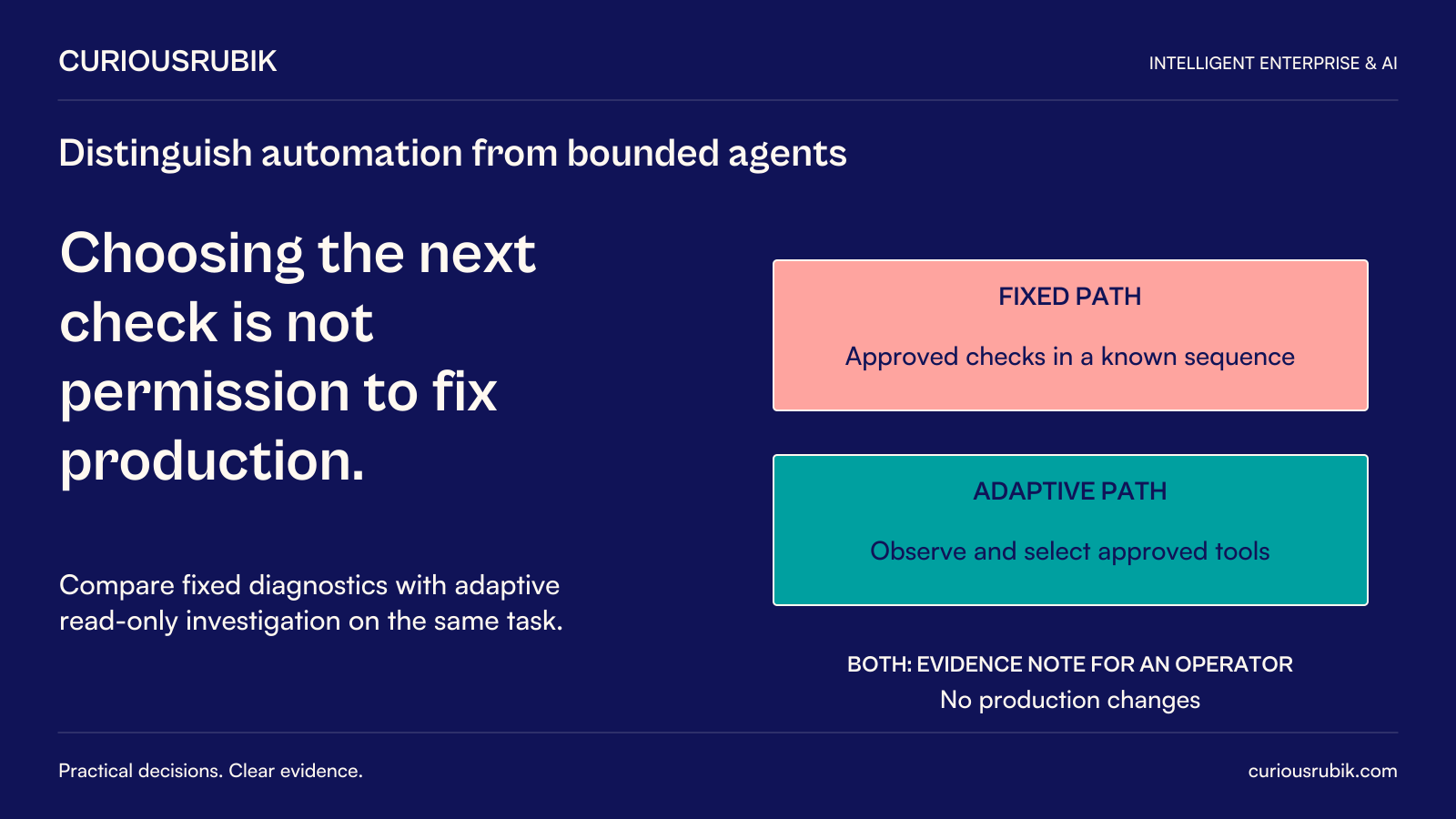
CuriousRubik poster: Choosing the next check is not permission to fix production. A fixed path performs approved checks in a known sequence; an adaptive path observes results and selects approved read-only tools. Both provide an evidence note for an operator, with no production changes.
  • AI and Automation

AI Agents vs. Traditional Automation: Understanding the Difference

  • Ruchitha

Traditional automation usually follows a workflow whose permitted paths are specified in advance. An AI agent, as the term is used here, can select its next step from available tools or actions in response to what it observes. The useful …
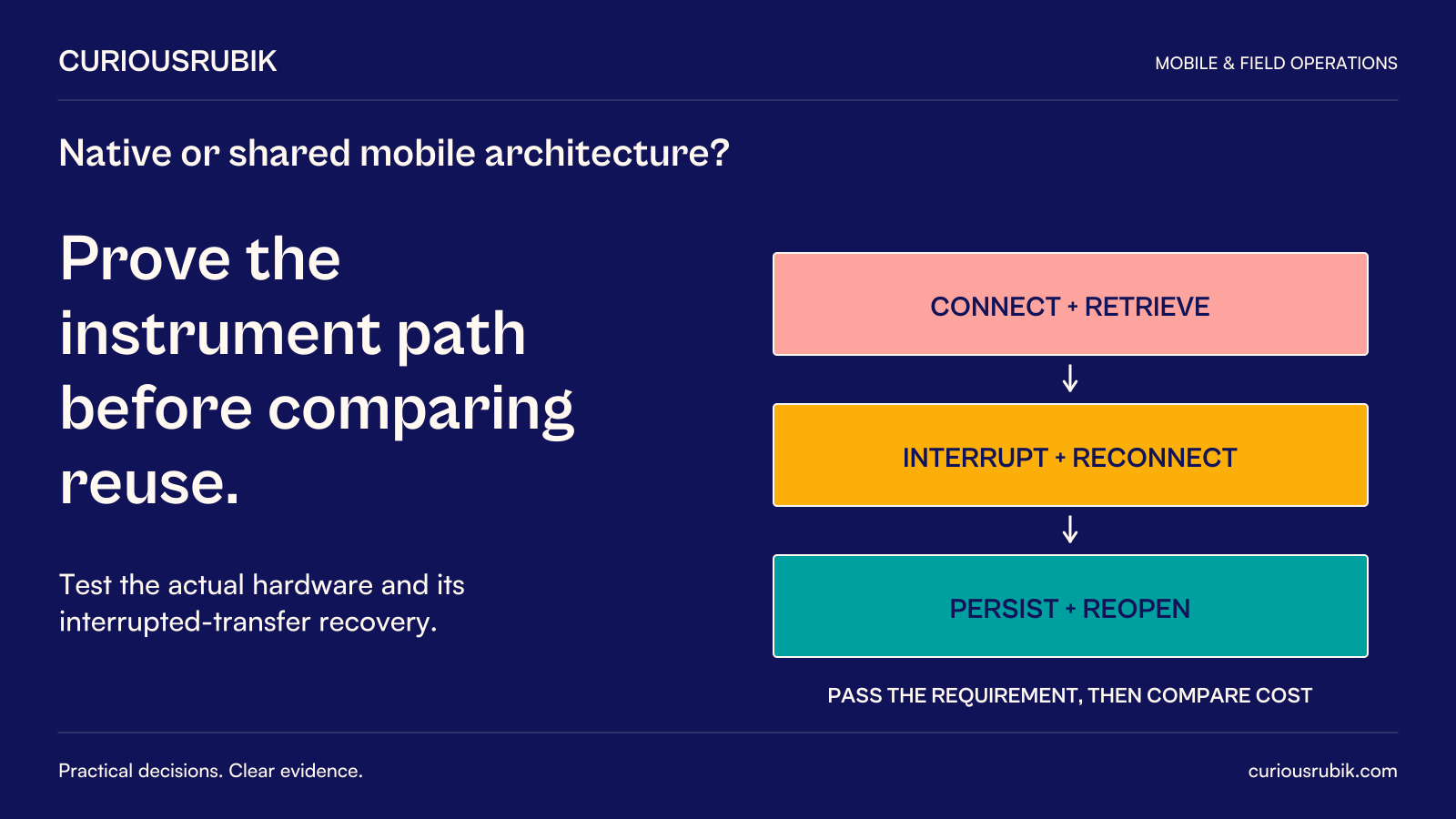
CuriousRubik poster: Prove the instrument path before comparing reuse. Test actual hardware through connect and retrieve, interrupt and reconnect, then persist and reopen. Pass the mandatory requirement before comparing cost; this does not prescribe a native or shared architecture winner.
  • MOBILE

Native vs. Cross-Platform Mobile Development for Enterprises

  • Ruchitha

The native versus cross-platform decision should follow the application’s hardest operating requirement. A shared implementation can reduce duplicated work, while platform-specific development can give teams more direct control over …

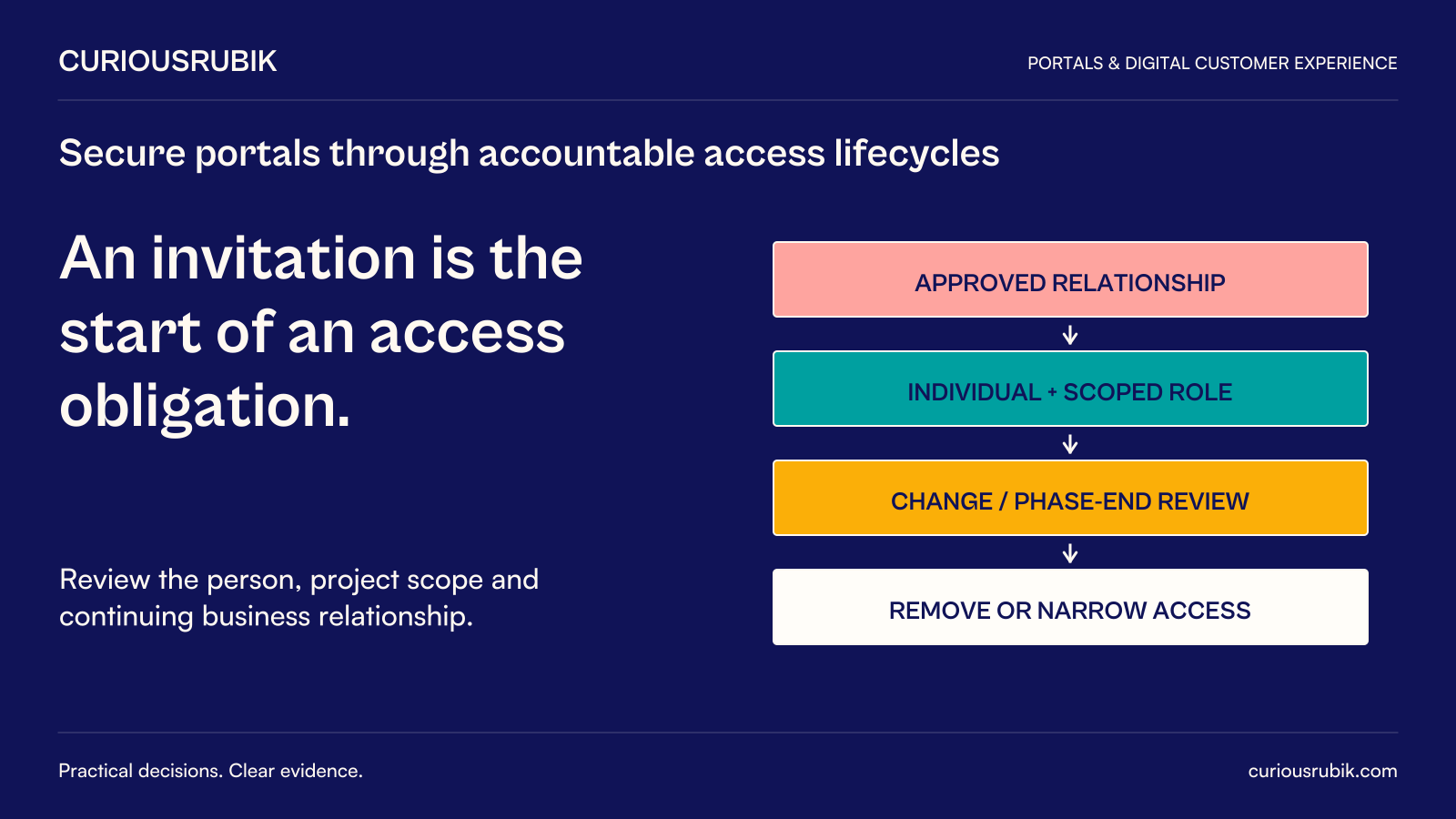
CuriousRubik poster: An invitation is the start of an access obligation. The lifecycle follows approved relationship, individual and scoped role, change or phase-end review, then removal or narrowing of access. Review the person, project scope and continuing business relationship.
  • Customization

Designing Secure Portals for External Business Users

  • Ruchitha

An external user can prove control of an email address without proving that they should represent a customer, supplier or project partner. That distinction is central to portal security. A successful sign-in answers only part of the …

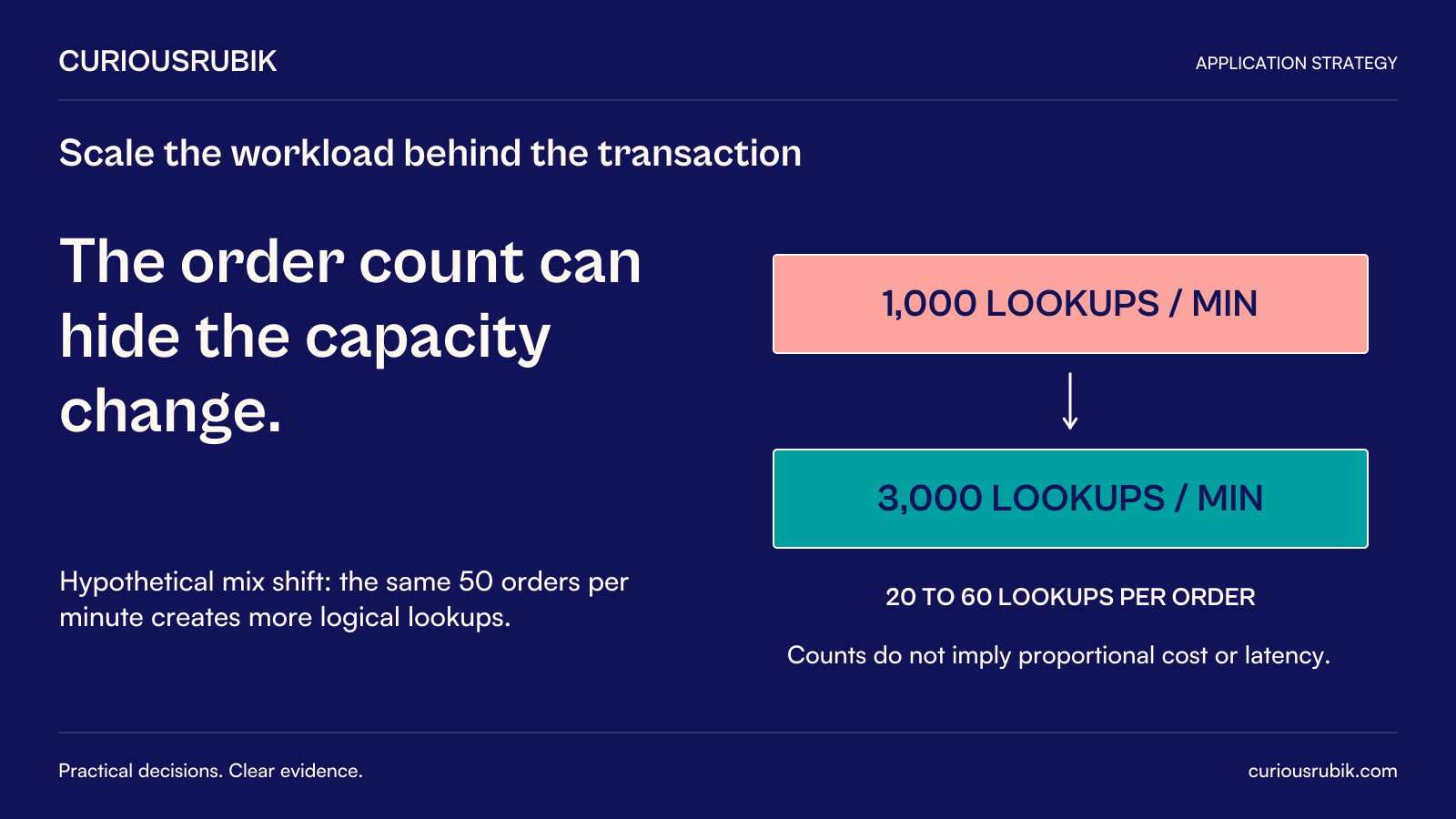
CuriousRubik poster: The order count can hide the capacity change. In a hypothetical mix shift, the same 50 orders per minute requires 20 then 60 lookups per order, increasing logical lookups from 1,000 to 3,000 per minute. Counts do not imply proportional cost or latency.
  • Customization

How to Build Applications That Scale with Business Growth

  • Ruchitha

A growth plan rarely arrives as a clean requirement to double application traffic. The business adds larger customers, more complicated orders, longer operating hours and new reporting obligations. Transaction volume may rise modestly …

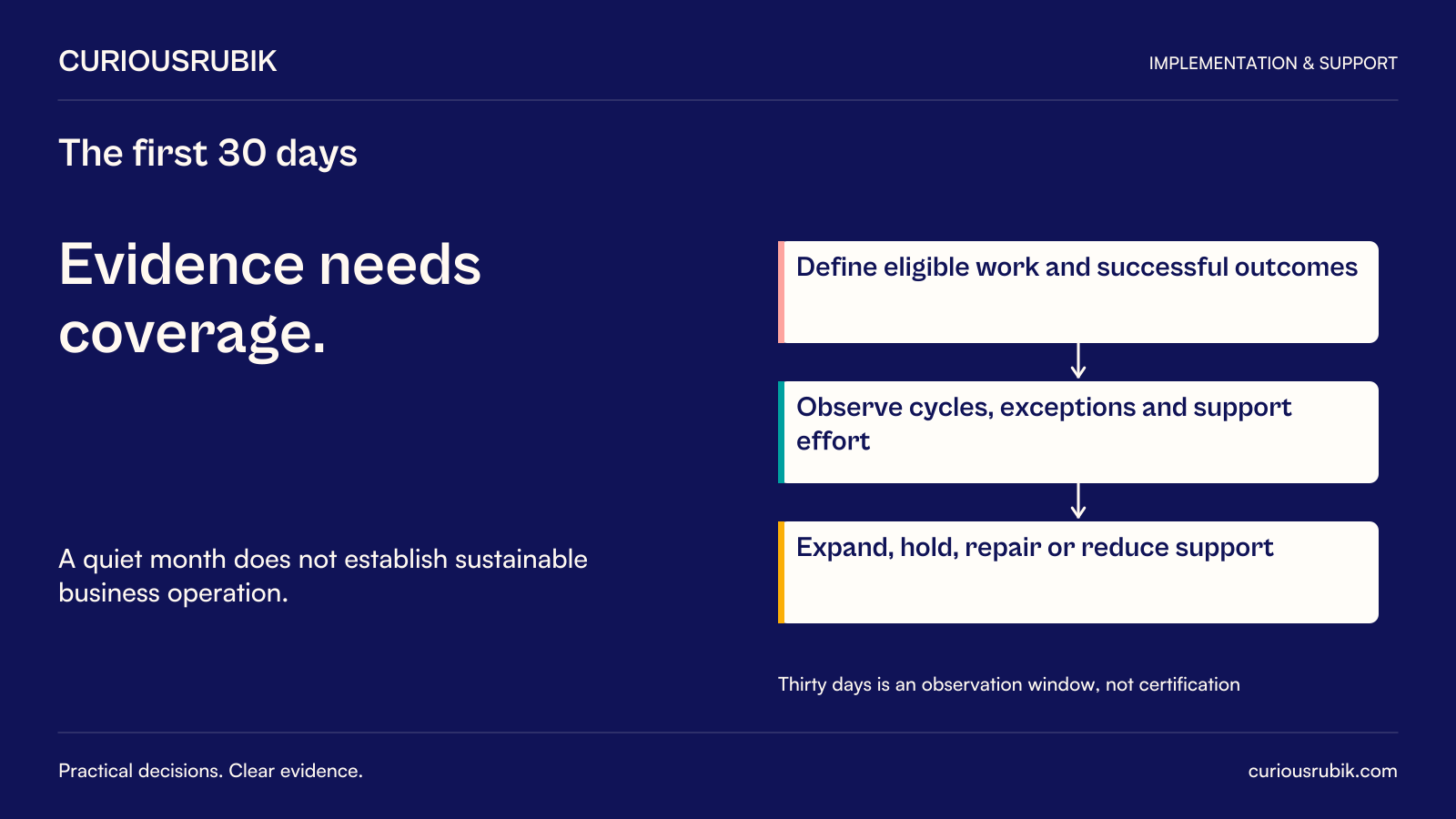
CuriousRubik poster: The first 30 days. Evidence needs coverage. A quiet month does not establish sustainable business operation. Right-hand sequence: Define eligible work and successful outcomes leads to Observe cycles, exceptions and support effort leads to Expand, hold, repair or reduce support. Thirty days is an observation window, not certification. No measured performance values are shown.
  • Support and Optimization

How to Measure System Stability During the First 30 Days

  • Ruchitha

Thirty days without a major outage can be reassuring and still provide an incomplete picture of system stability. The business may have processed little volume, avoided difficult transactions, or relied on consultants to repair records …

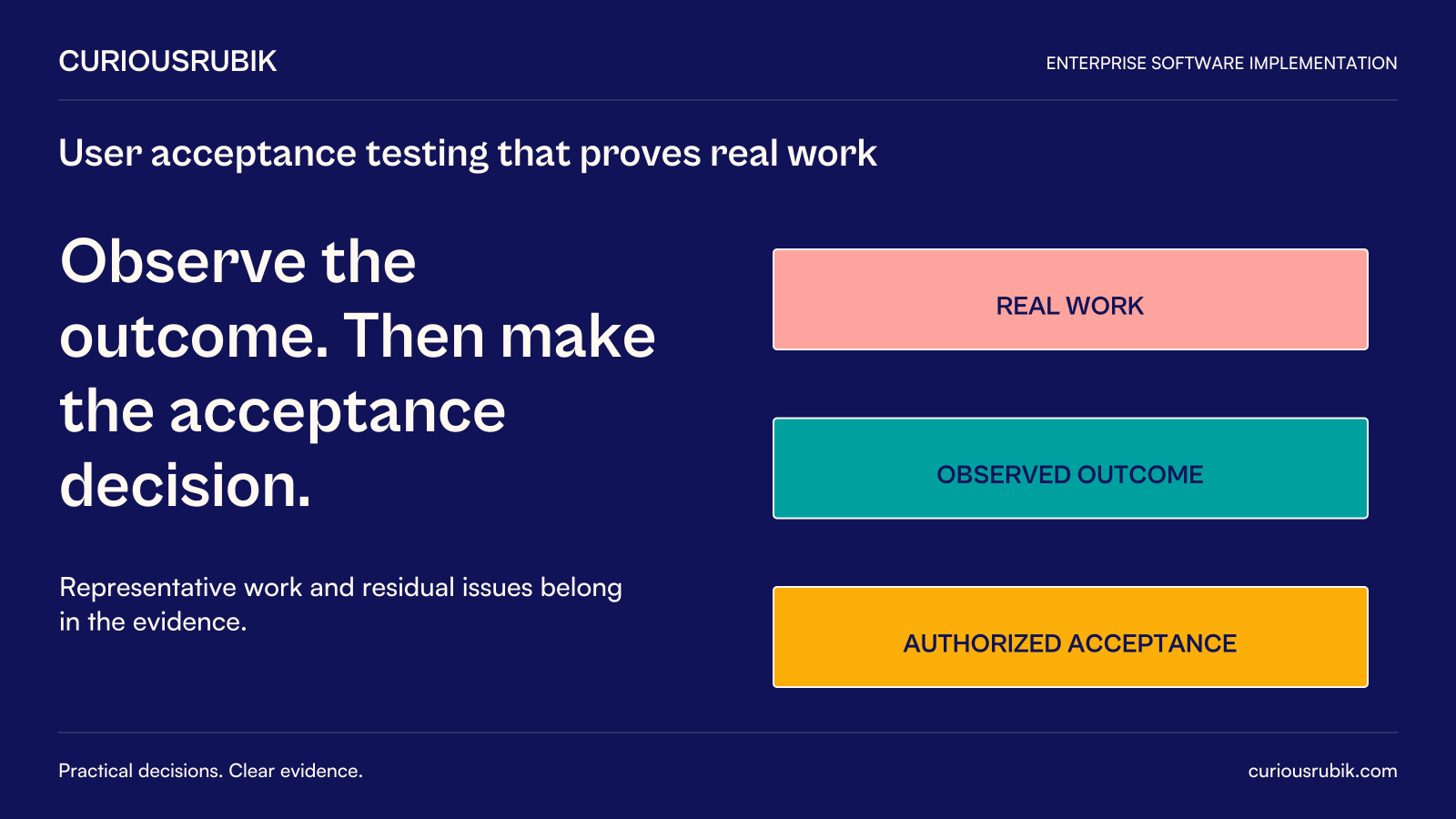
CuriousRubik poster: Observe the outcome. Then make the acceptance decision. Representative work and residual issues belong in the evidence. Diagram labels: REAL WORK, OBSERVED OUTCOME, AUTHORIZED ACCEPTANCE.
  • Implementation

User Acceptance Testing Is a Business Responsibility

  • Ruchitha

A system can pass technical tests and still be unsuitable for the work people must perform. The screens respond, the interfaces return valid messages and the configured rules behave as specified, but a user cannot complete a realistic task …

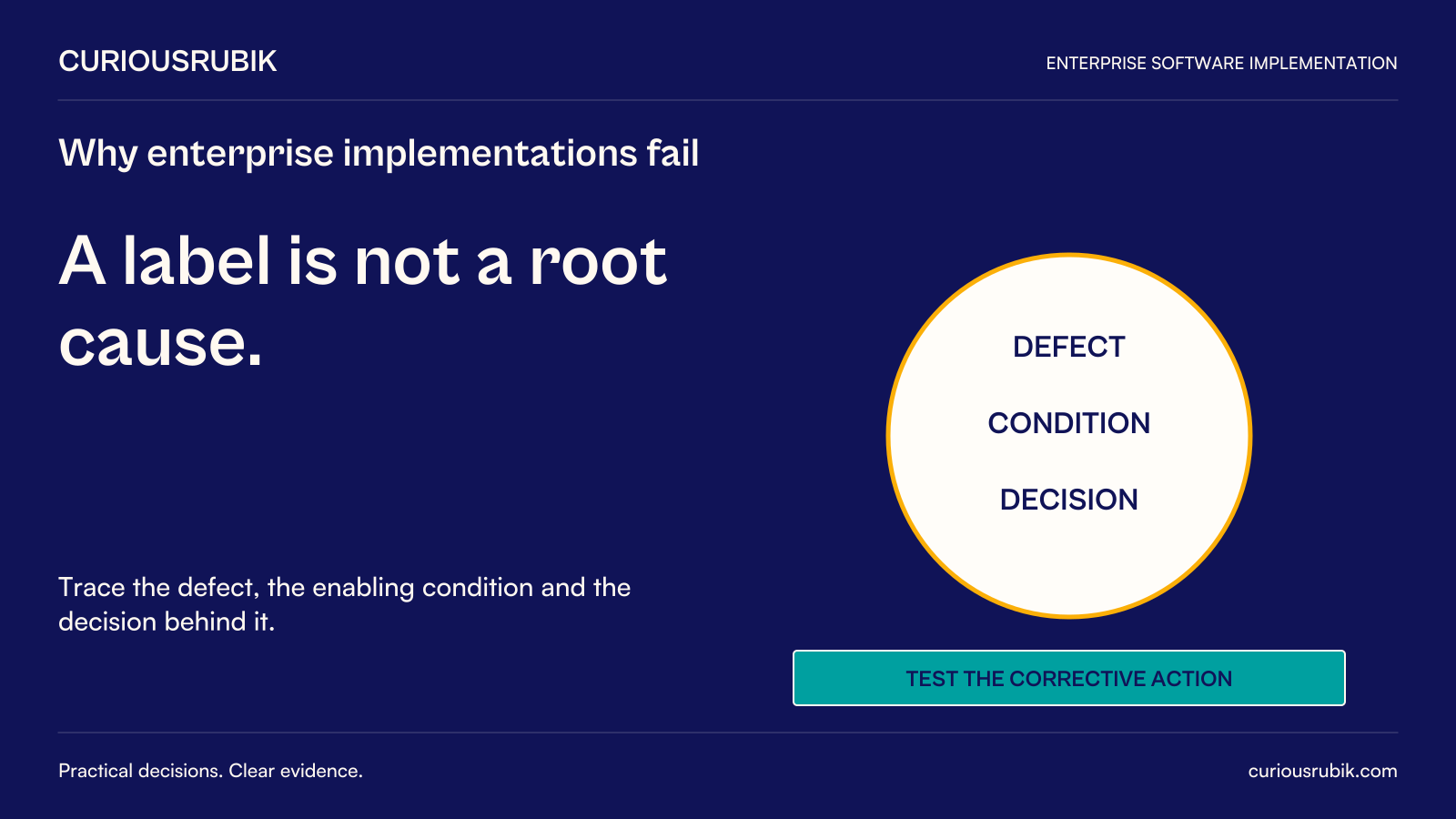
CuriousRubik poster: A label is not a root cause. Trace the defect, enabling condition and governance decision, then test the corrective action.
  • Implementation

Why Enterprise Software Implementations Fail: The Root Causes

  • Ruchitha

When an implementation misses a major milestone, the first explanation is often a label: poor requirements, weak change management, bad data or vendor underperformance. A label can point toward a problem, but it does not explain the …

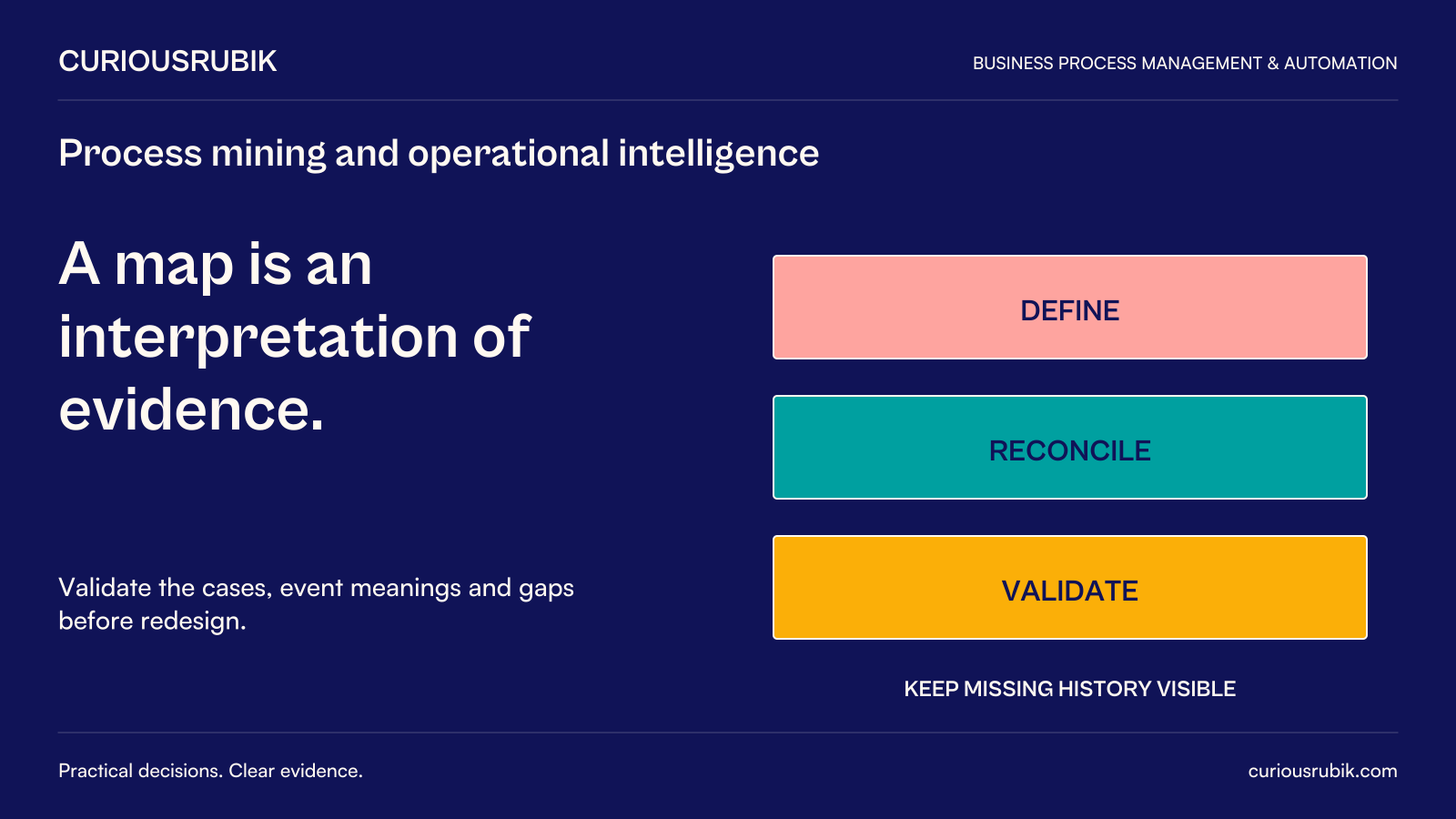
A map is an interpretation of evidence. Validate the cases, event meanings and gaps before redesign. Diagram: Define, Reconcile and Validate precede redesign; keep missing history visible.
  • AI and Automation

Process Mining: Discovering How Your Business Really Operates

  • Ruchitha

A process map says every purchase request is approved before an order is issued. The system history shows a more complicated pattern: some requests return for clarification, some approvals are recorded after the order, and some cases …

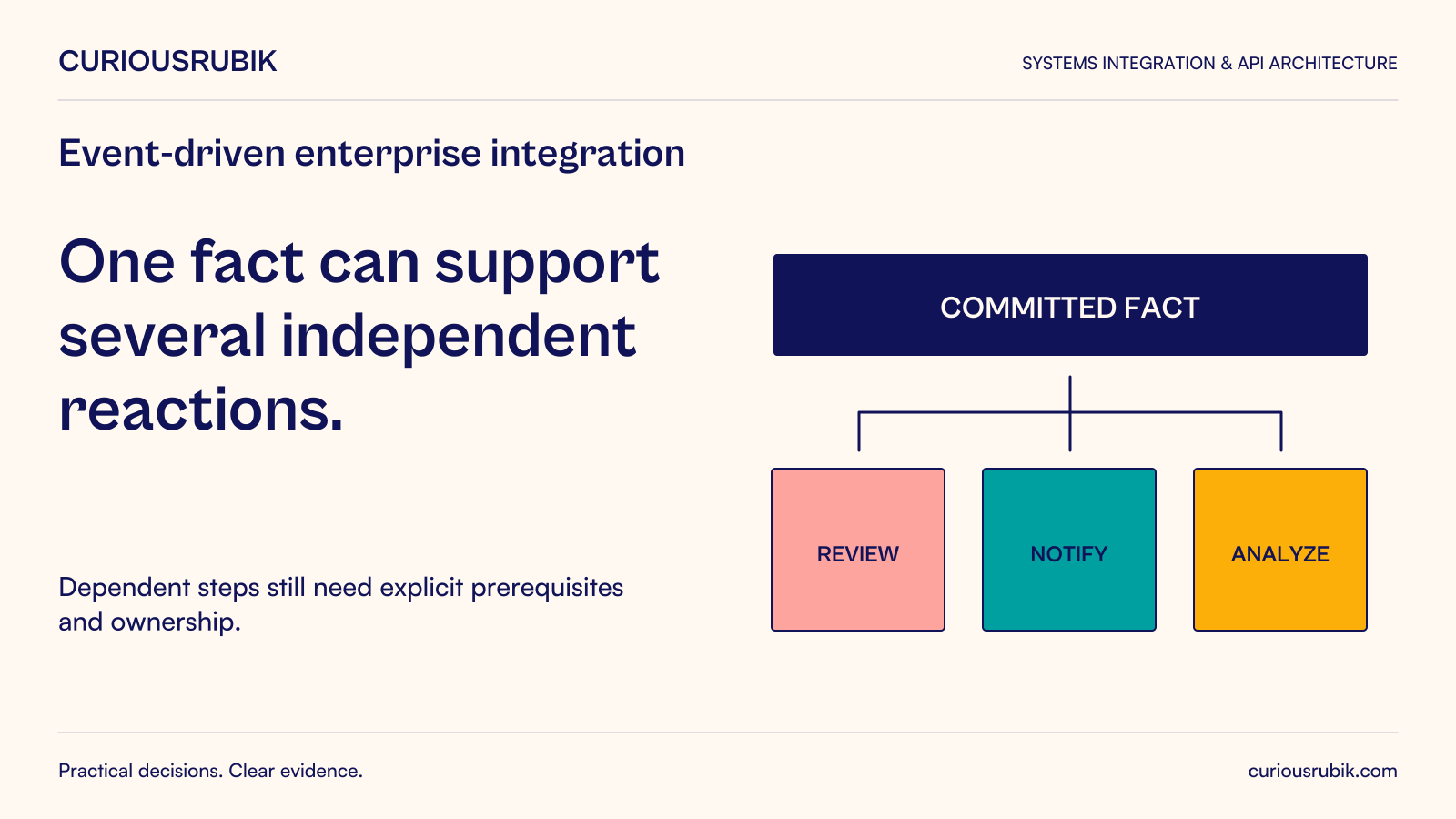
One fact can support several independent reactions. Dependent steps still need explicit prerequisites and ownership. Diagram: A committed fact branches into Review, Notify and Analyze; dependent steps still need explicit prerequisites.
  • Integrations

The Business Case for Event-Driven Architecture

  • Ruchitha

Event-driven architecture is worth considering when several independently owned processes need to react to the same business fact without forcing the originating process to wait for all of them. Its value can come from separating release …

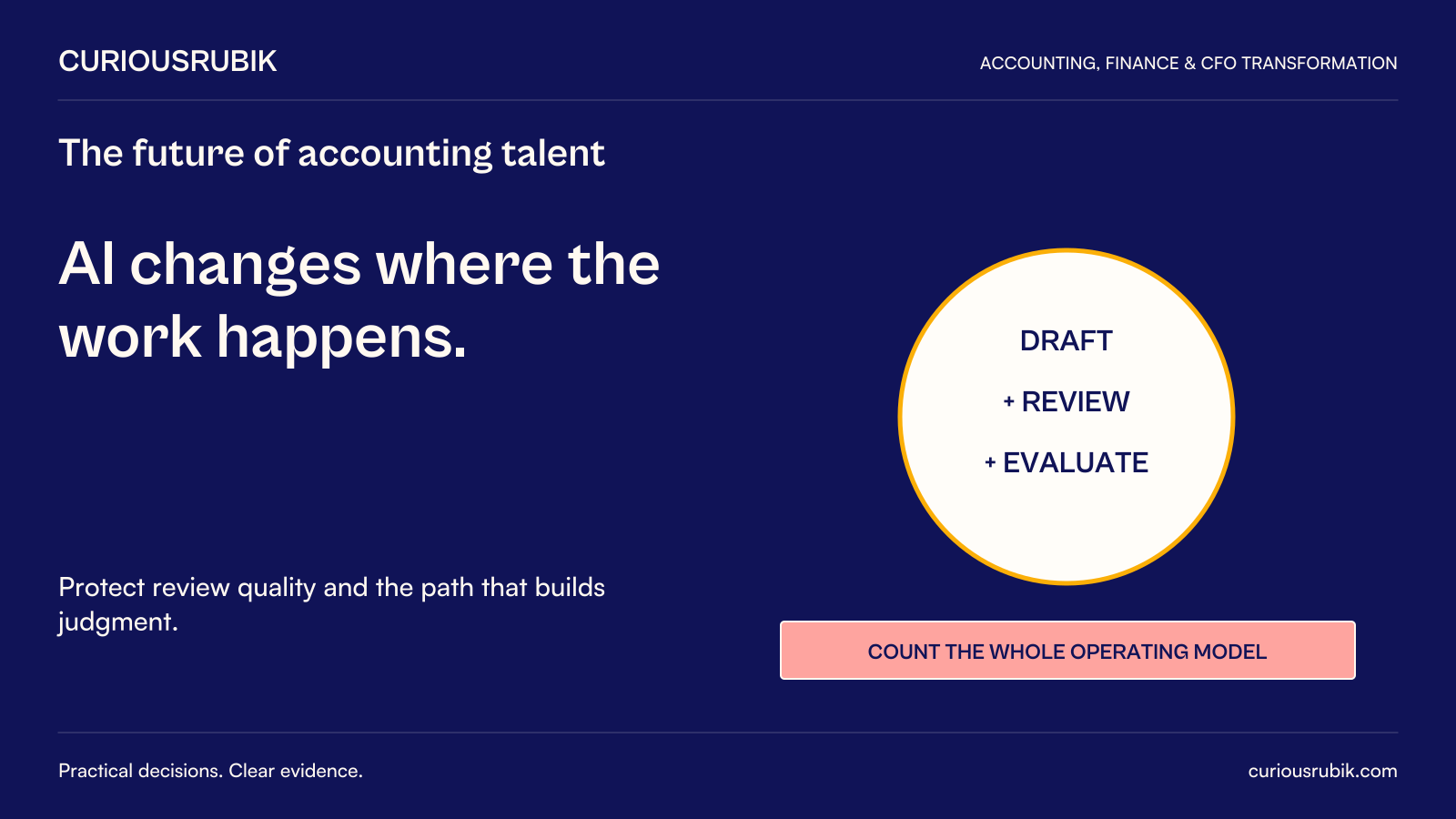
AI changes where the work happens. Protect review quality and the path that builds judgment. Diagram: The operating model explicitly counts Draft + Review + Evaluate.
  • Finance and Reporting

The Future of Accounting Teams in an AI-Enabled Business

  • Ruchitha

Accounting leaders should redesign work around verifiable evidence, review capacity, and professional development before changing headcount assumptions around AI. A system that produces a plausible draft can reduce preparation effort while …

What’s on your mind?

A little context is all it takes to begin.

Please leave out passwords, payment details and confidential account data.