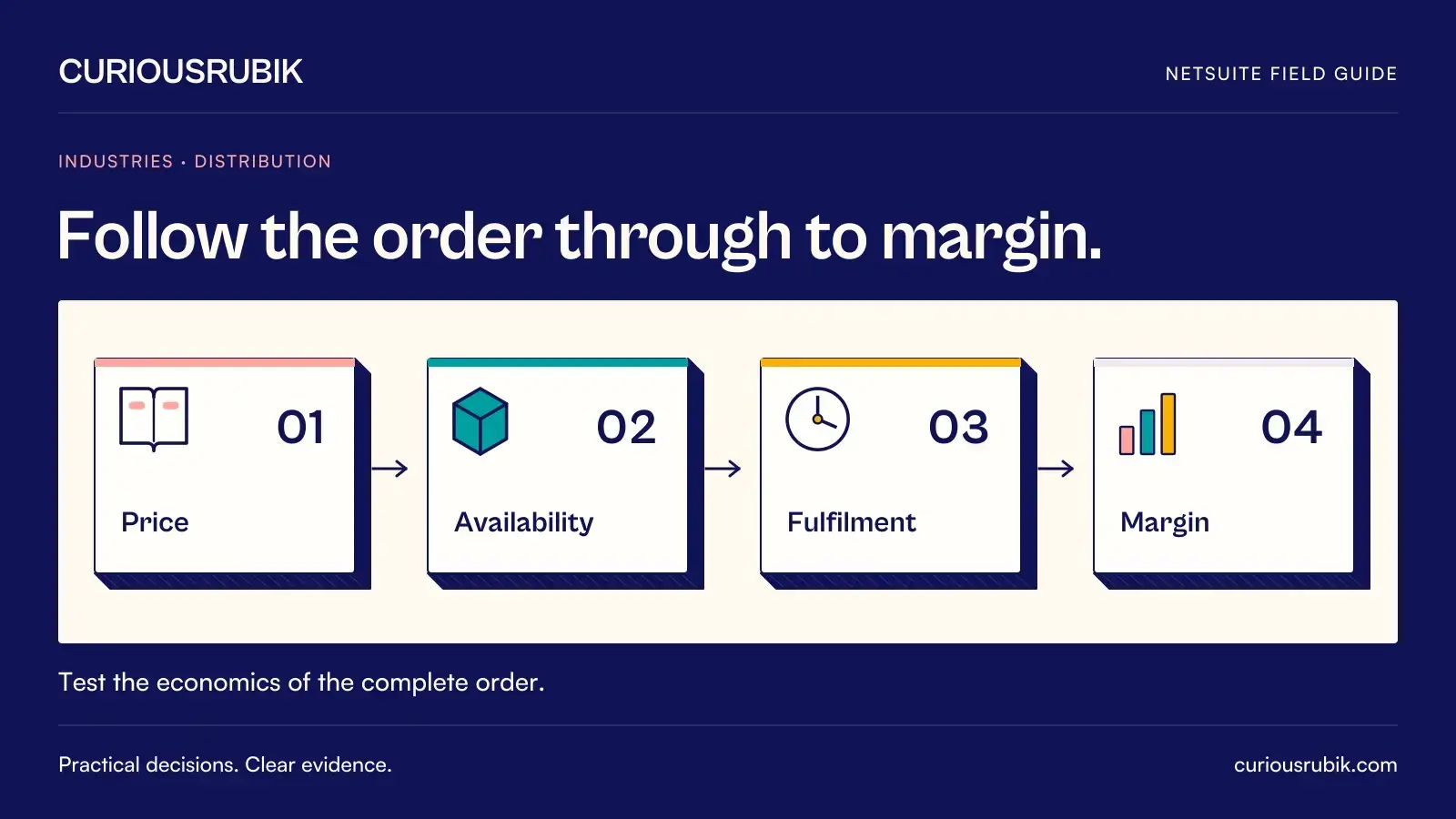
Wholesale distribution brings commercial promises and warehouse constraints into the same order. A customer-specific price may be correct while the available quantity is overstated. A shipment may leave on time while its margin omits …
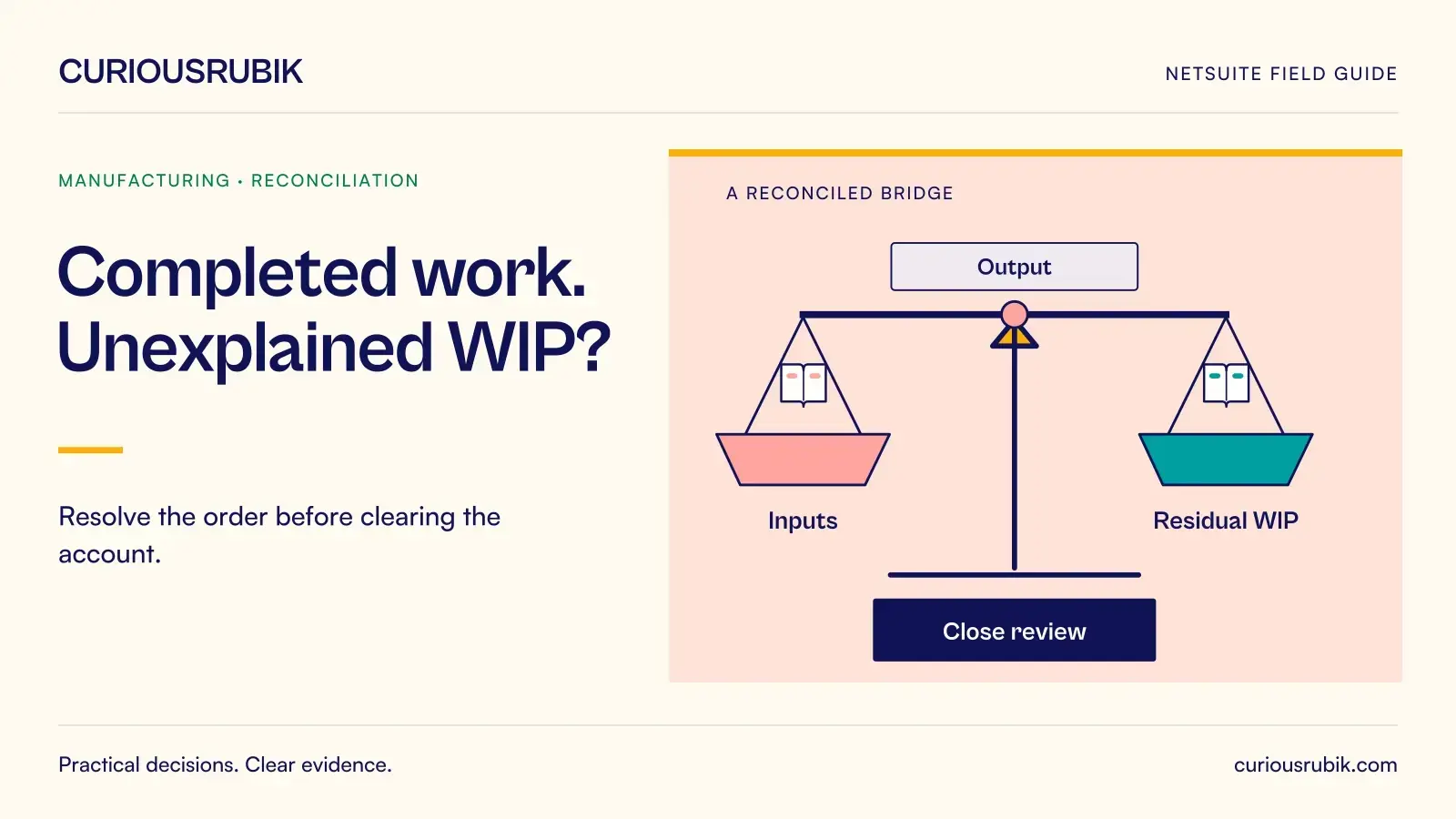
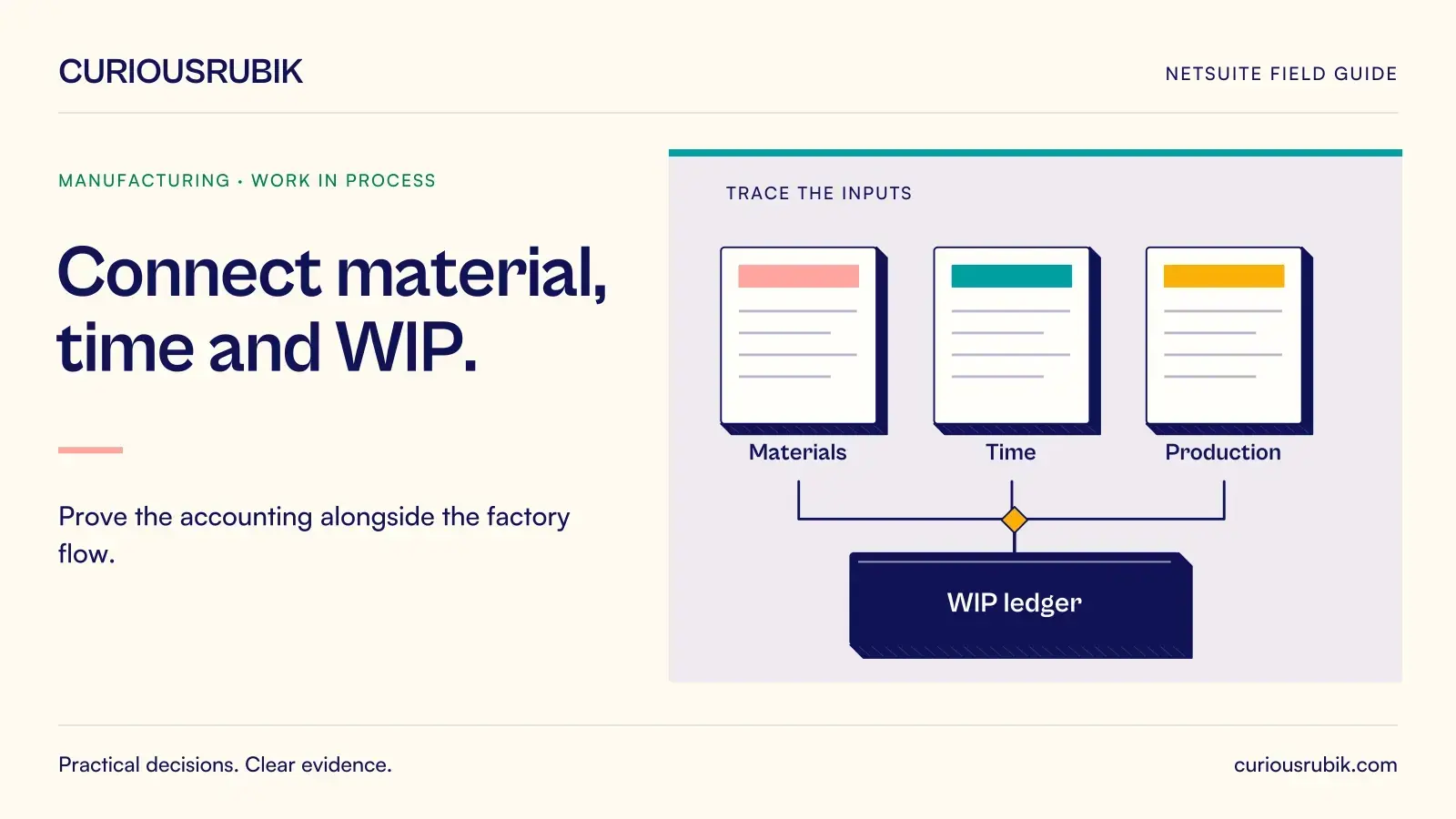
The last finished unit can leave production before all the order's accounting is complete. Material issues may be missing, operation time may arrive late, and completion values may differ from the costs accumulated in work in process. A …
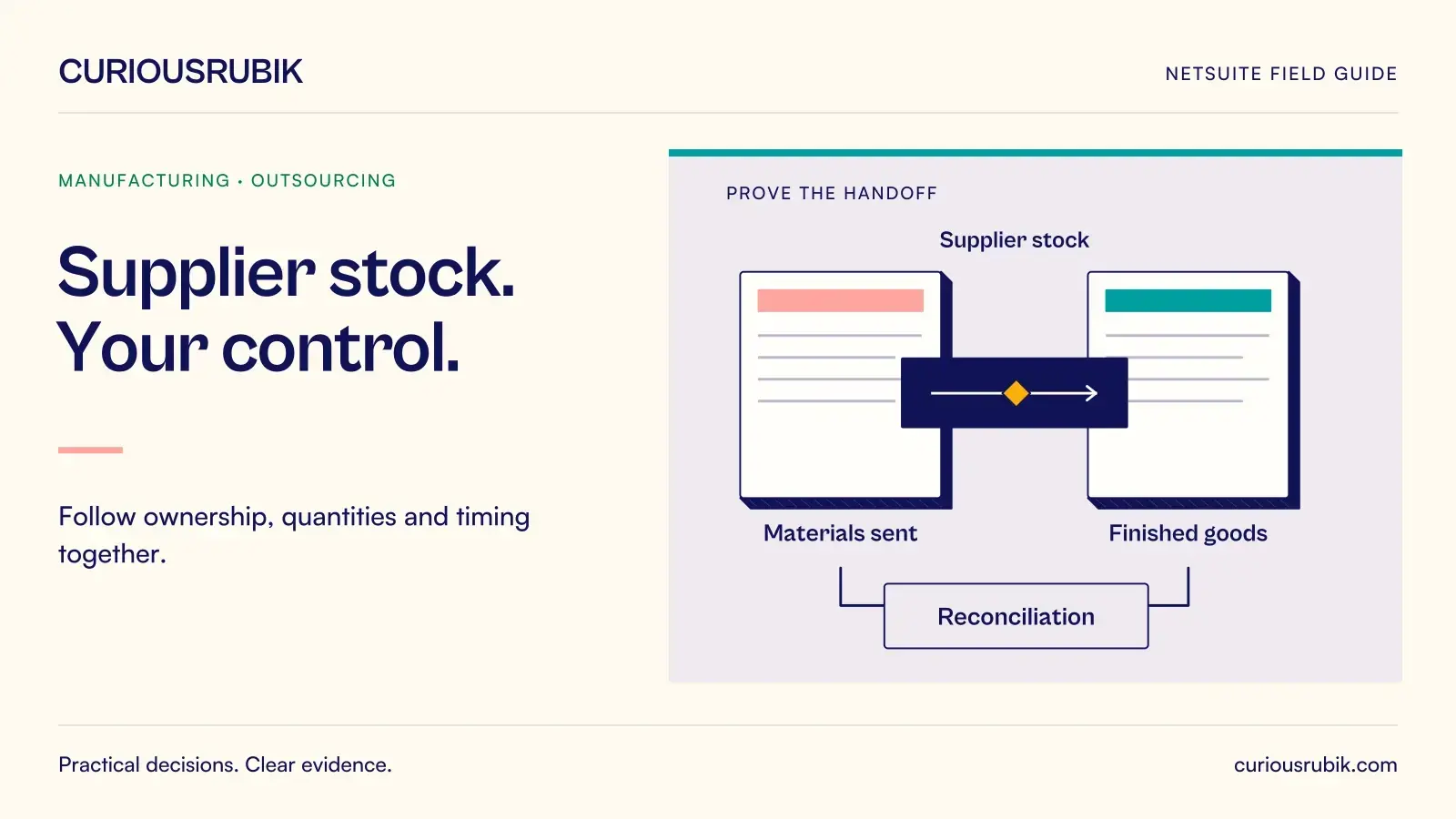
Sending material to a manufacturing supplier creates a visibility problem before it creates a finished product. The business needs to know what it still owns, what the supplier has consumed, what remains in process, and what has been …
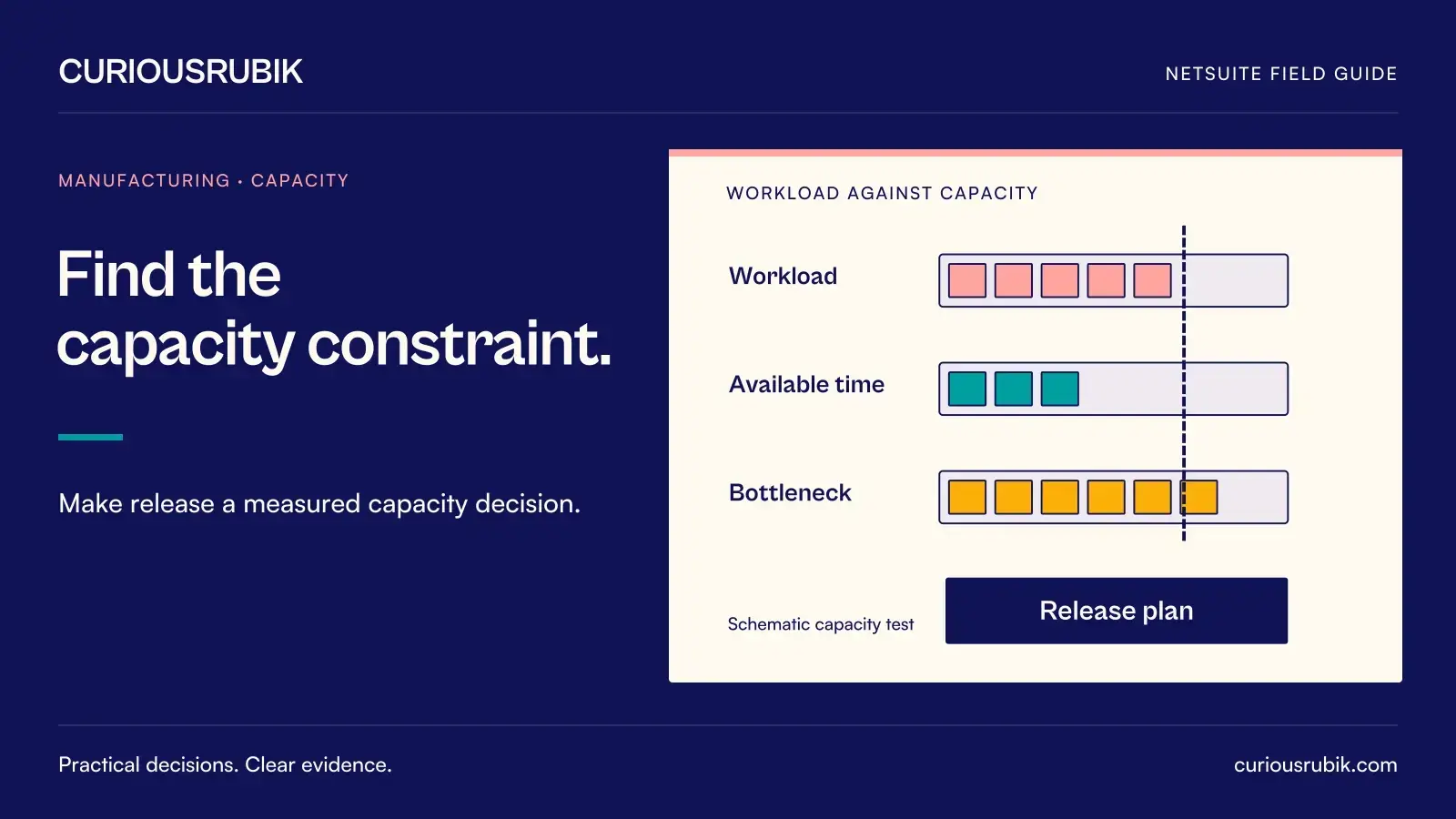
A production schedule can contain valid dates and still be impossible to execute. Work may exceed the available machine hours, depend on an absent operator, or assume that maintenance never interrupts the week. Releasing every order does …
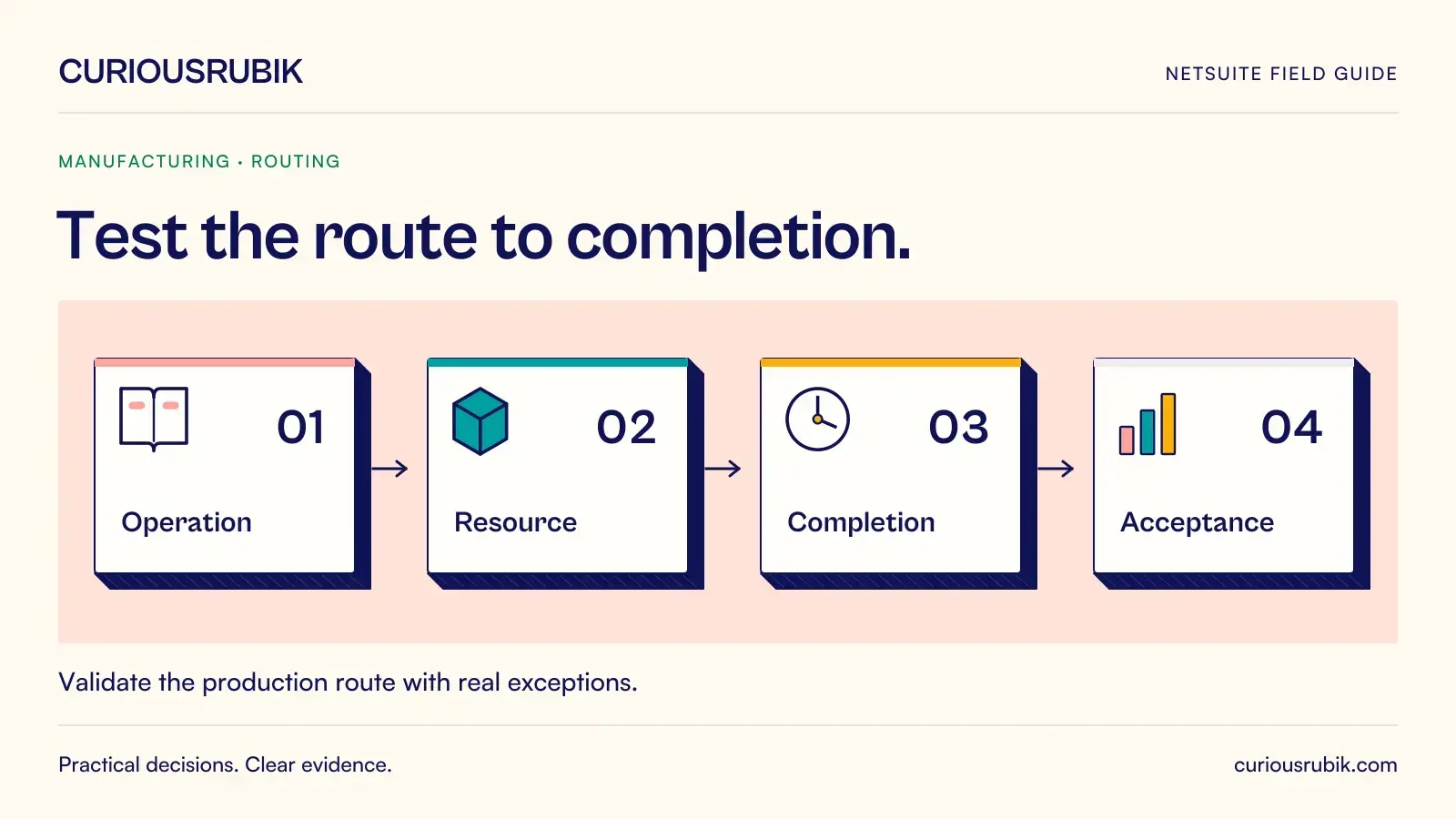
A routing translates production steps into an expected sequence, resource requirement, and cost structure. Small errors in its assumptions can multiply across hundreds of orders. Setup time entered as a per-unit value, or a resource count …
A manufacturing implementation can create work orders and still leave finance unable to explain production cost. The gap usually appears between physical activity and transaction capture: components are consumed before they are issued, …
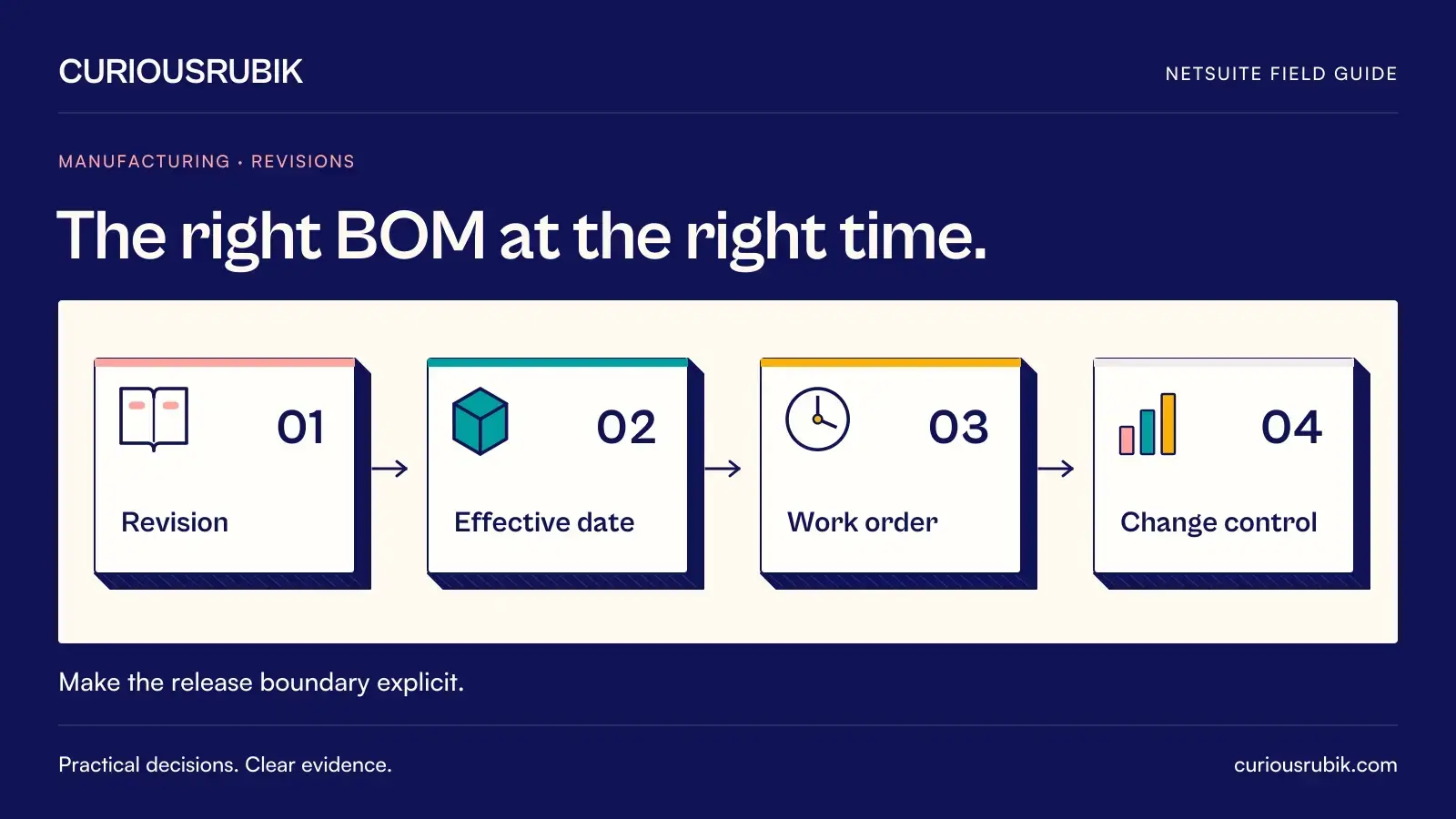
A bill of materials tells the business what a product requires. Once production has started, it also helps explain what was planned, what was consumed, and why the cost changed. An engineering revision therefore affects purchasing, …
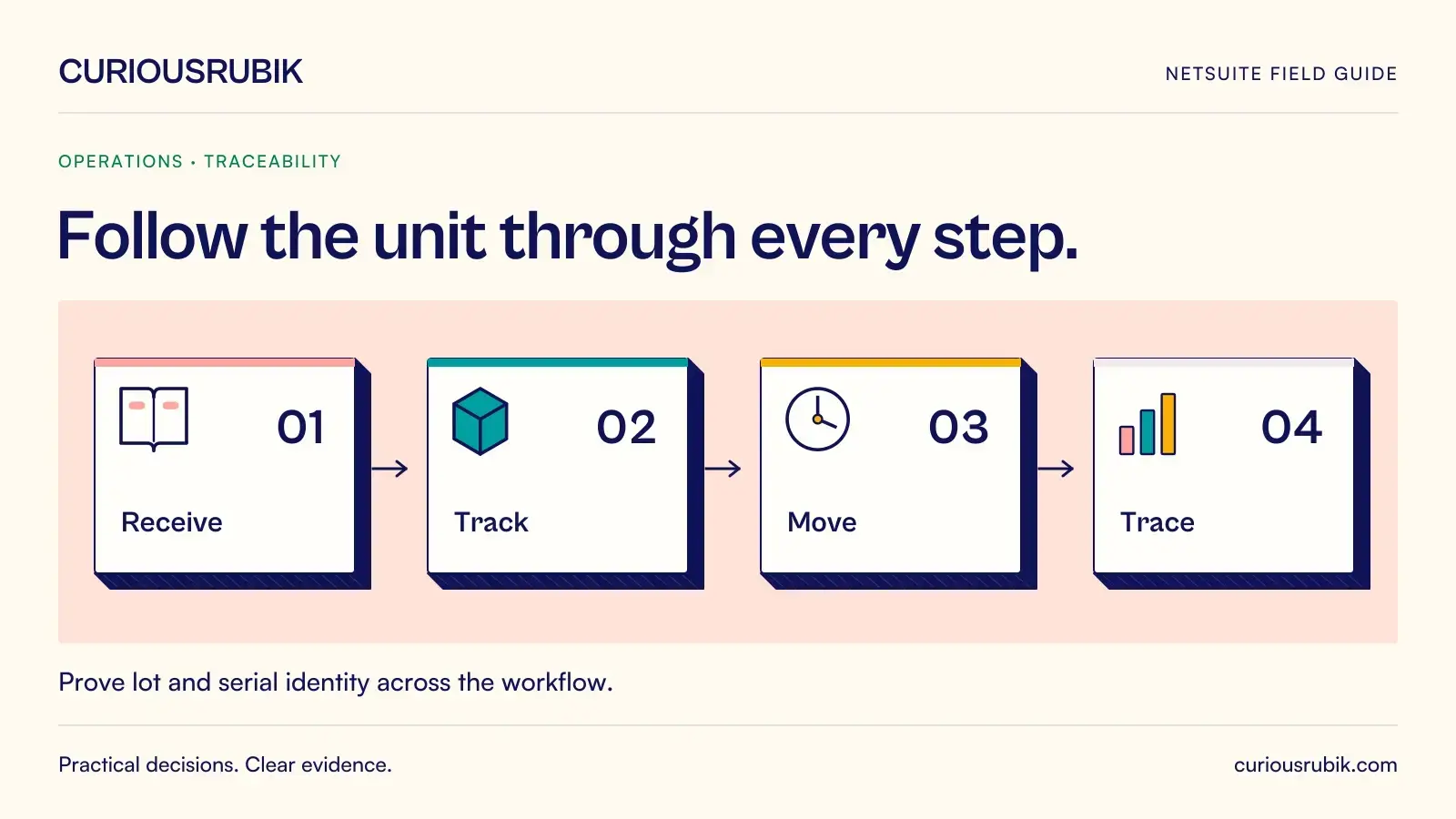
A lot number on an item record is only the beginning of traceability. During a recall, the business needs to establish where affected material came from, what it became, where it moved, and which customers received it. Each missing …
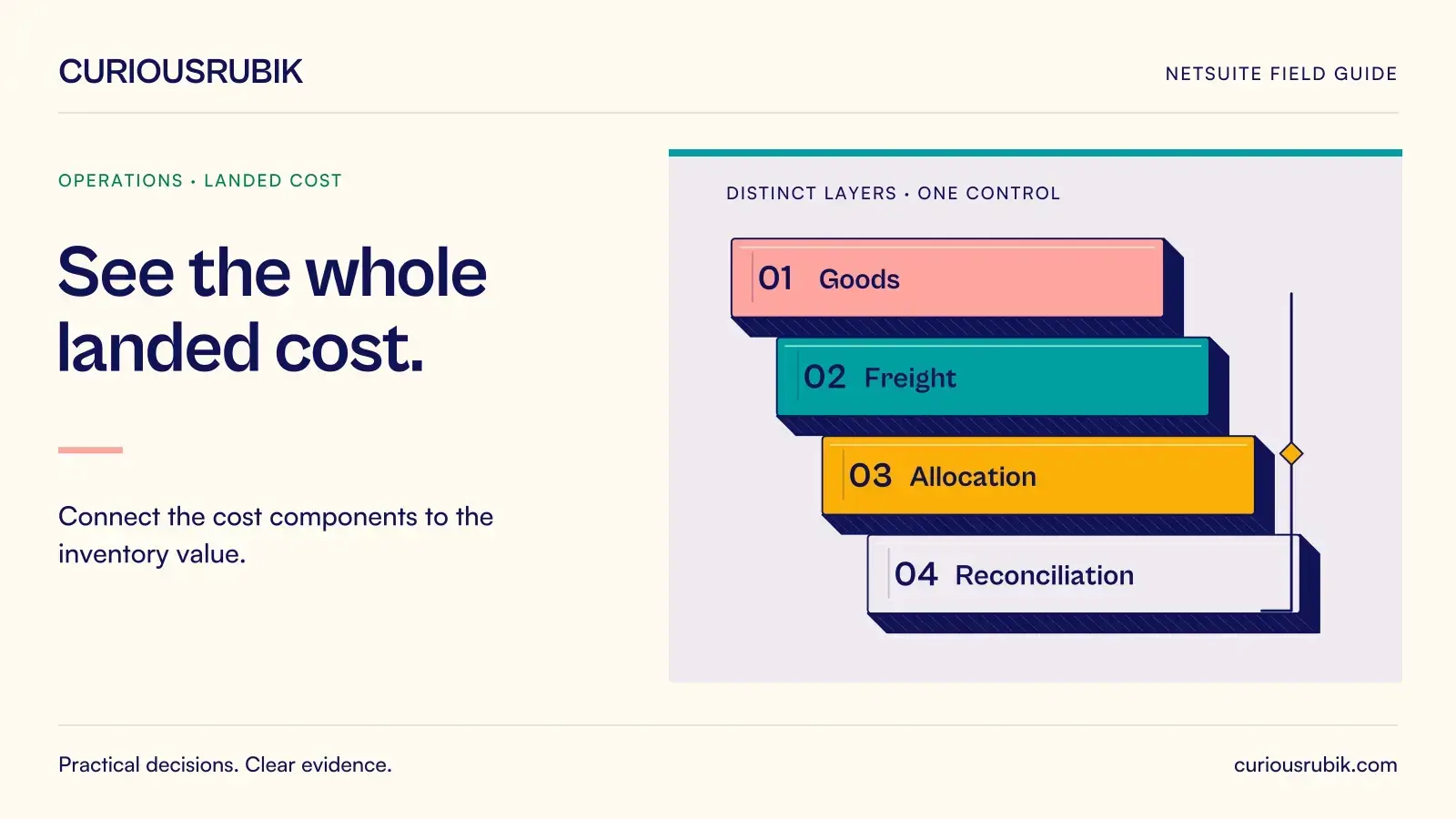
The purchase price on an item receipt may explain only part of the cost of bringing stock into the business. Freight, duty, insurance, and handling can materially change the economics. If those amounts are omitted, duplicated, or allocated …
A count difference is a signal to investigate, not immediate proof that stock has been lost. The warehouse may have moved goods after the count snapshot, recorded a receipt late, or counted cases as individual units. Approving the first …
Wholesale distribution brings commercial promises and warehouse constraints into the same order. A customer-specific price may be correct while the available quantity is overstated. A shipment may leave on time while its margin omits …
The last finished unit can leave production before all the order's accounting is complete. Material issues may be missing, operation time may arrive late, and completion values may differ from the costs accumulated in work in process. A …
Sending material to a manufacturing supplier creates a visibility problem before it creates a finished product. The business needs to know what it still owns, what the supplier has consumed, what remains in process, and what has been …
A production schedule can contain valid dates and still be impossible to execute. Work may exceed the available machine hours, depend on an absent operator, or assume that maintenance never interrupts the week. Releasing every order does …
A routing translates production steps into an expected sequence, resource requirement, and cost structure. Small errors in its assumptions can multiply across hundreds of orders. Setup time entered as a per-unit value, or a resource count …
A manufacturing implementation can create work orders and still leave finance unable to explain production cost. The gap usually appears between physical activity and transaction capture: components are consumed before they are issued, …
A bill of materials tells the business what a product requires. Once production has started, it also helps explain what was planned, what was consumed, and why the cost changed. An engineering revision therefore affects purchasing, …
A lot number on an item record is only the beginning of traceability. During a recall, the business needs to establish where affected material came from, what it became, where it moved, and which customers received it. Each missing …
The purchase price on an item receipt may explain only part of the cost of bringing stock into the business. Freight, duty, insurance, and handling can materially change the economics. If those amounts are omitted, duplicated, or allocated …
A count difference is a signal to investigate, not immediate proof that stock has been lost. The warehouse may have moved goods after the count snapshot, recorded a receipt late, or counted cases as individual units. Approving the first …