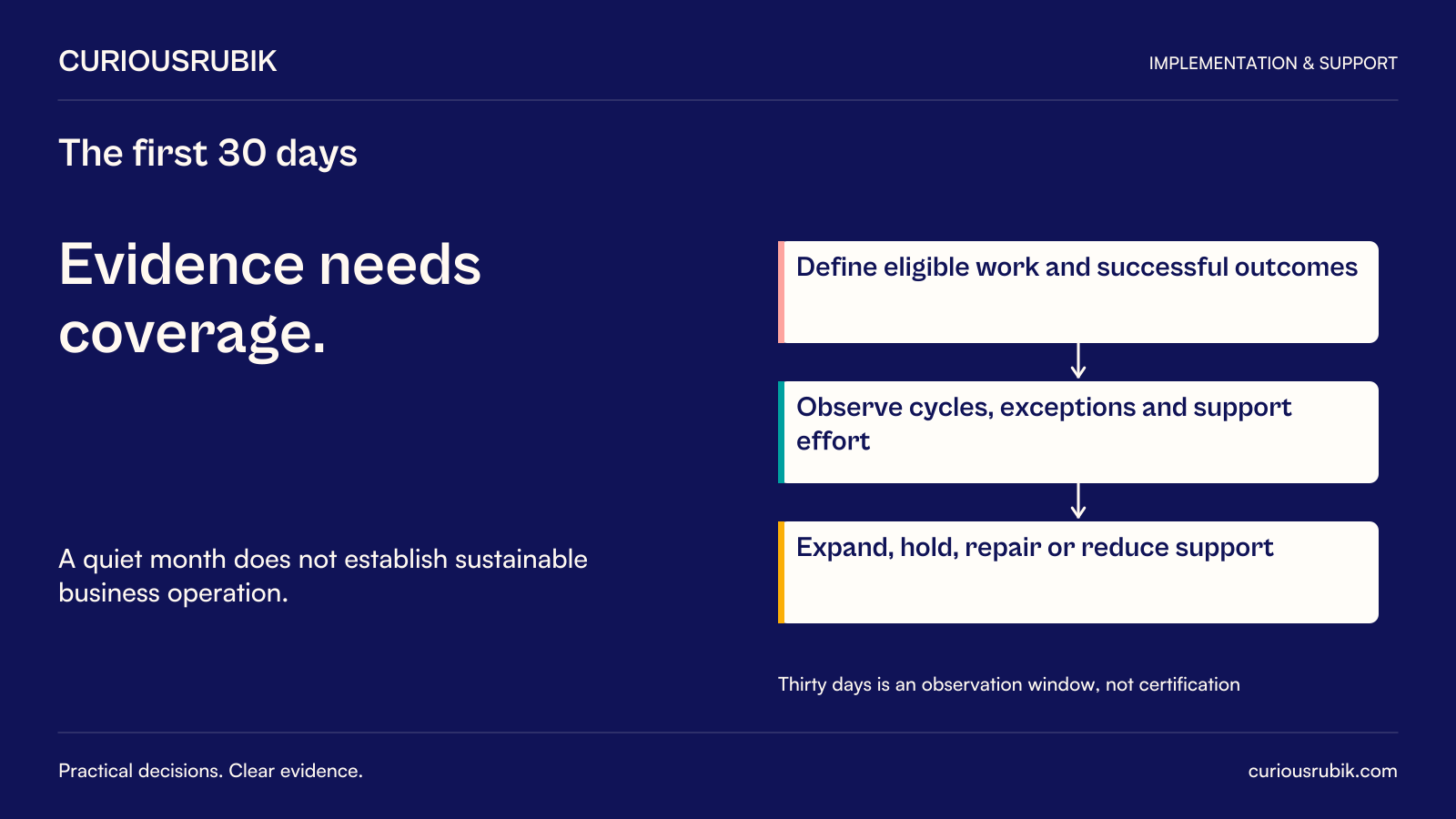
Thirty days without a major outage can be reassuring and still provide an incomplete picture of system stability. The business may have processed little volume, avoided difficult transactions, or relied on consultants to repair records …
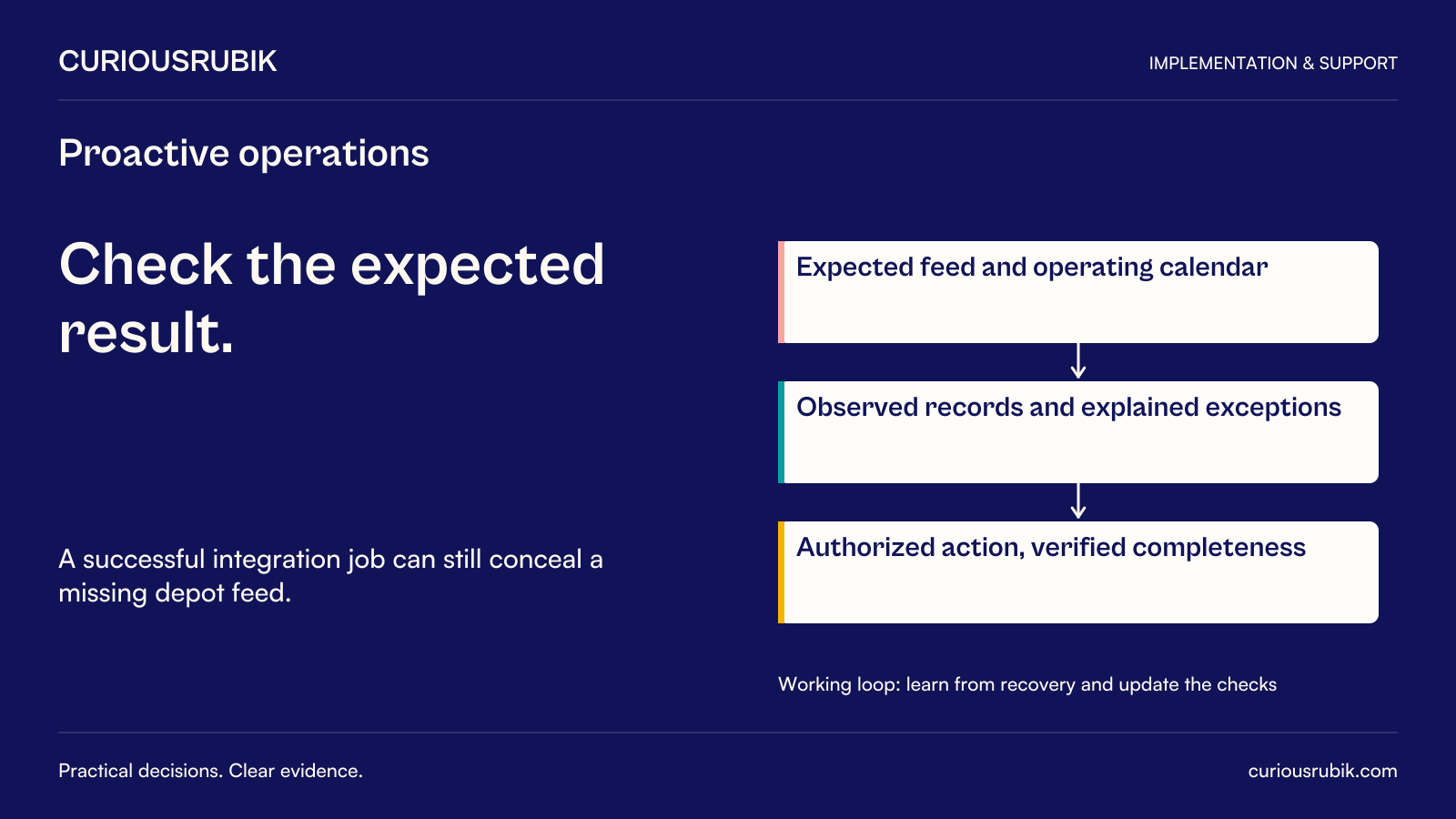
A successful overnight job can conceal an operational failure. The application is available, the interface returned no error, and the support queue is quiet. Yet a required data feed never arrived, so the next team begins the day with an …
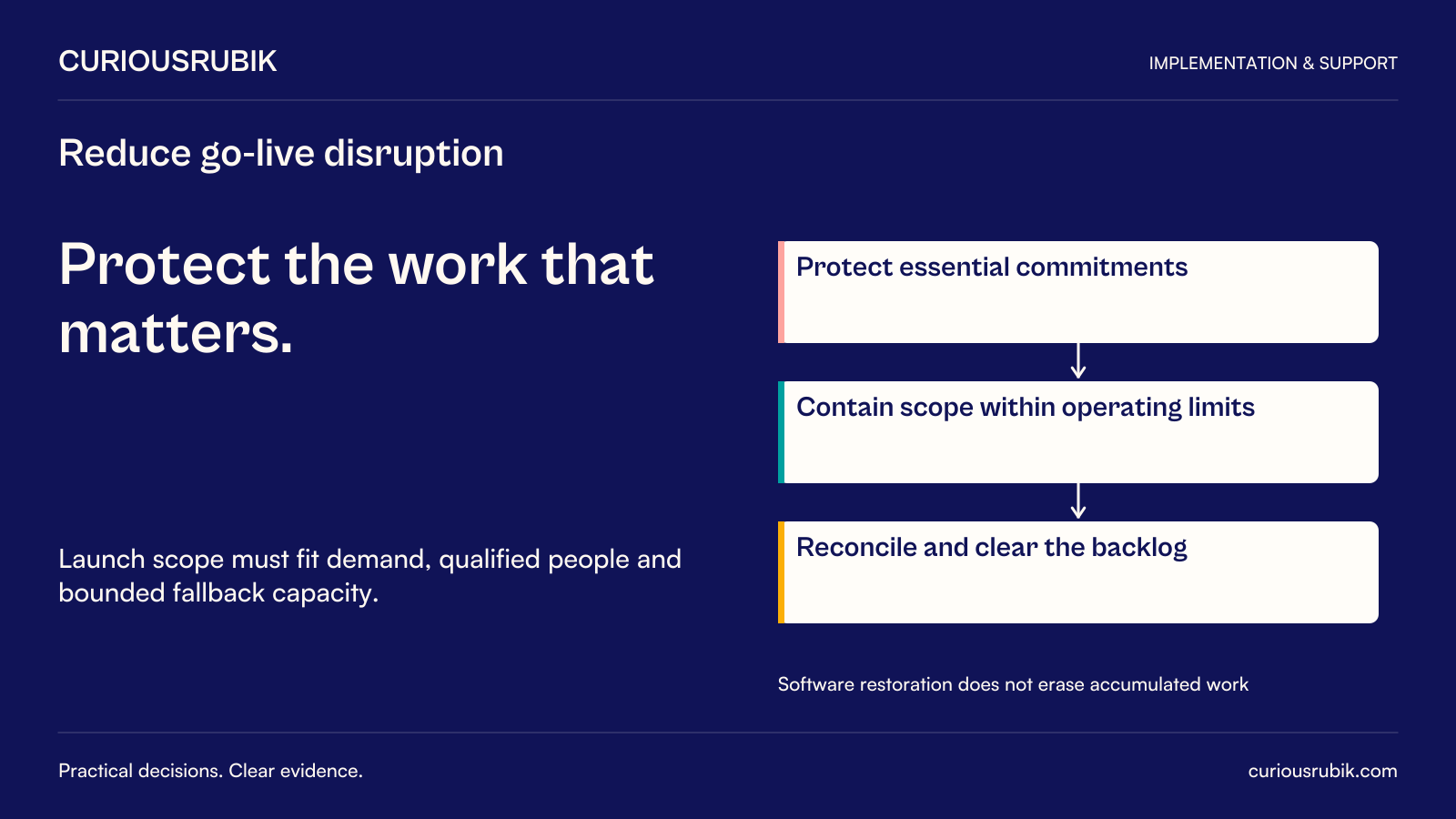
A system can remain available throughout launch while the business falls behind. Employees work more slowly, questions interrupt specialists, exceptions take longer to resolve, and a backlog grows faster than the organization can clear it.
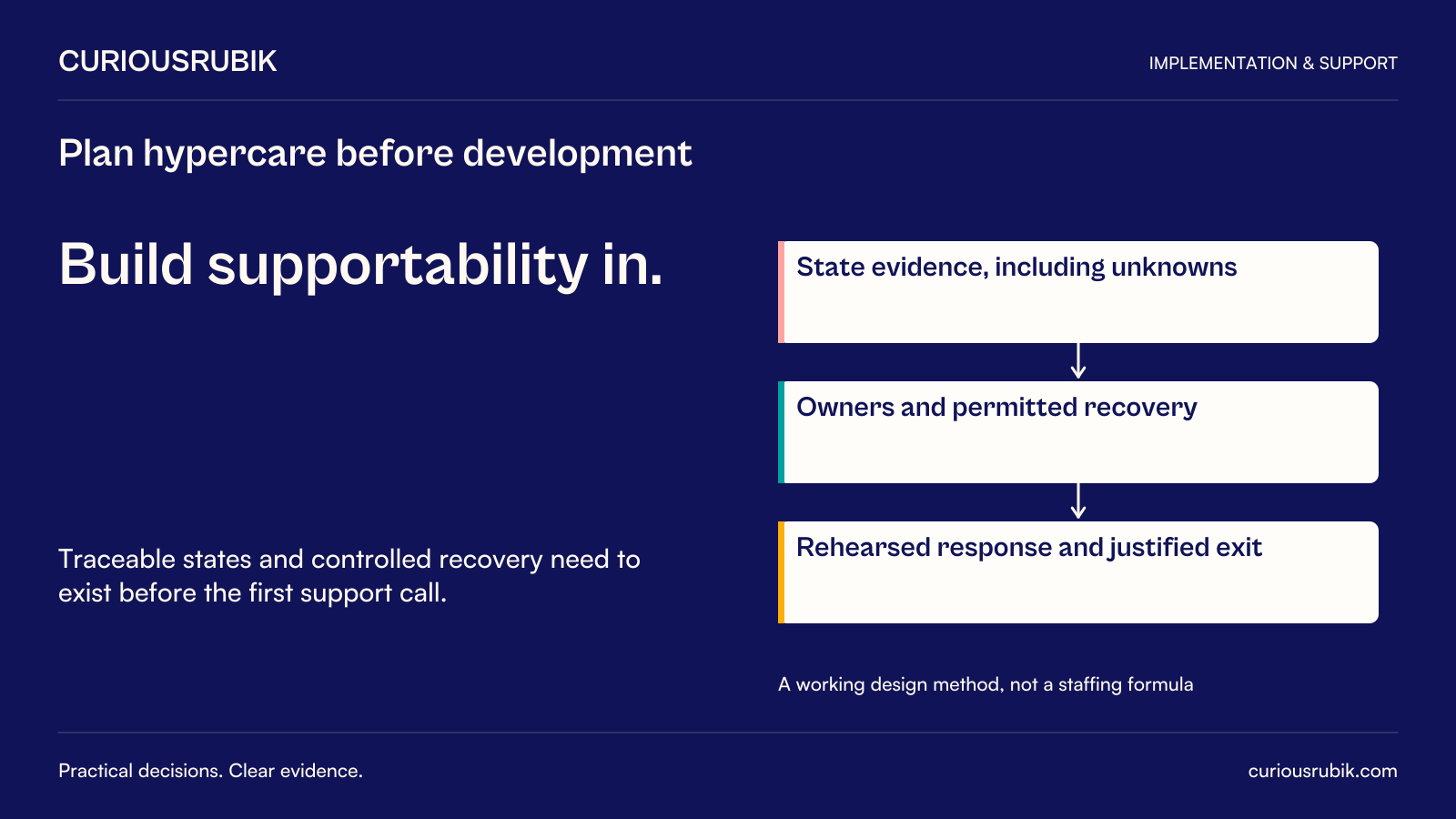
The first support call after launch may describe a simple symptom: “The customer completed the form, but the service is not active.” Resolving it can require tracing identity, payment status, workflow state, an integration message, and a …
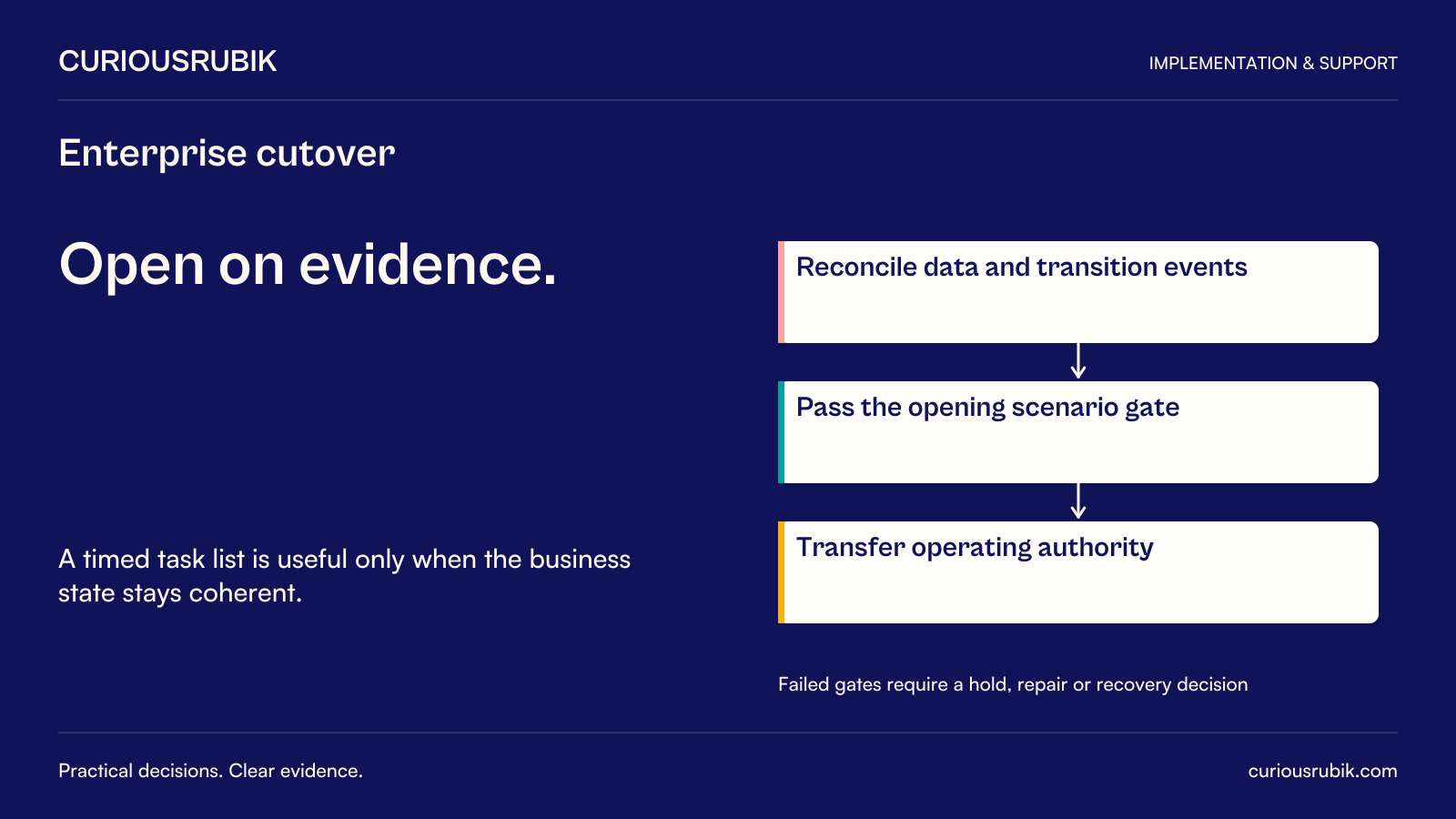
A cutover plan is often presented as a long list of tasks with start times. During execution, that list becomes difficult to use when one task finishes late, a reconciliation fails, or two teams disagree about whether a dependency is …
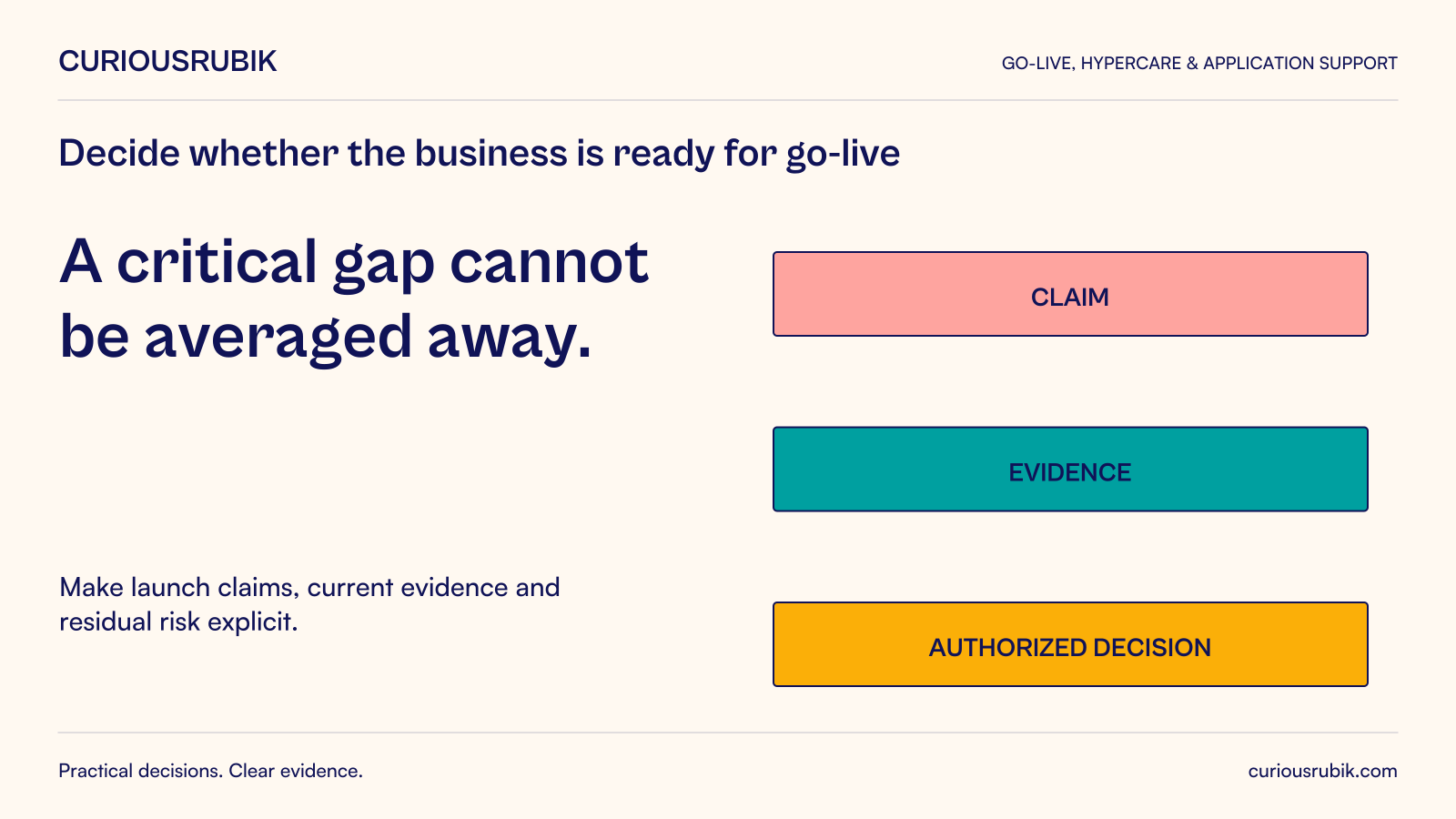
A readiness dashboard can be mostly green while the release remains unsafe to launch. Training may be complete, data migration may have passed, and minor defects may be closing quickly, yet one unresolved issue prevents the business from …
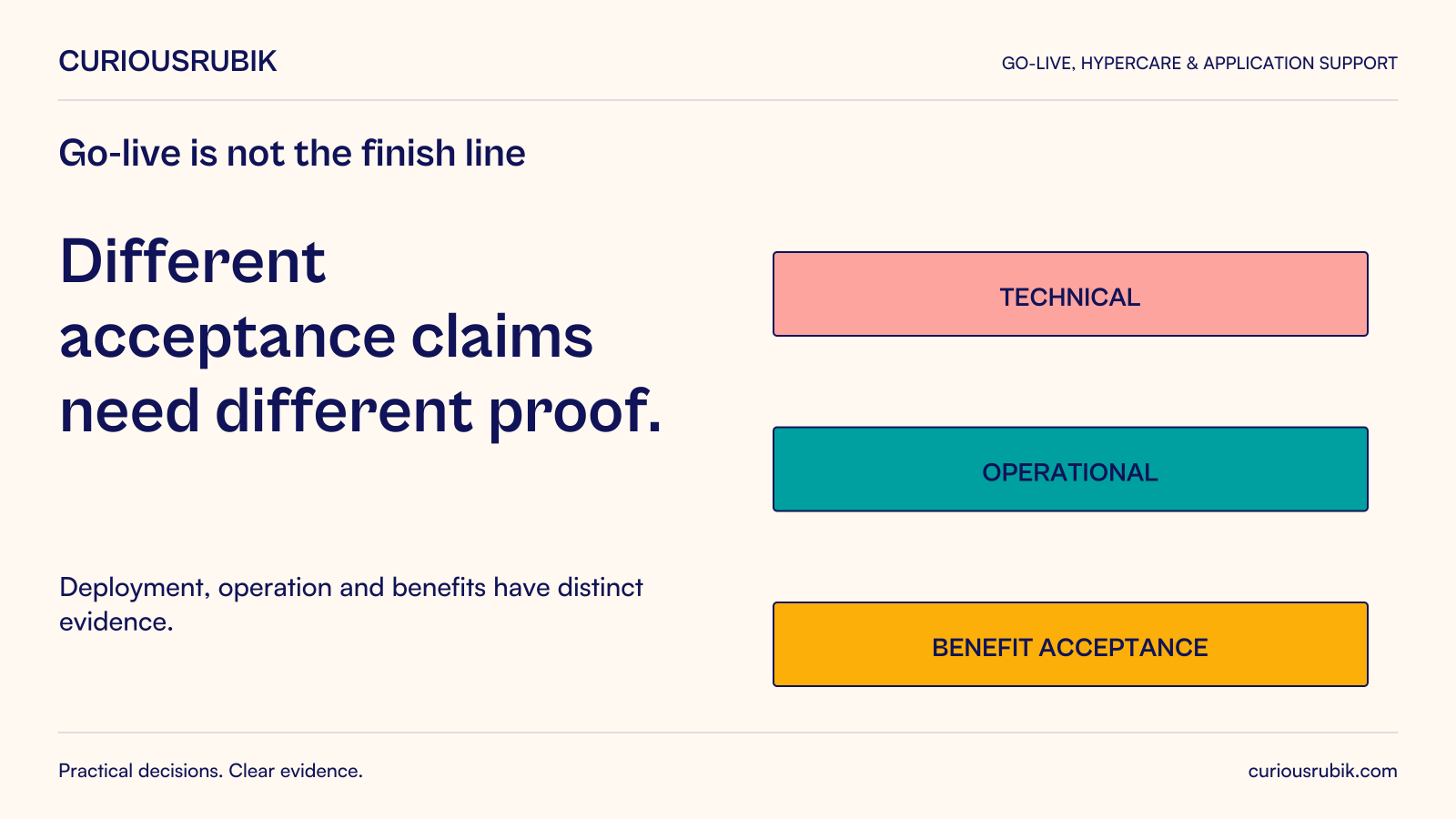
On the first morning after launch, employees can sign in, transactions are moving, and the project team has completed the cutover checklist. The business has achieved an important milestone. It has not yet shown that the new system can …
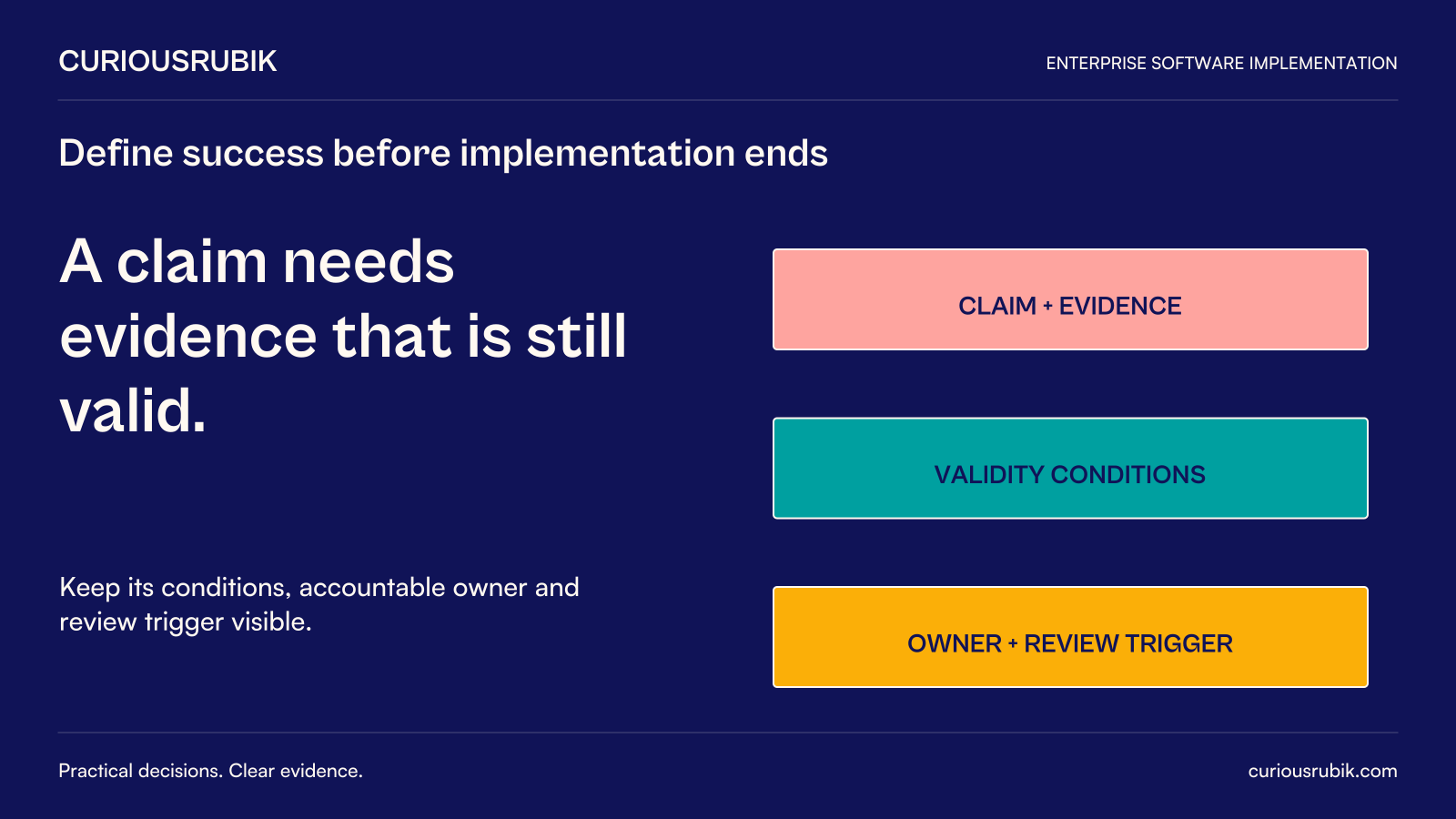
A delivery team can accumulate approvals, test results and training records while gradually losing confidence in what those records prove. Configuration changes, data changes and operating decisions can make earlier evidence obsolete. A …
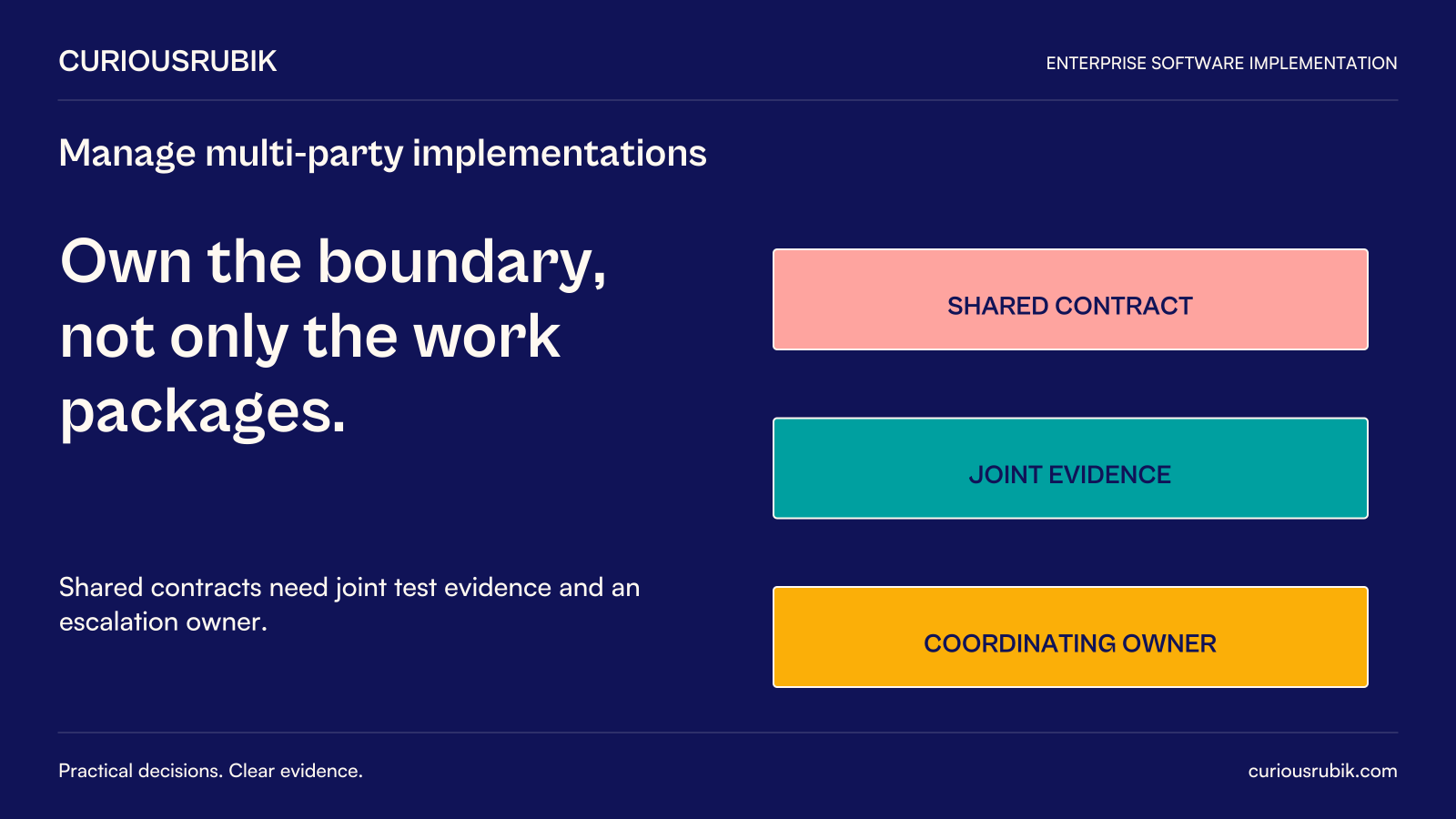
A transformation can reach the end of several successful supplier work packages without producing a usable service. One vendor has configured the application, another has built the interfaces and a third has prepared the infrastructure. …
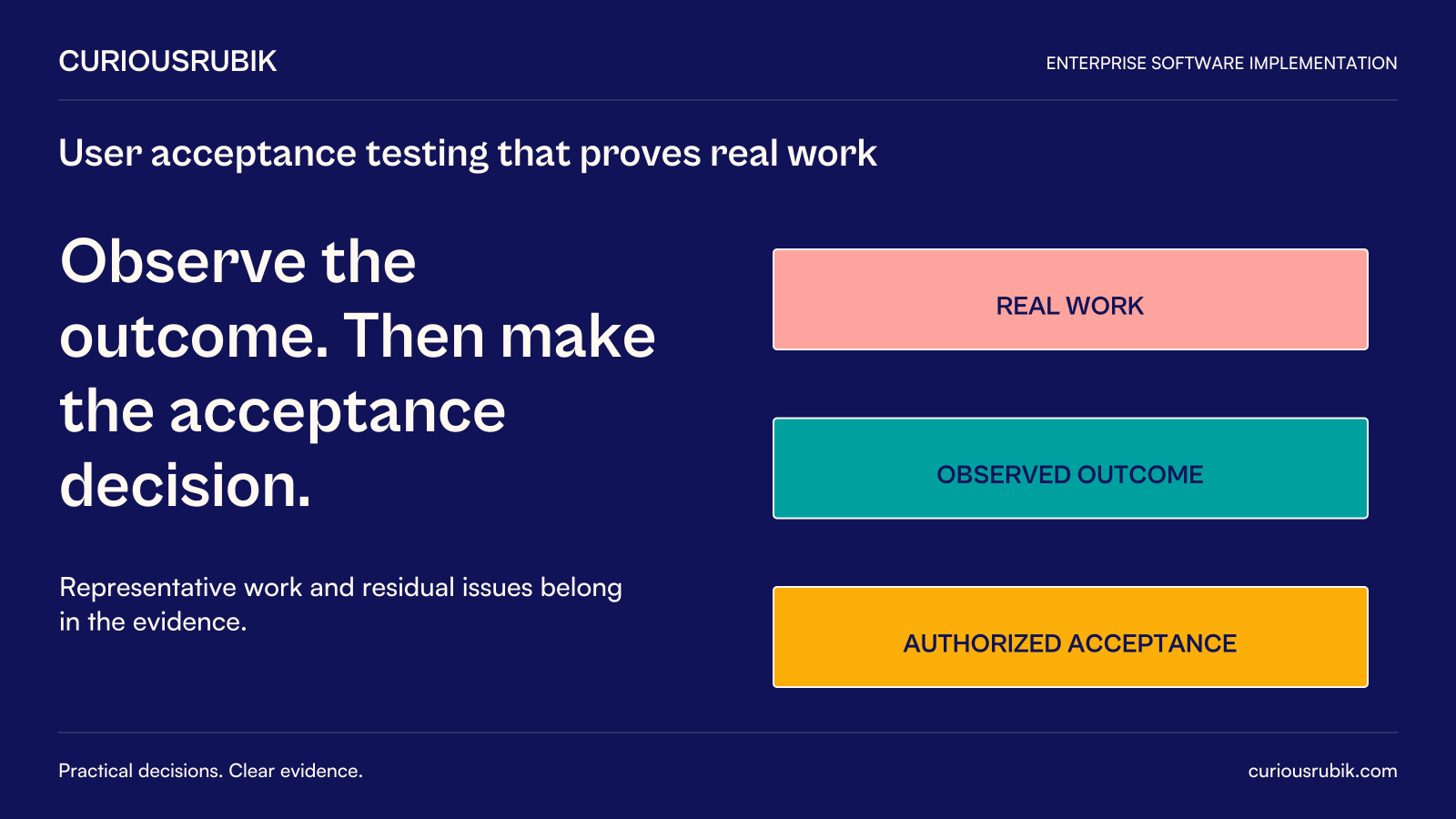
A system can pass technical tests and still be unsuitable for the work people must perform. The screens respond, the interfaces return valid messages and the configured rules behave as specified, but a user cannot complete a realistic task …