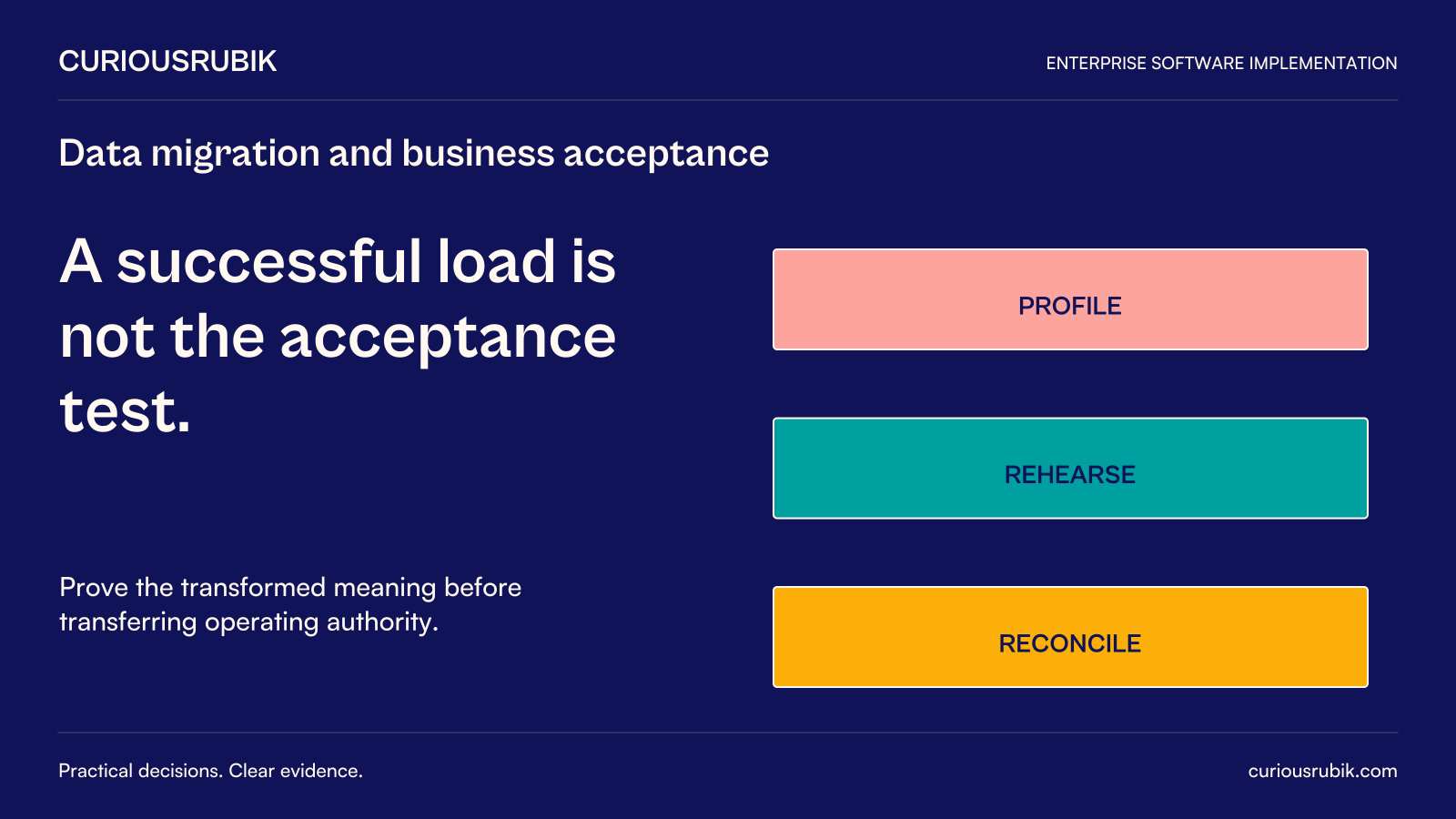
A migration can load every record successfully and still leave the business unable to operate correctly. The destination may contain the wrong relationships, ambiguous statuses, missing history or opening positions that cannot be …
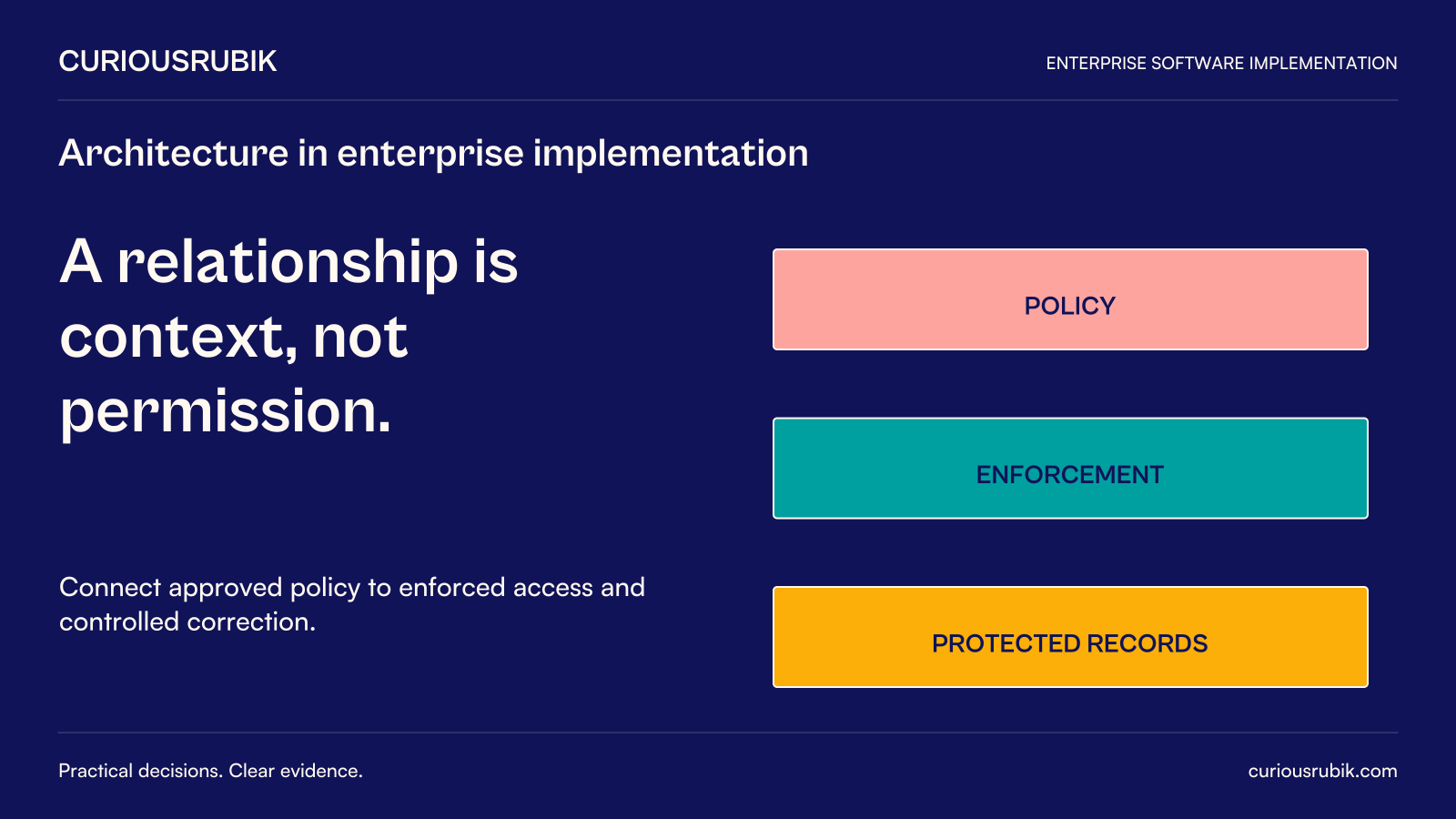
An implementation can have individually sound workstreams and an incoherent overall solution. The portal team models customers one way, the finance team uses another, the integration team translates between them and the support team …
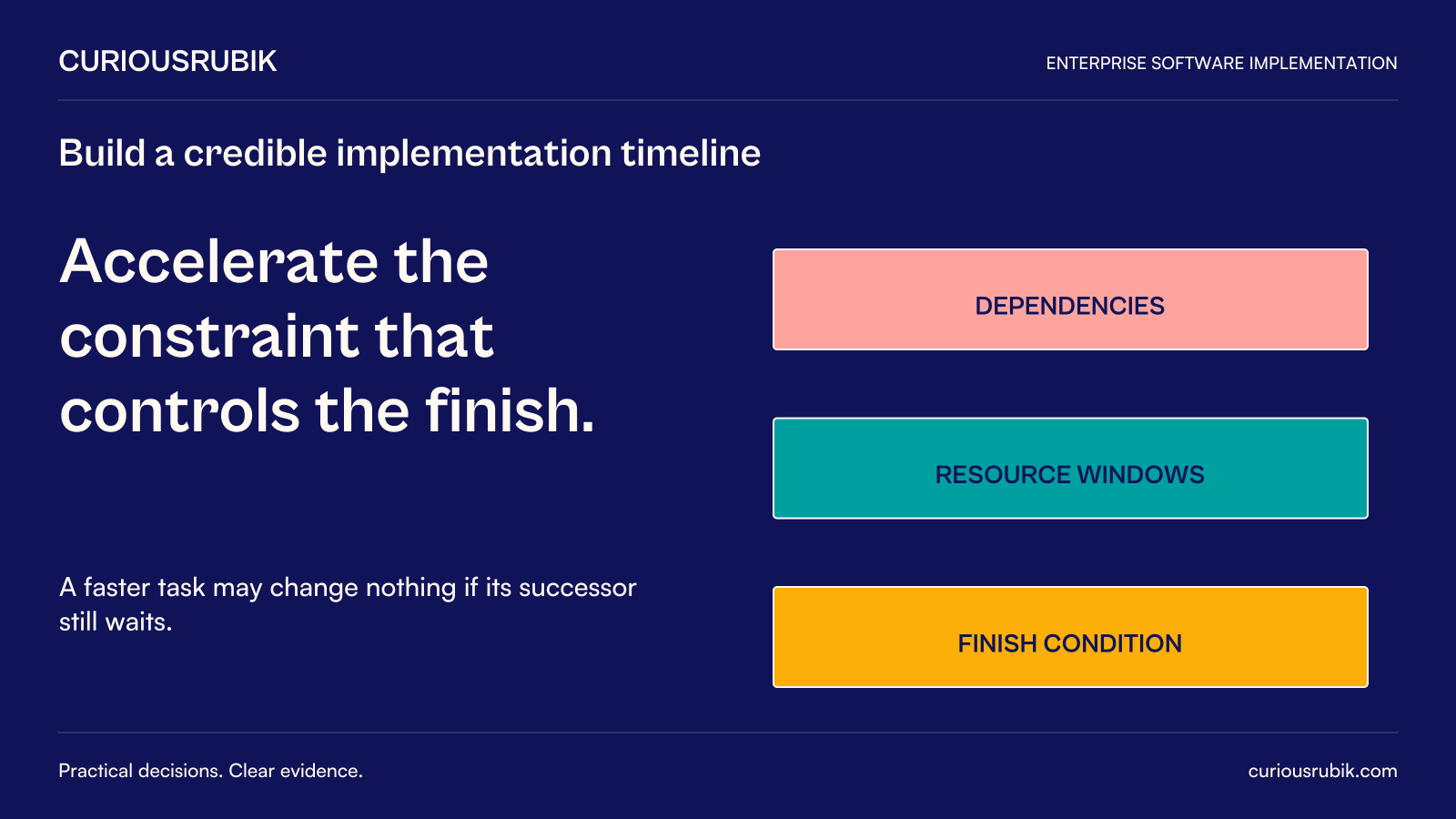
A milestone date becomes credible when the team can explain the work, dependencies, decisions and available people that lead to it. A date agreed in a steering meeting is a target; it is not yet a delivery model.
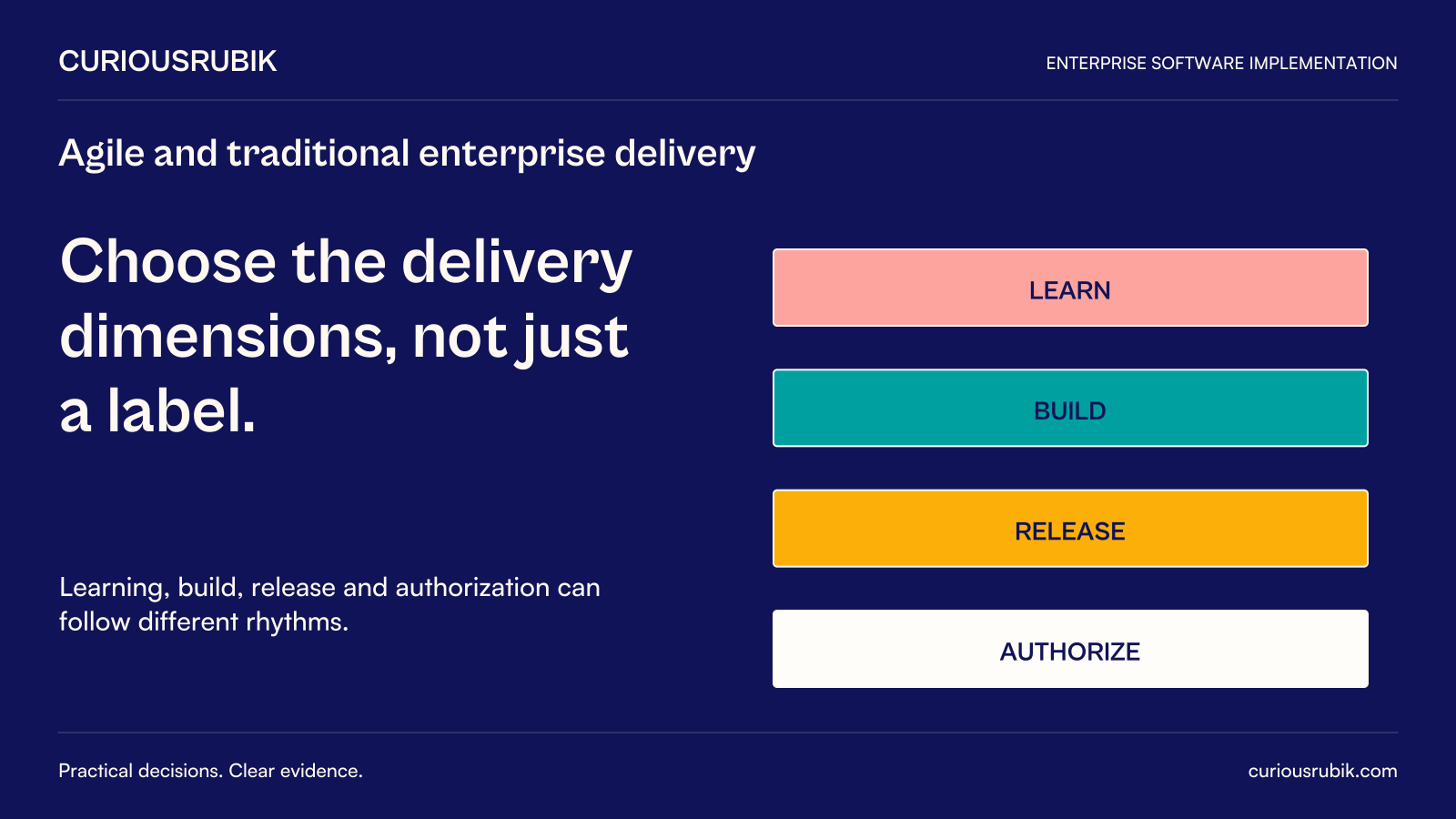
An enterprise program can use two-week development cycles and still postpone its most important learning until final integration. Another can have formal approval gates while testing difficult assumptions early and adapting its design. The …
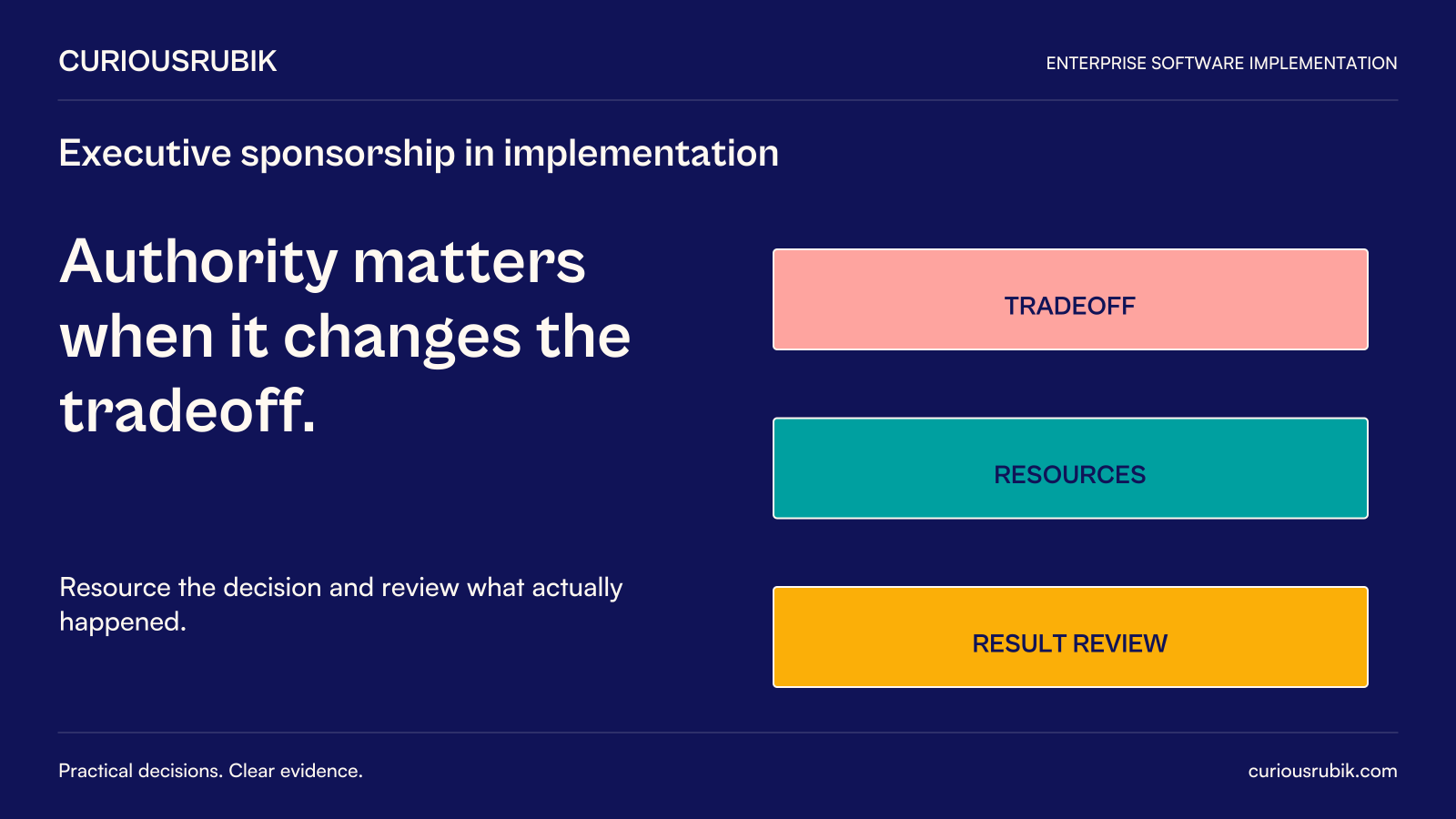
An implementation team can design a workflow, estimate the work and explain the consequences of a choice. It cannot always decide whose business priorities should prevail. When departments disagree about a common process, scarce staff or …
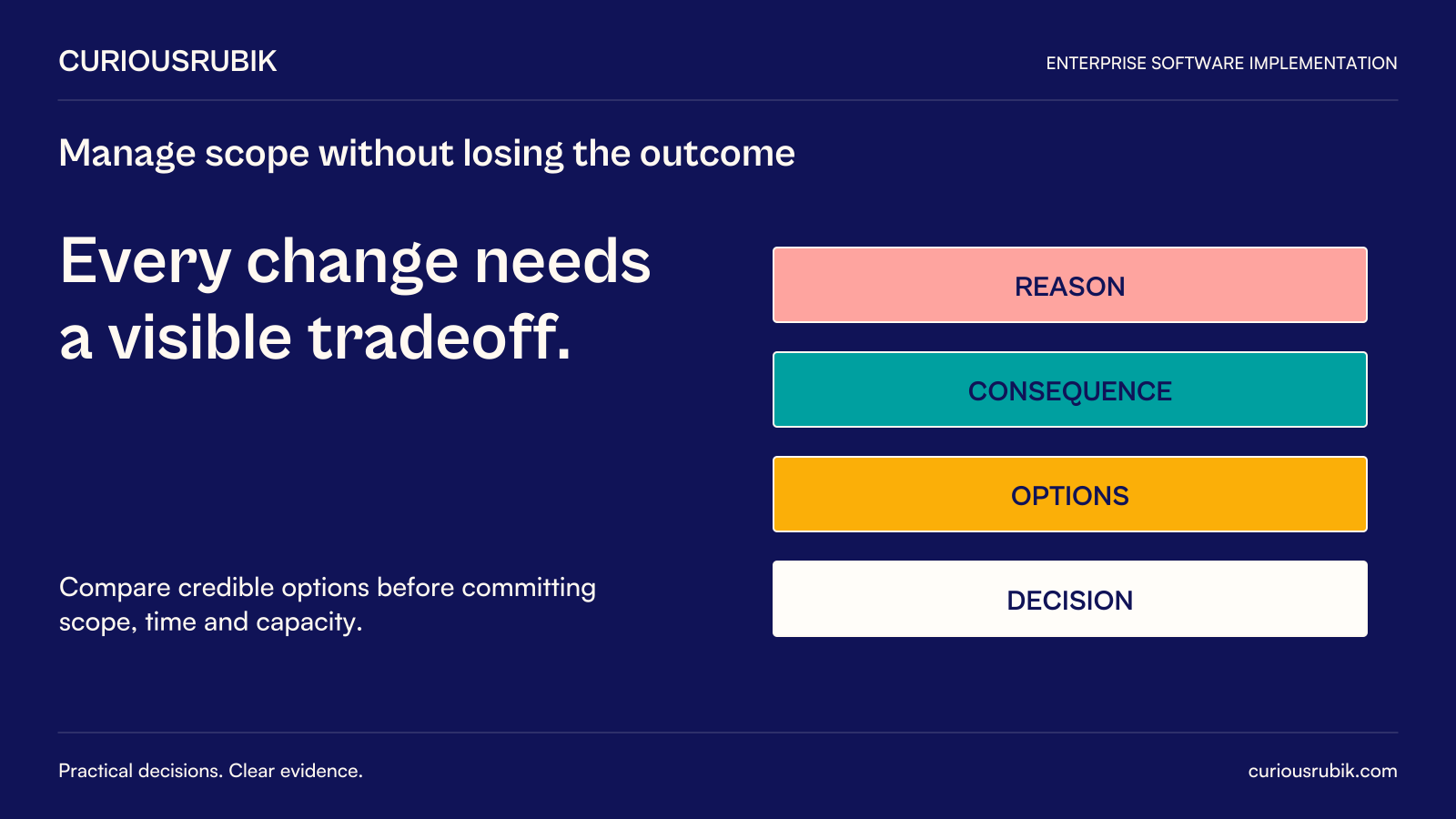
A project can protect its original scope and still deliver the wrong result. It can also accept every sensible suggestion and exhaust the capacity needed to finish. The sponsor’s task is to distinguish changes that preserve the intended …
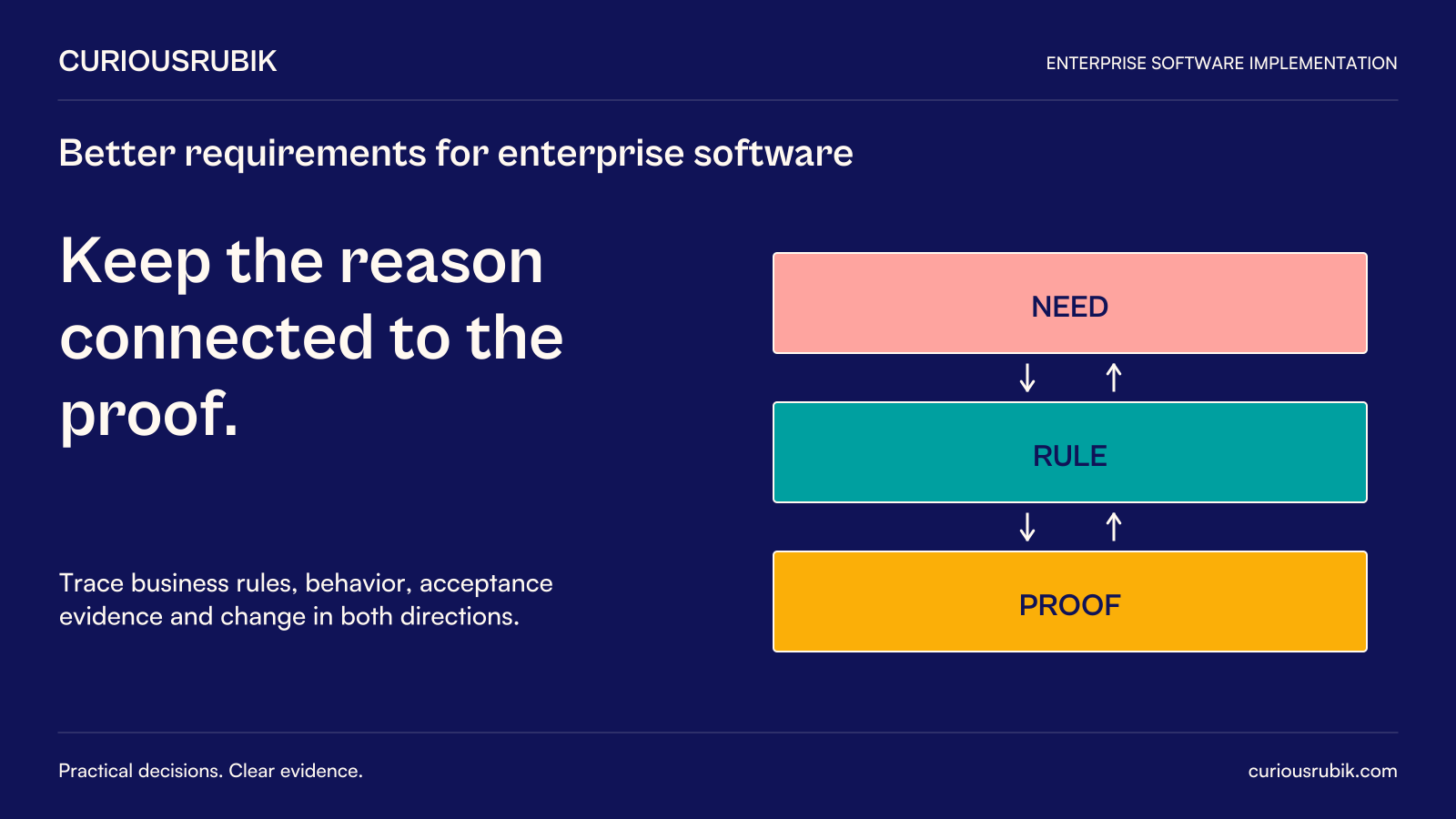
A workshop can collect hundreds of requests without producing a dependable specification. “Support approvals,” “provide real-time reporting” and “make the process user-friendly” may accurately record what people said. They do not yet tell …
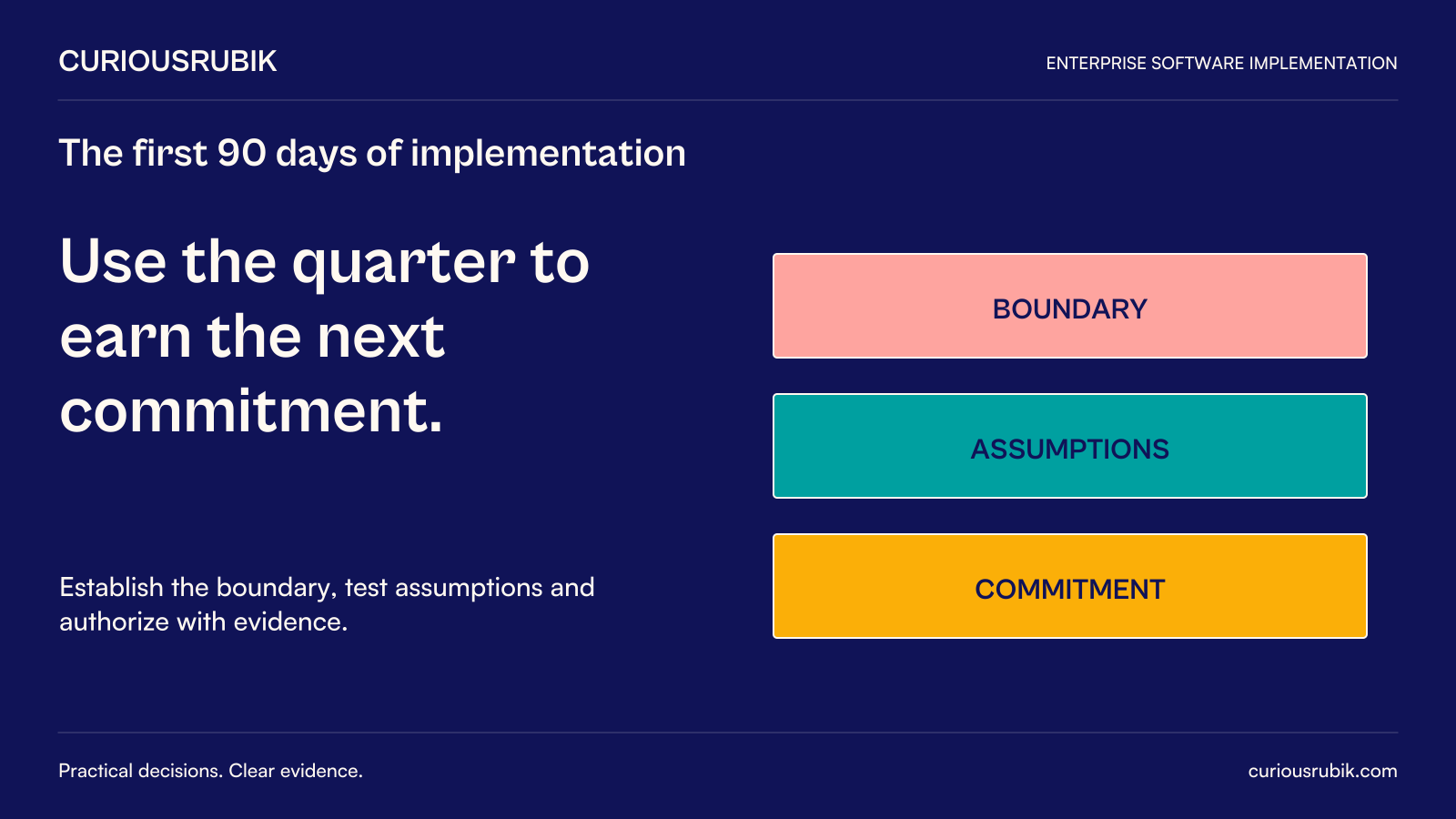
The first quarter of an implementation should change the quality of the program’s commitments. By the end of that period, leaders should understand the intended business outcome, the major dependencies, the evidence behind the delivery …
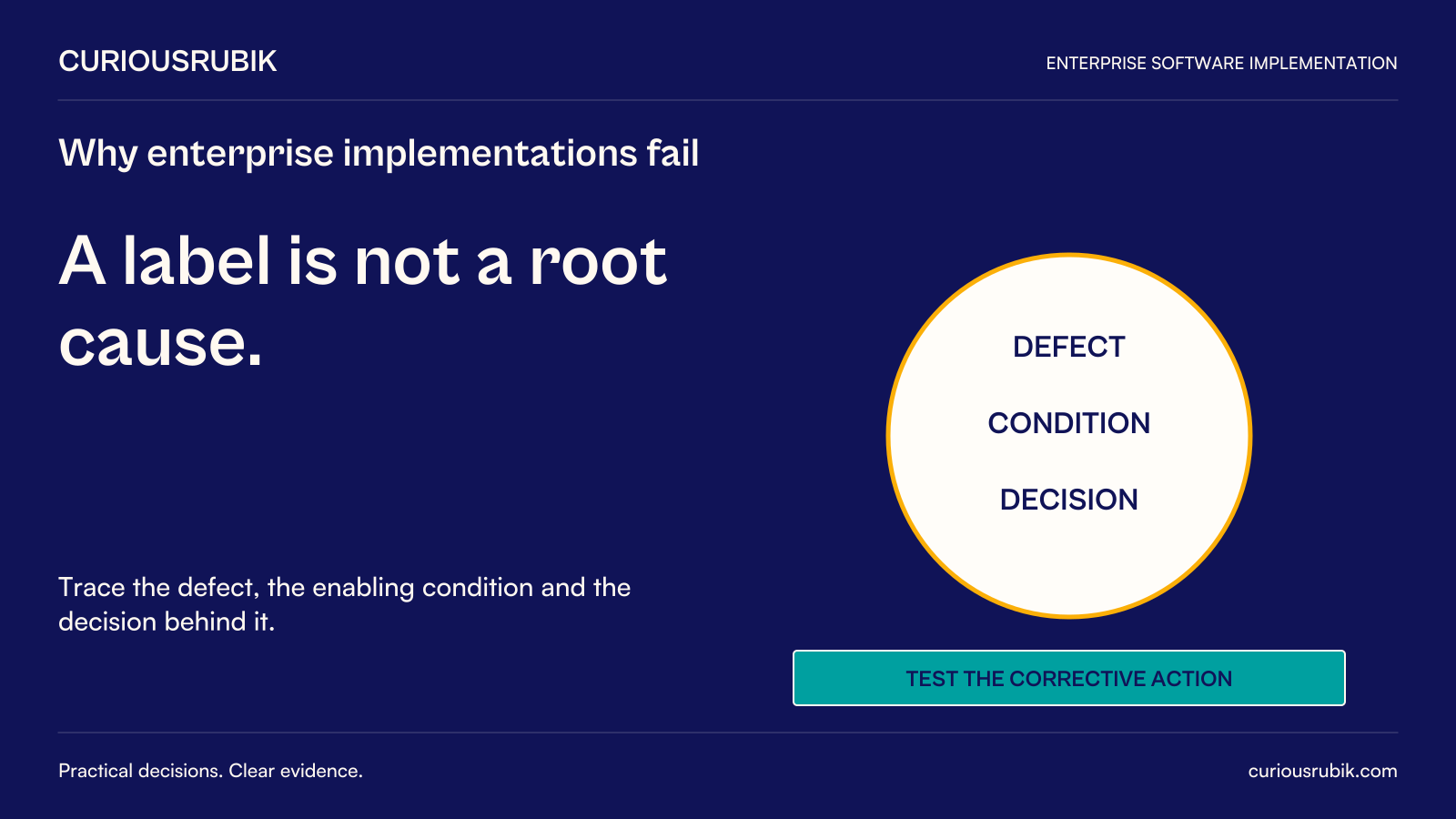
When an implementation misses a major milestone, the first explanation is often a label: poor requirements, weak change management, bad data or vendor underperformance. A label can point toward a problem, but it does not explain the …
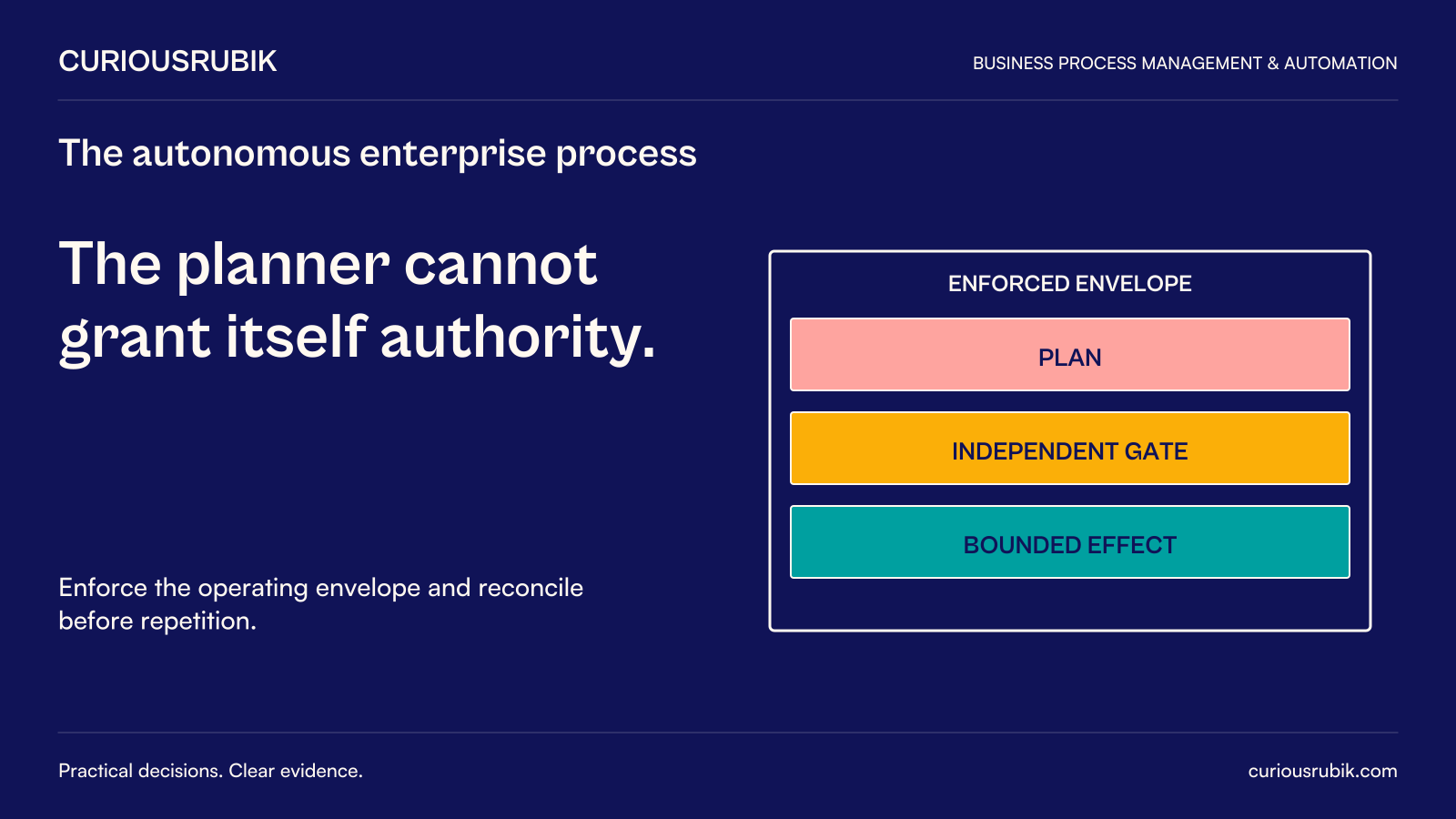
A business process becomes autonomous when it can observe a situation, choose among permitted actions, execute them, and assess the result without a person approving every routine step. That capability can be built with rules, …