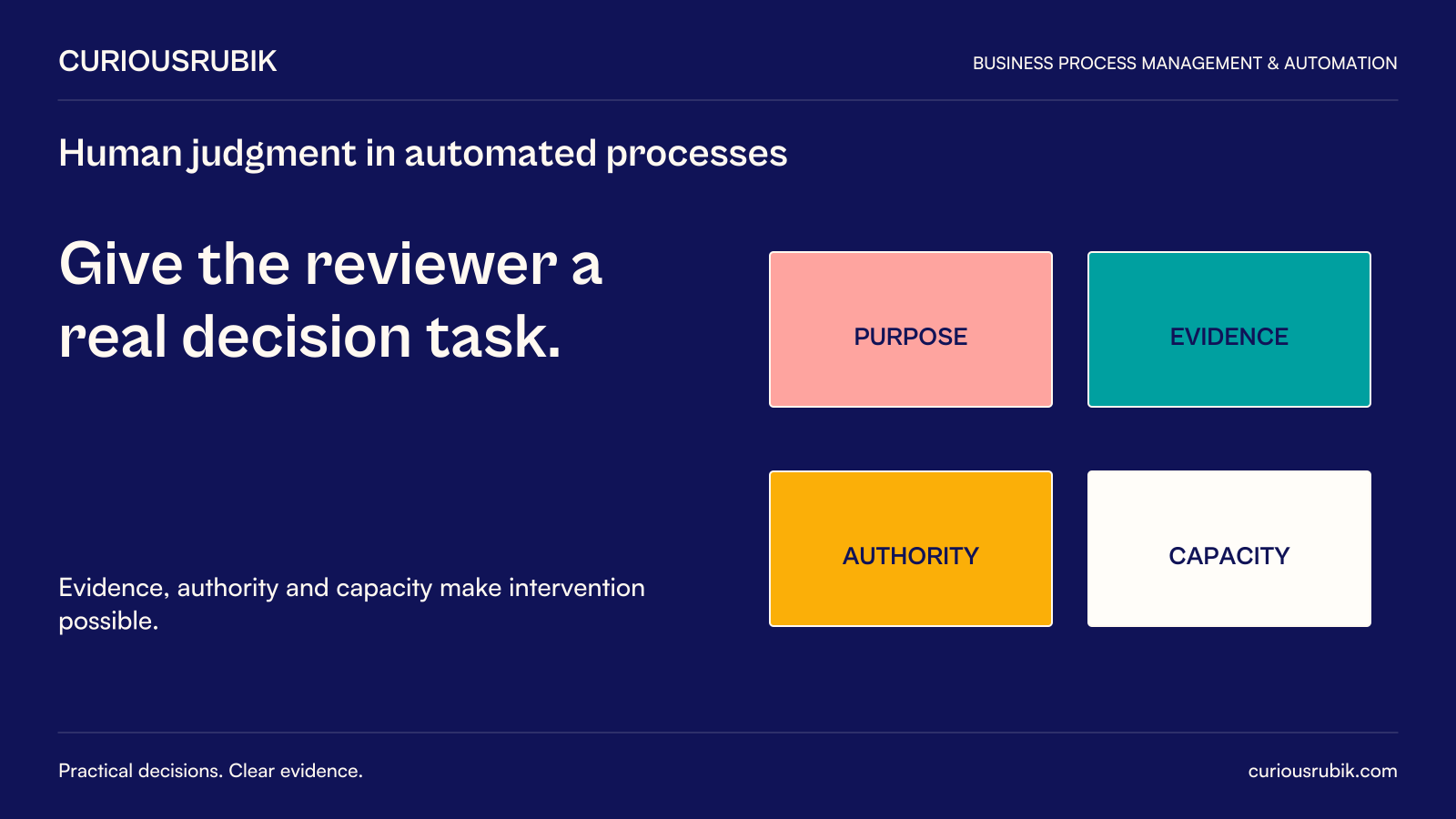
A workflow can require human approval and still provide little meaningful oversight. The reviewer may see only a polished recommendation, lack the source evidence, face an unmanageable queue, or have no practical way to change the proposed …
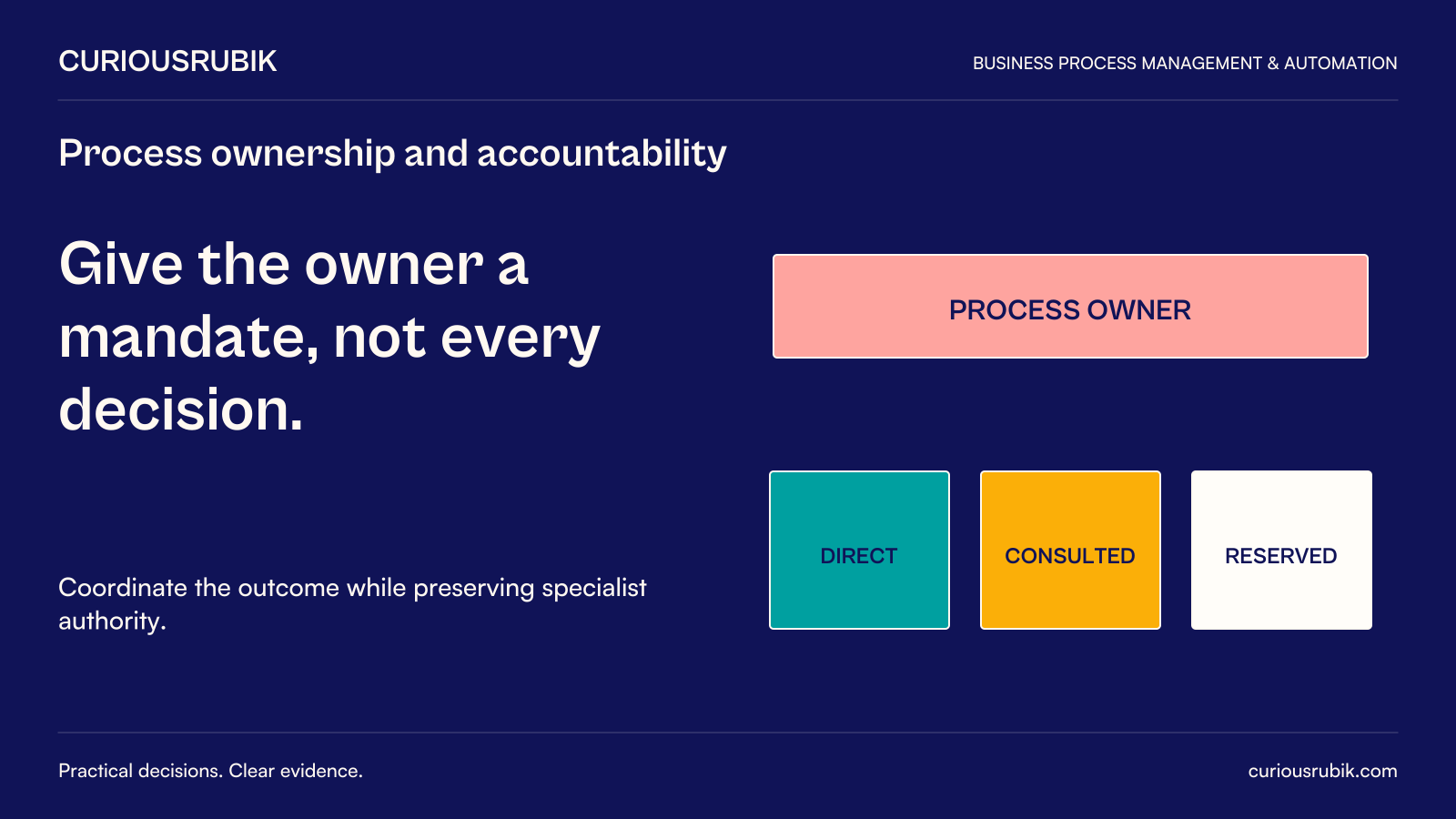
An automation team can fix a failed interface. It cannot decide whether a request should be accepted, which department should absorb additional work, or whether an old approval is still necessary. When those decisions have no owner, …
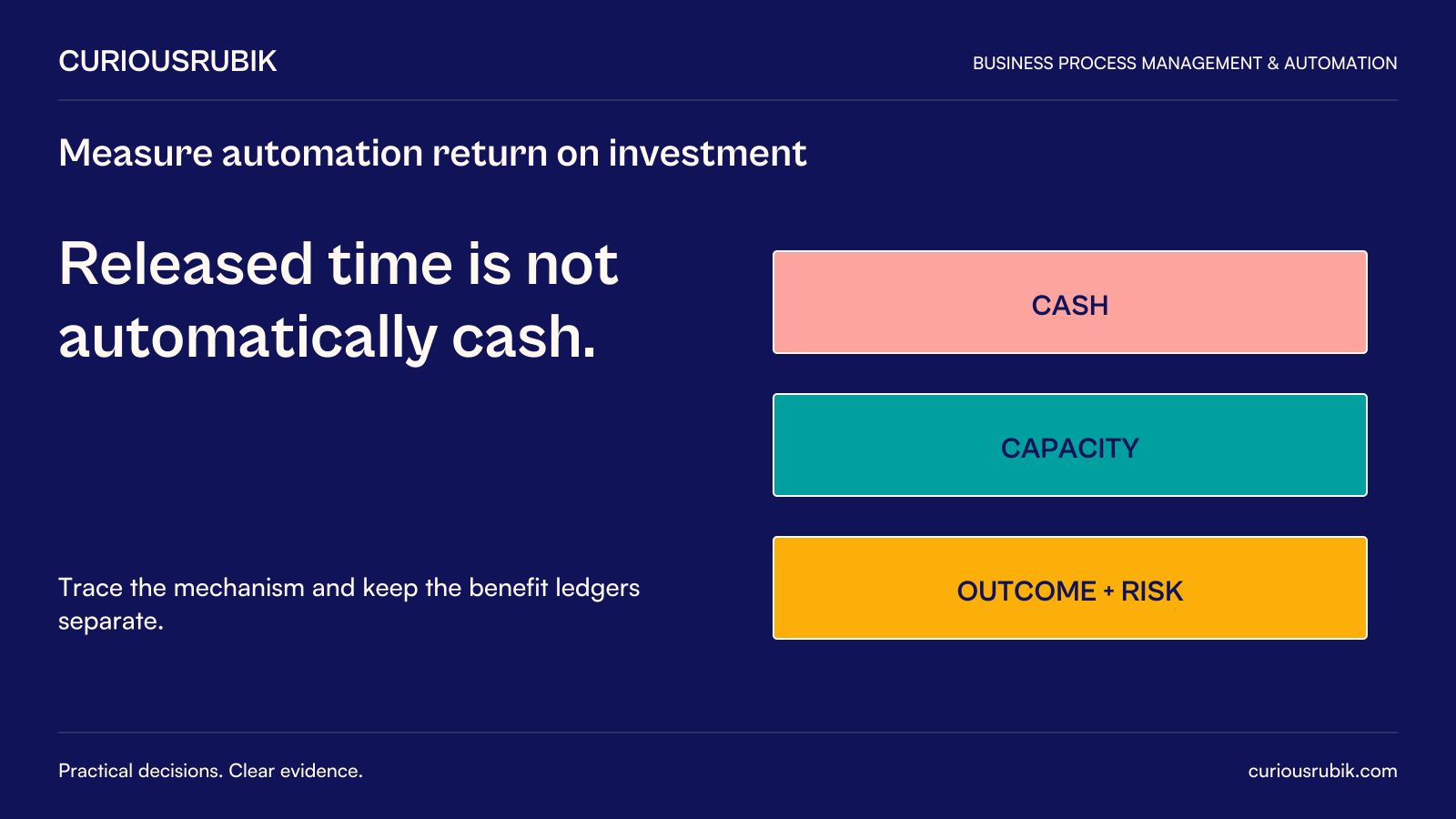
An automation business case often begins with minutes saved per transaction. That is a useful input, but it is several decisions away from return on investment. The organization still has to establish which work disappears, what new work …
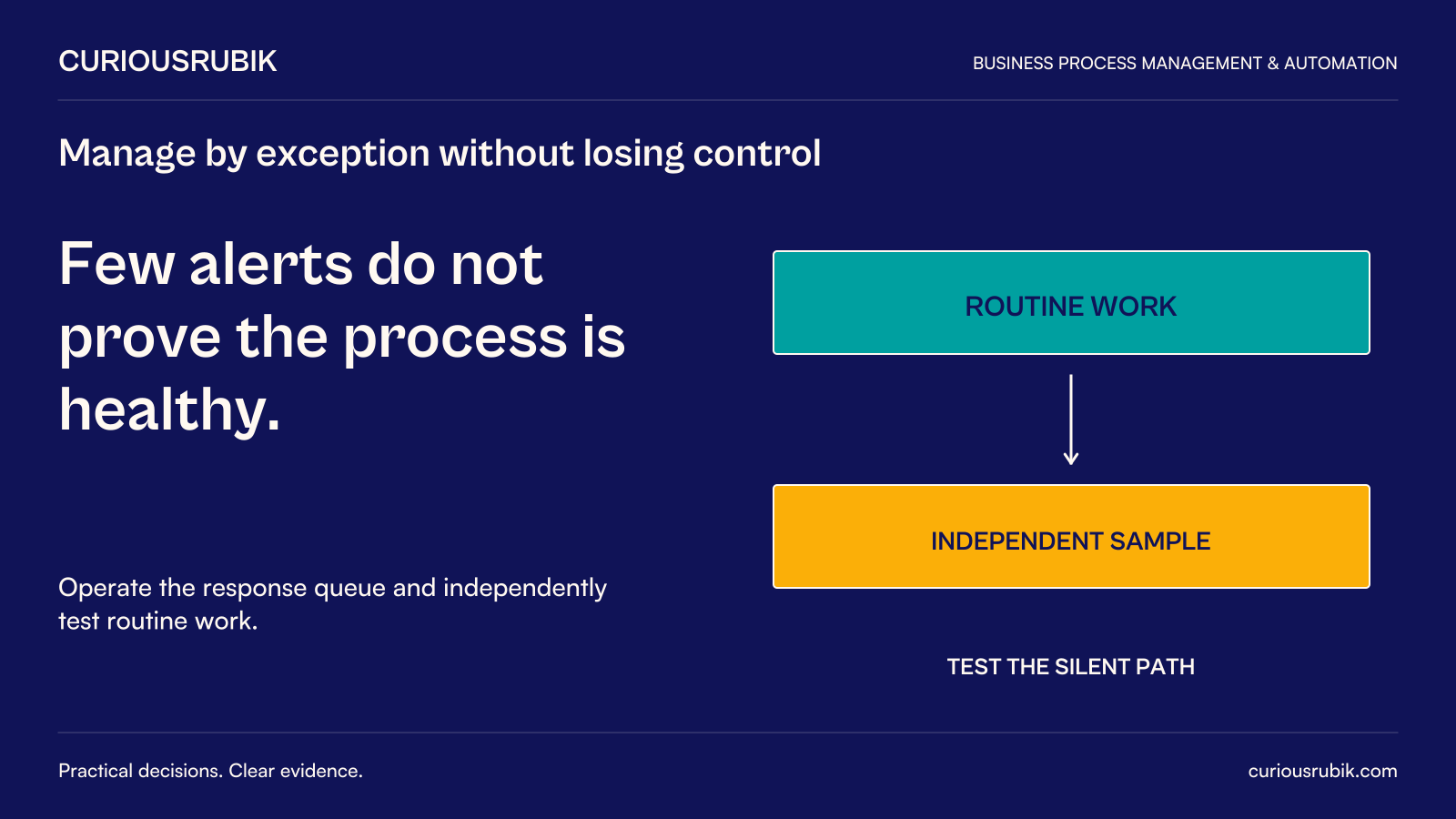
An organization operating by exception does not ask people to inspect every transaction. It allows defined routine work to proceed and directs attention to cases that need judgment, correction, or intervention.
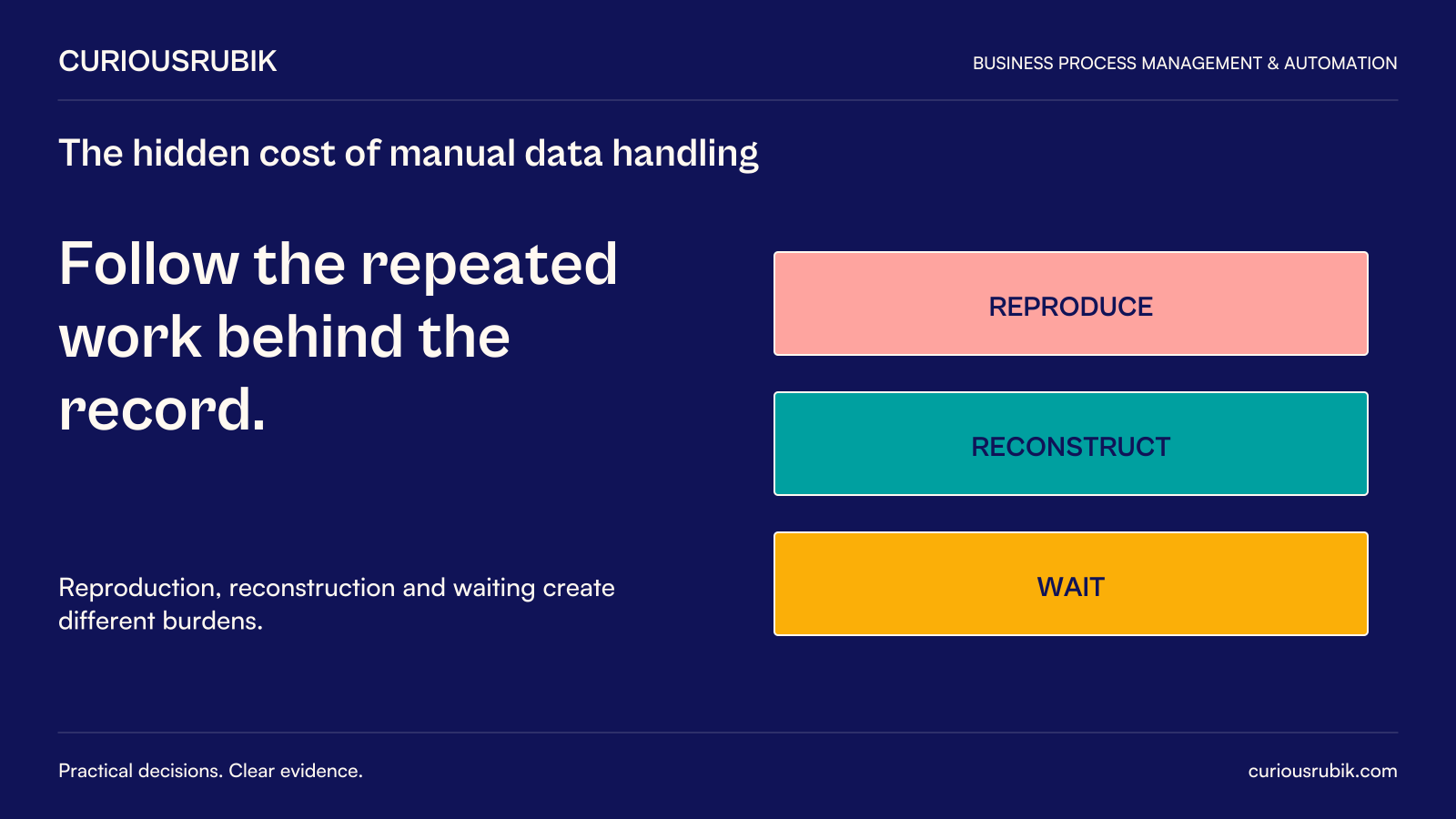
A maintenance job is finished, but the fleet planner cannot see it. The workshop has completed a job card. An administrator will rekey the details into the asset register tomorrow, and a cost analyst will translate the same work into a …
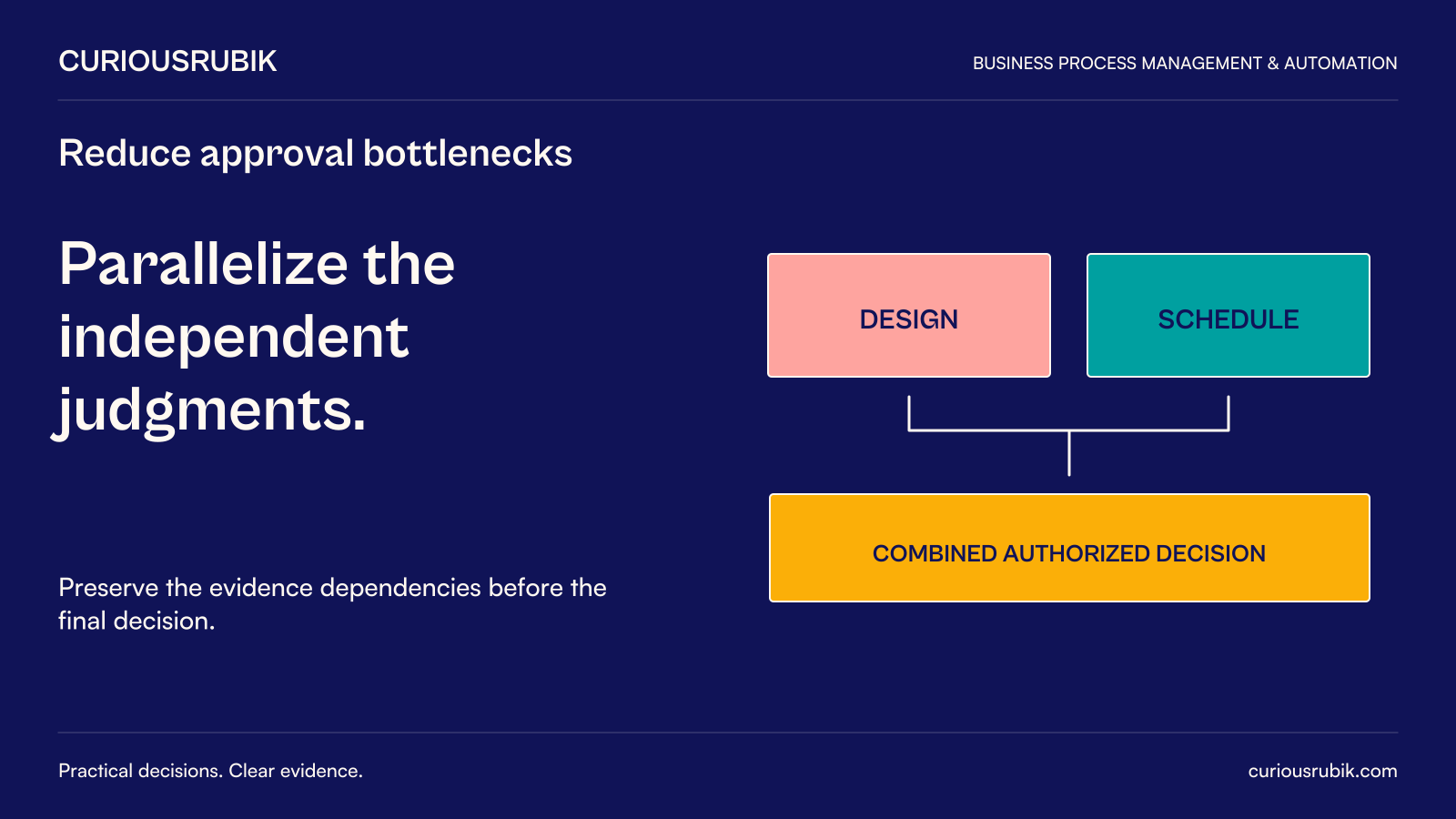
An approval may take ten minutes of judgment and three days of waiting. Adding reminders can shorten some delays, but it does not explain why the request waited: the approver lacked information, was unavailable, had no clear authority, or …
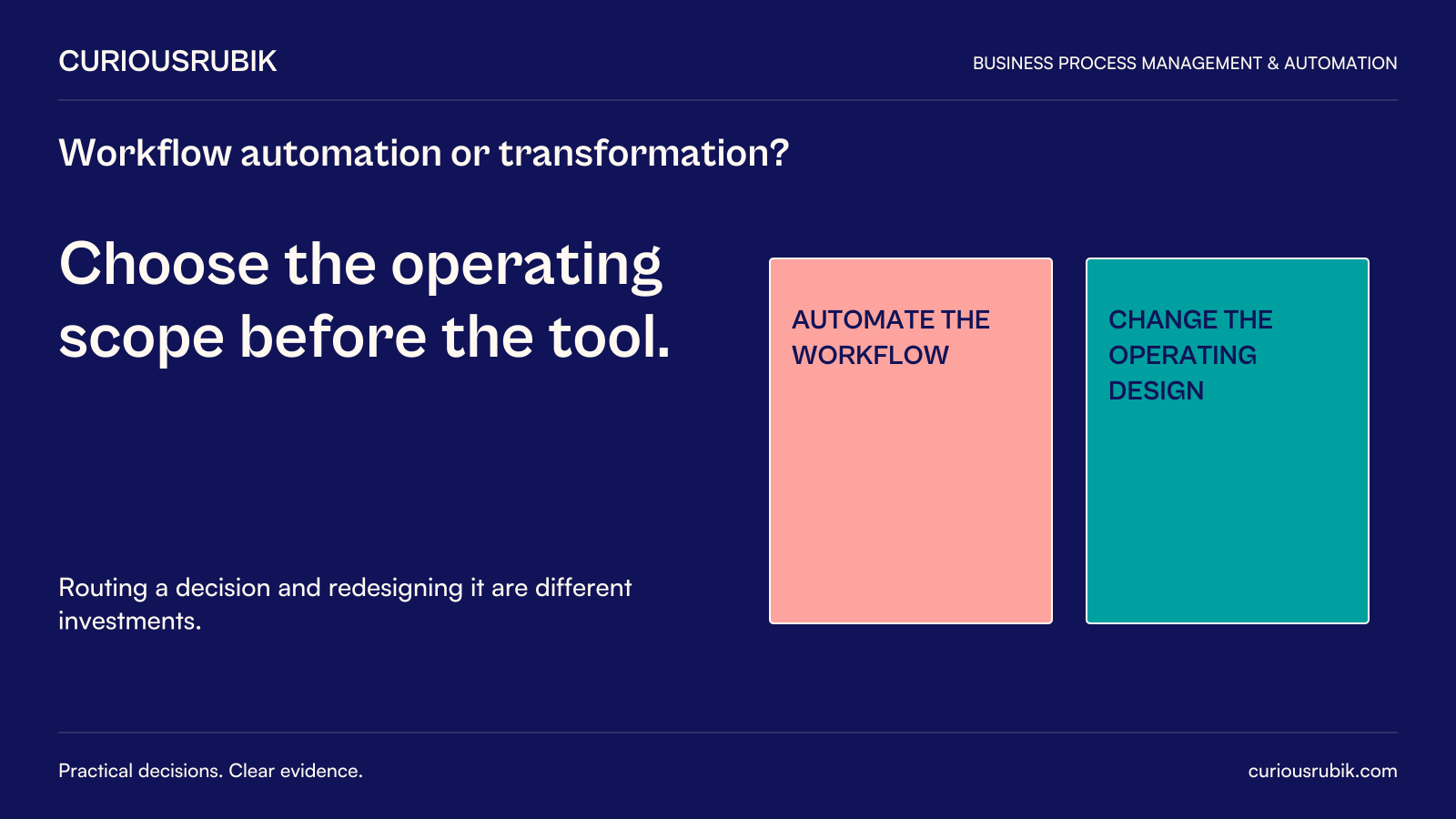
A digital form can replace an email request, route it to the right people, and record every approval. That can be a worthwhile improvement. It does not necessarily change why the request exists, when the decision is made, or who is …
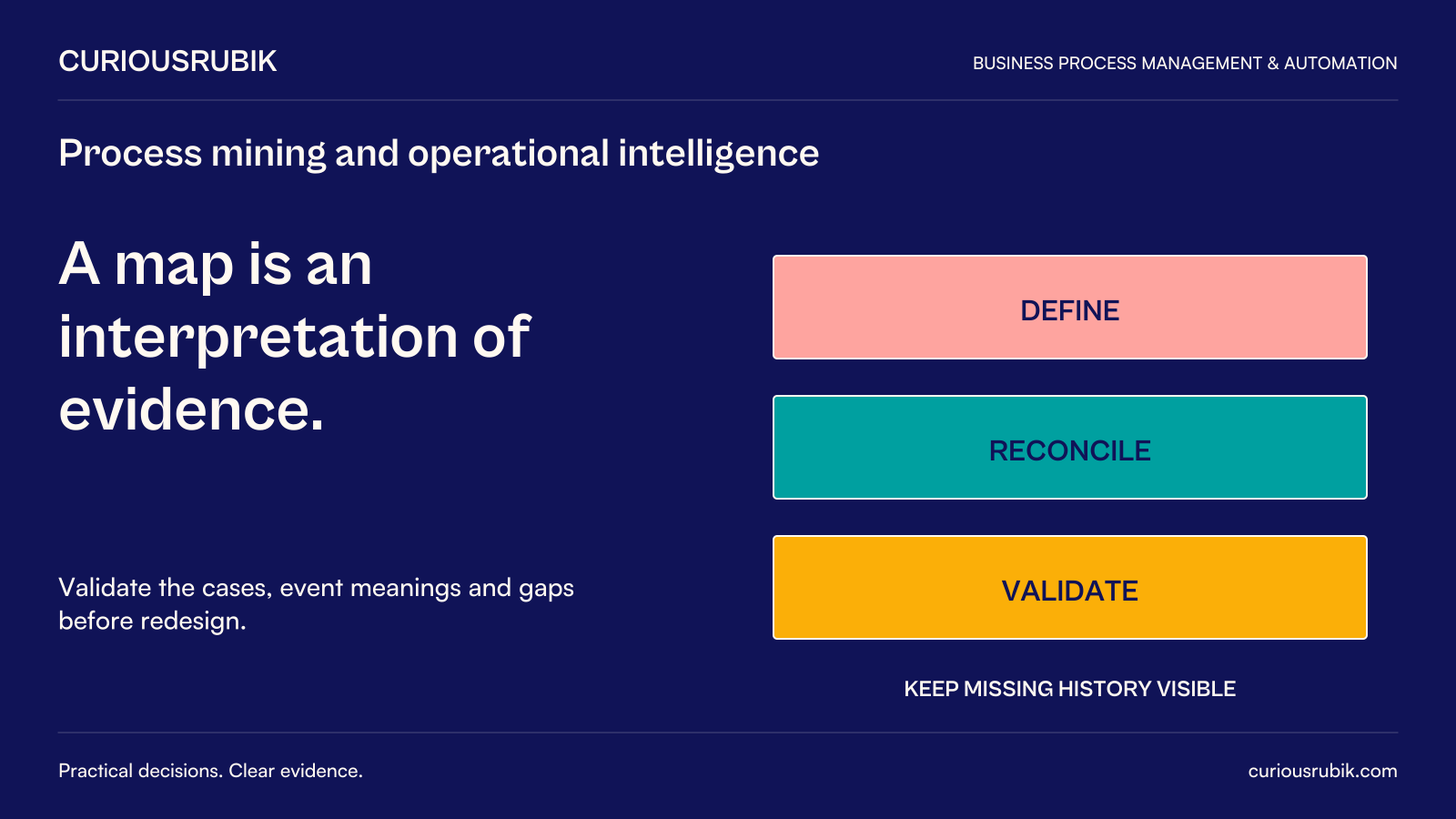
A process map says every purchase request is approved before an order is issued. The system history shows a more complicated pattern: some requests return for clarification, some approvals are recorded after the order, and some cases …
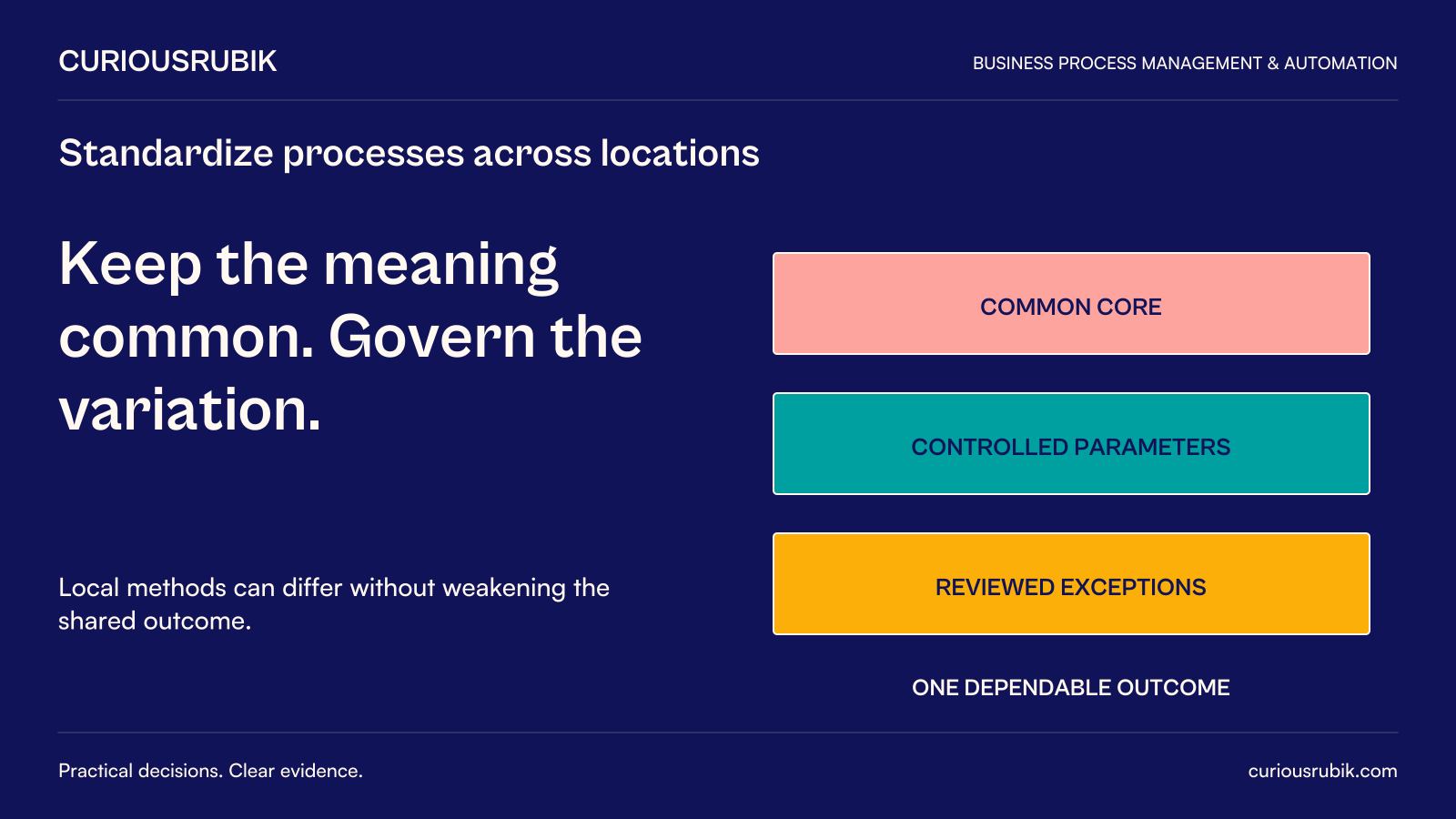
A company can add locations faster than it can develop a shared understanding of how work should be done. Each new branch adapts the process to local conditions. Some adaptations are necessary. Others reflect habit, incomplete training, or …
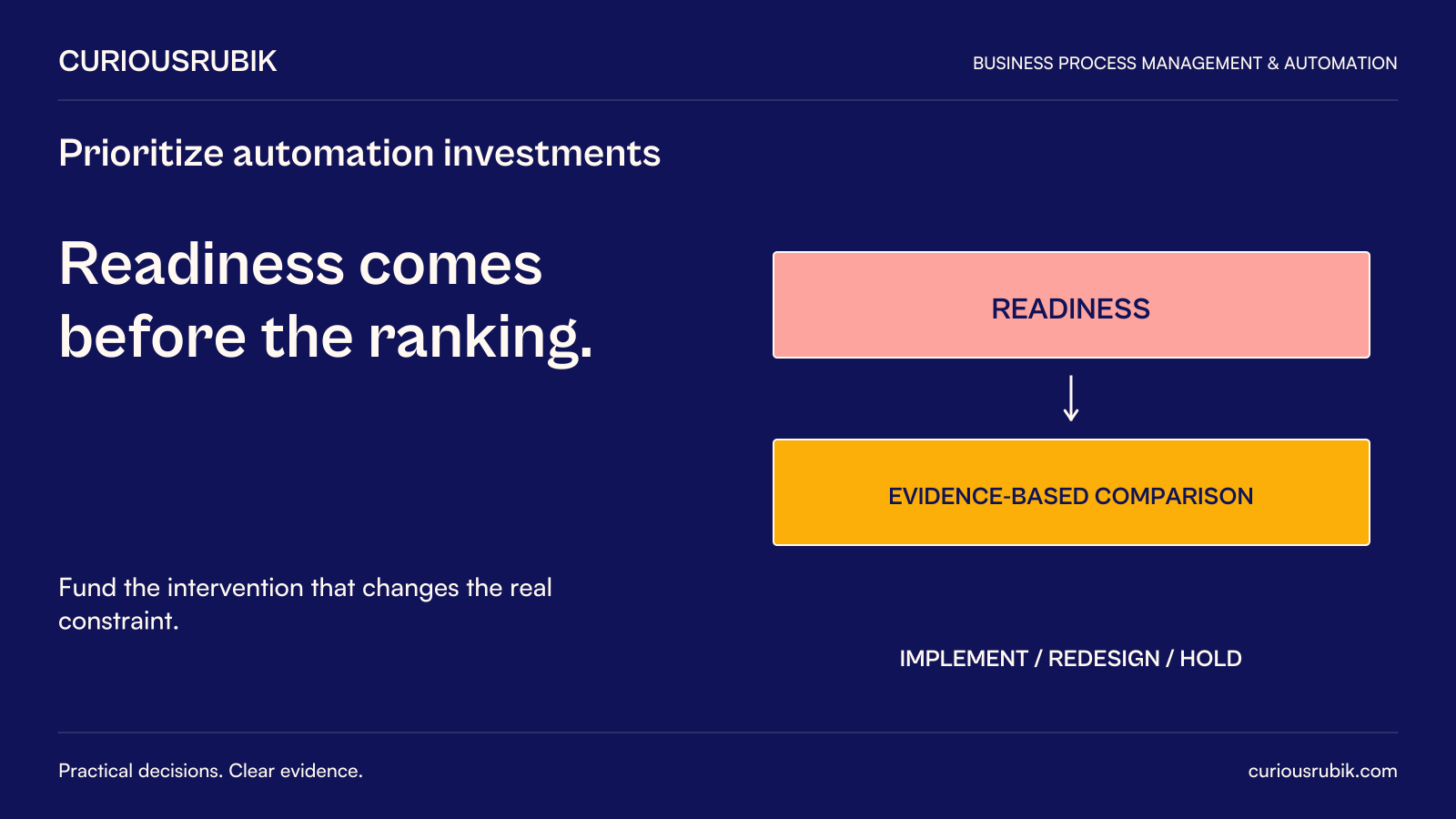
The easiest process to automate is not necessarily the process that deserves the next investment. A repetitive reporting task may offer a quick demonstration while a less visible reconciliation problem delays customer delivery. A …