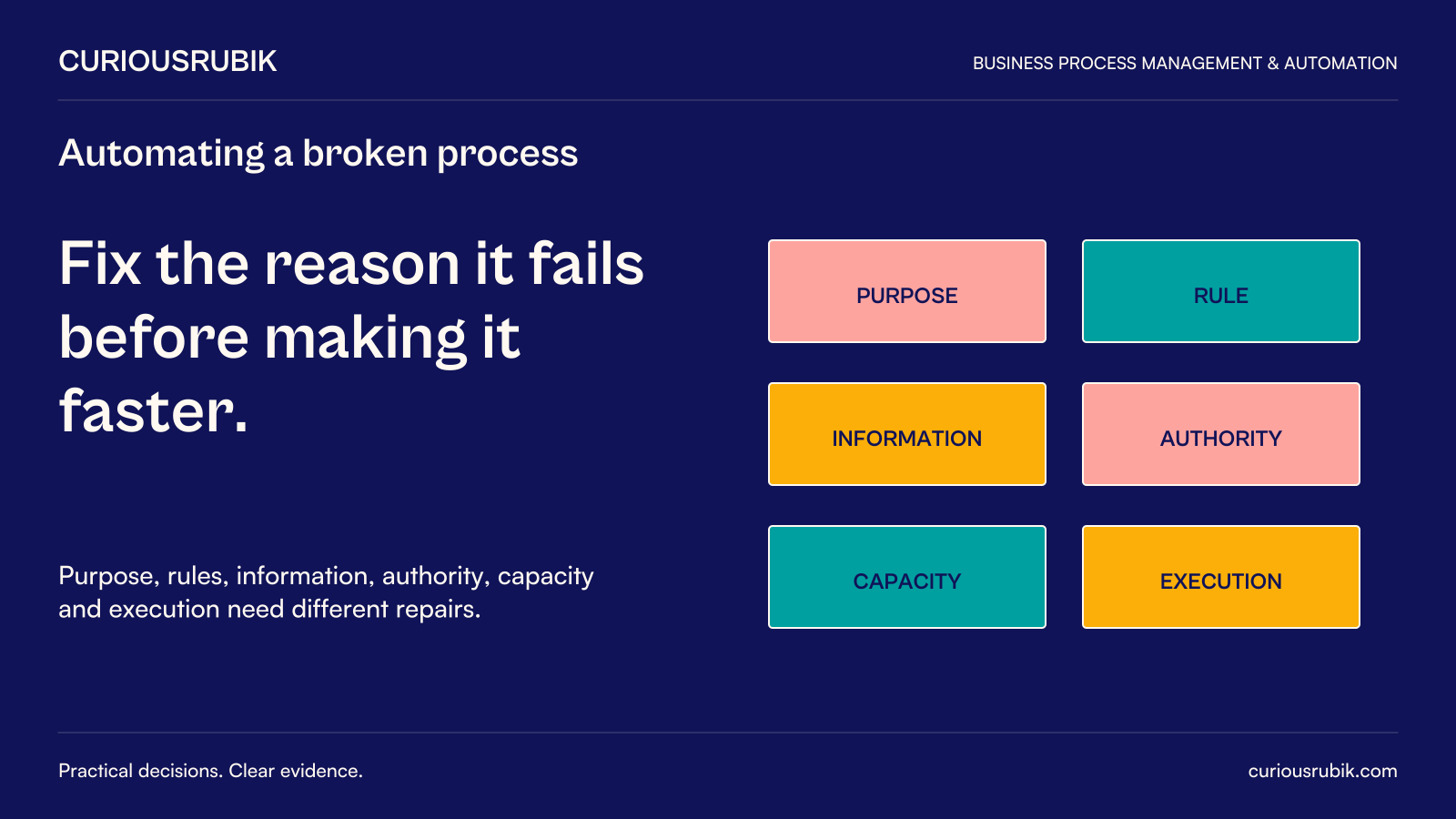
A return request waits in three queues before anybody decides whether the goods should come back. Automating the routing can make the request move faster through each queue while preserving the reason it was delayed: nobody has authority …
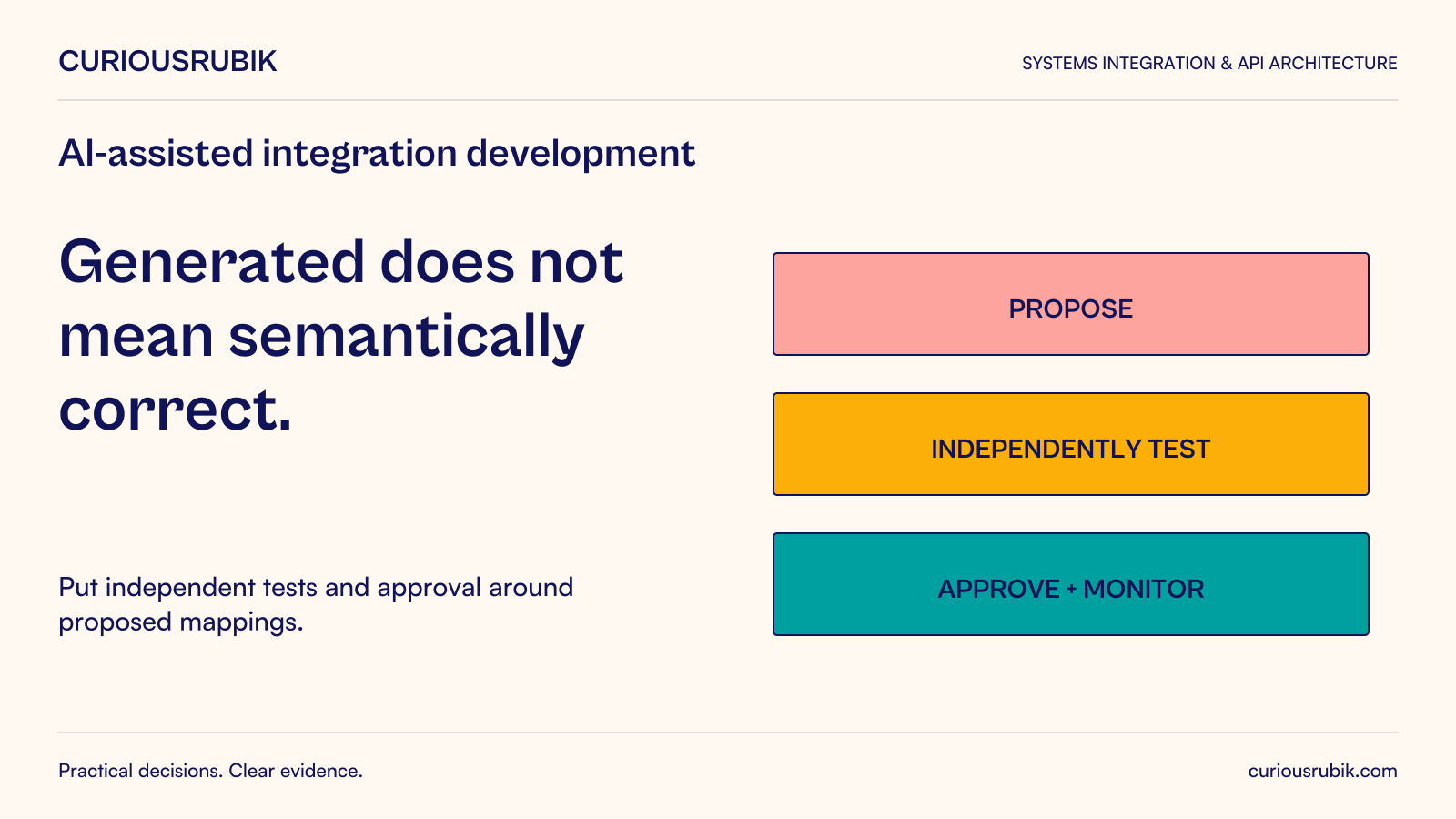
AI can make integration code easier to produce while making an incorrect interpretation easier to hide. A generated mapping may compile, accept valid messages and populate every required field, yet still confuse a unit price with a line …
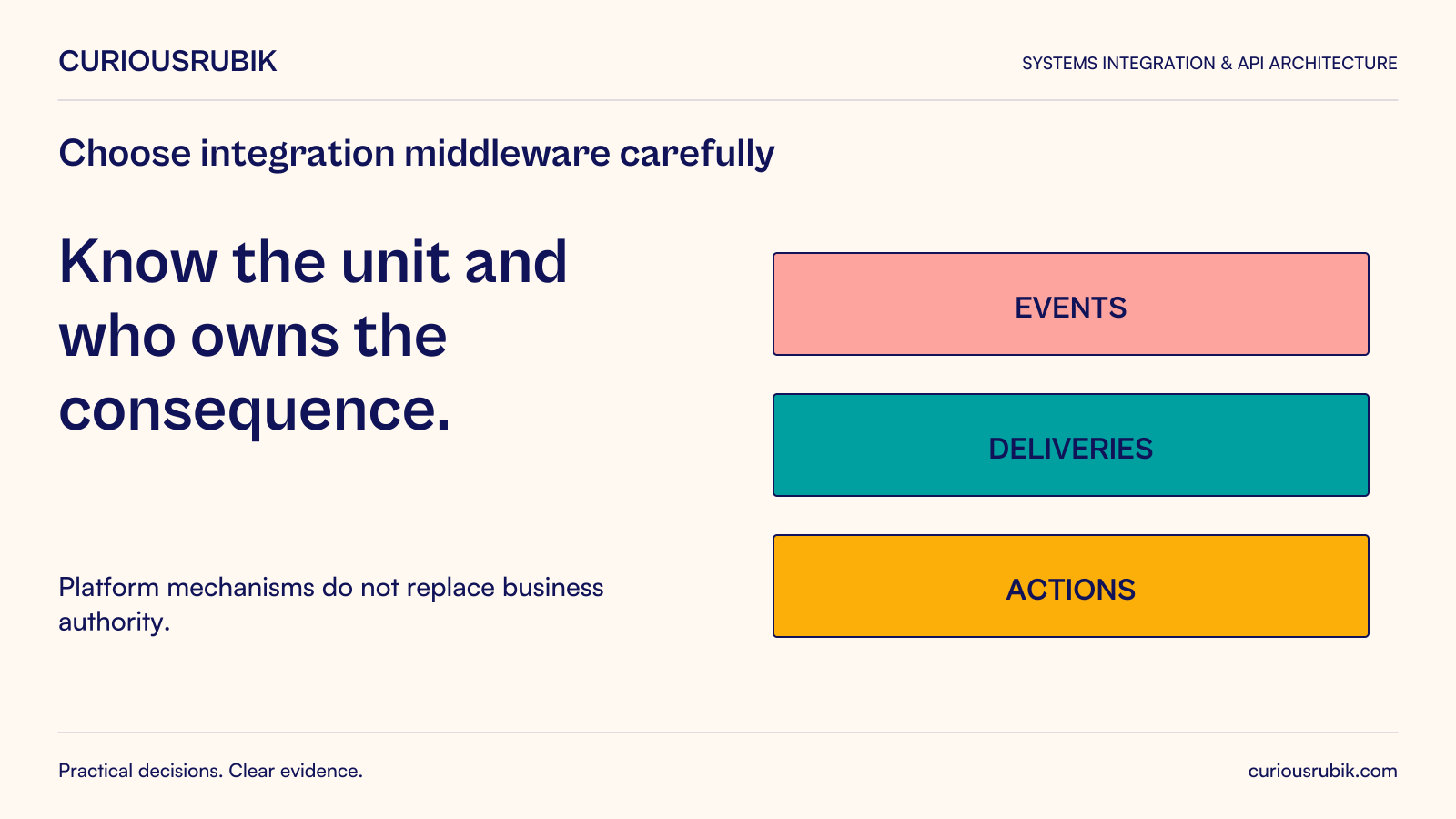
Middleware is justified when it provides shared integration capabilities more reliably or economically than the alternatives, without obscuring business ownership. It becomes unnecessary complexity when the organization buys a broad …
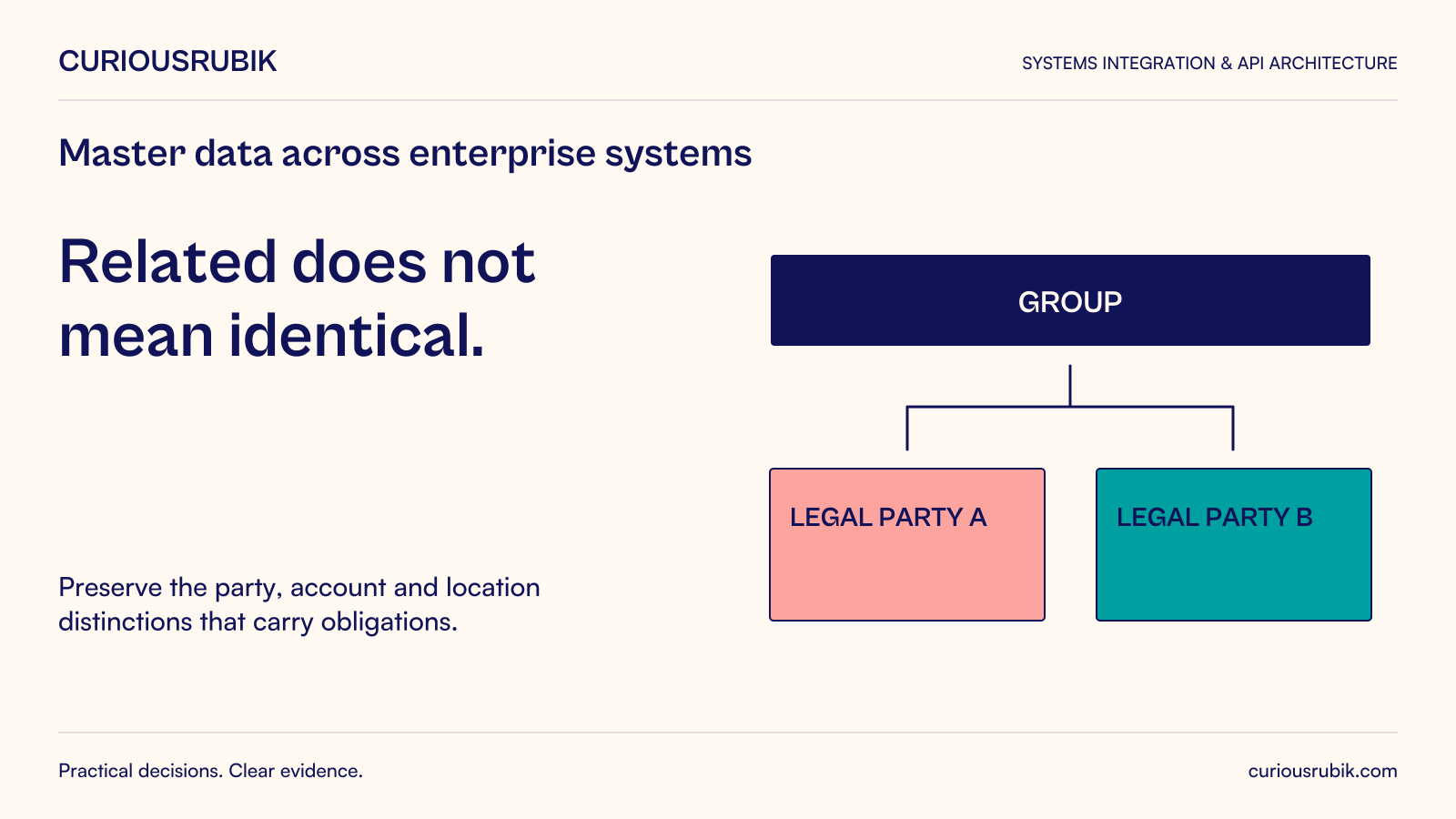
Master data management should establish who may define and change a shared business fact, how other systems identify it, and how disagreements are resolved. A central record is useful only when those decisions are explicit. Copying …
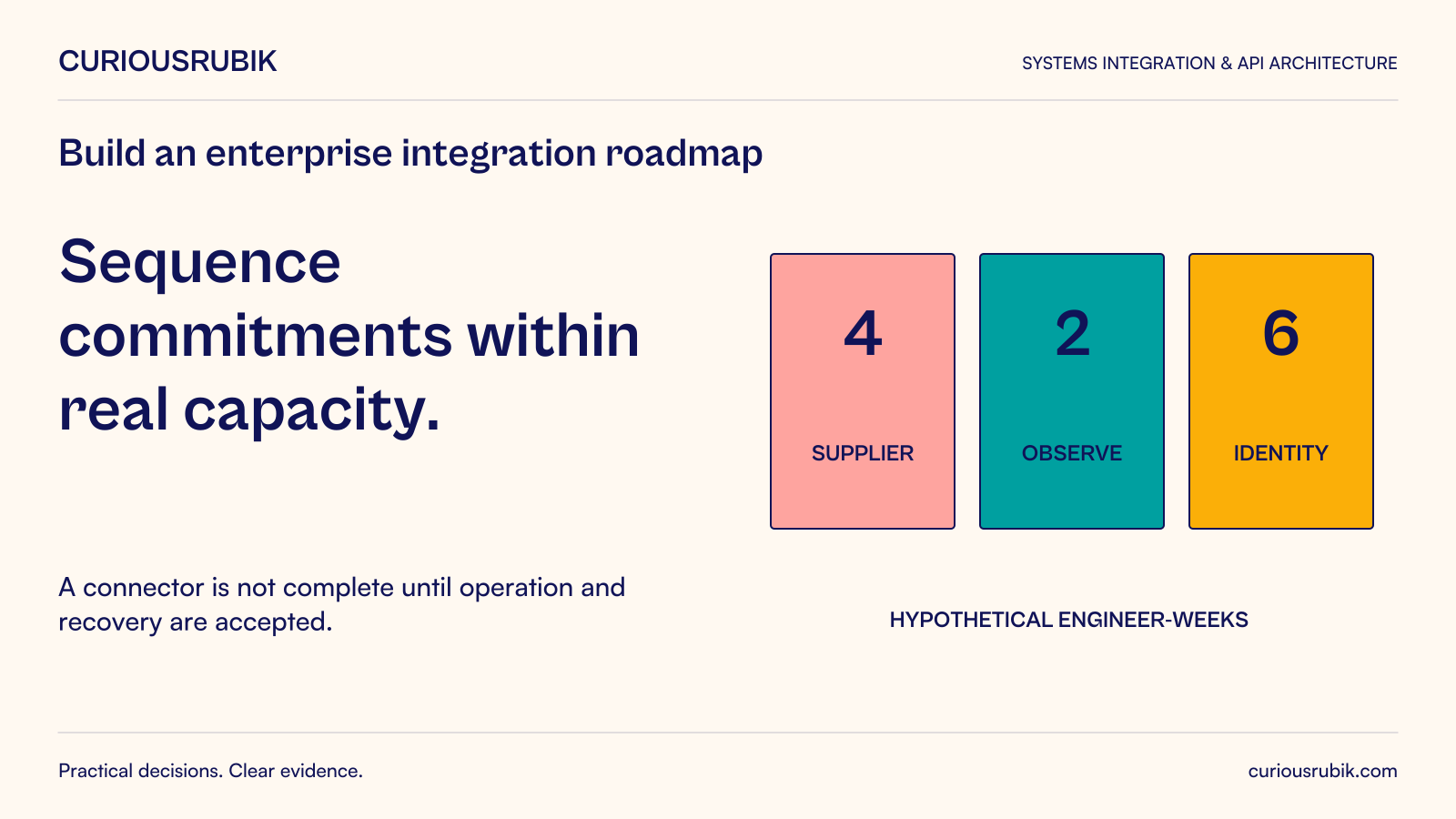
An integration roadmap should sequence improvements to business flows, shared contracts, and operating capabilities under a real capacity constraint. A list of connectors to build is insufficient because it hides prerequisites, transition …
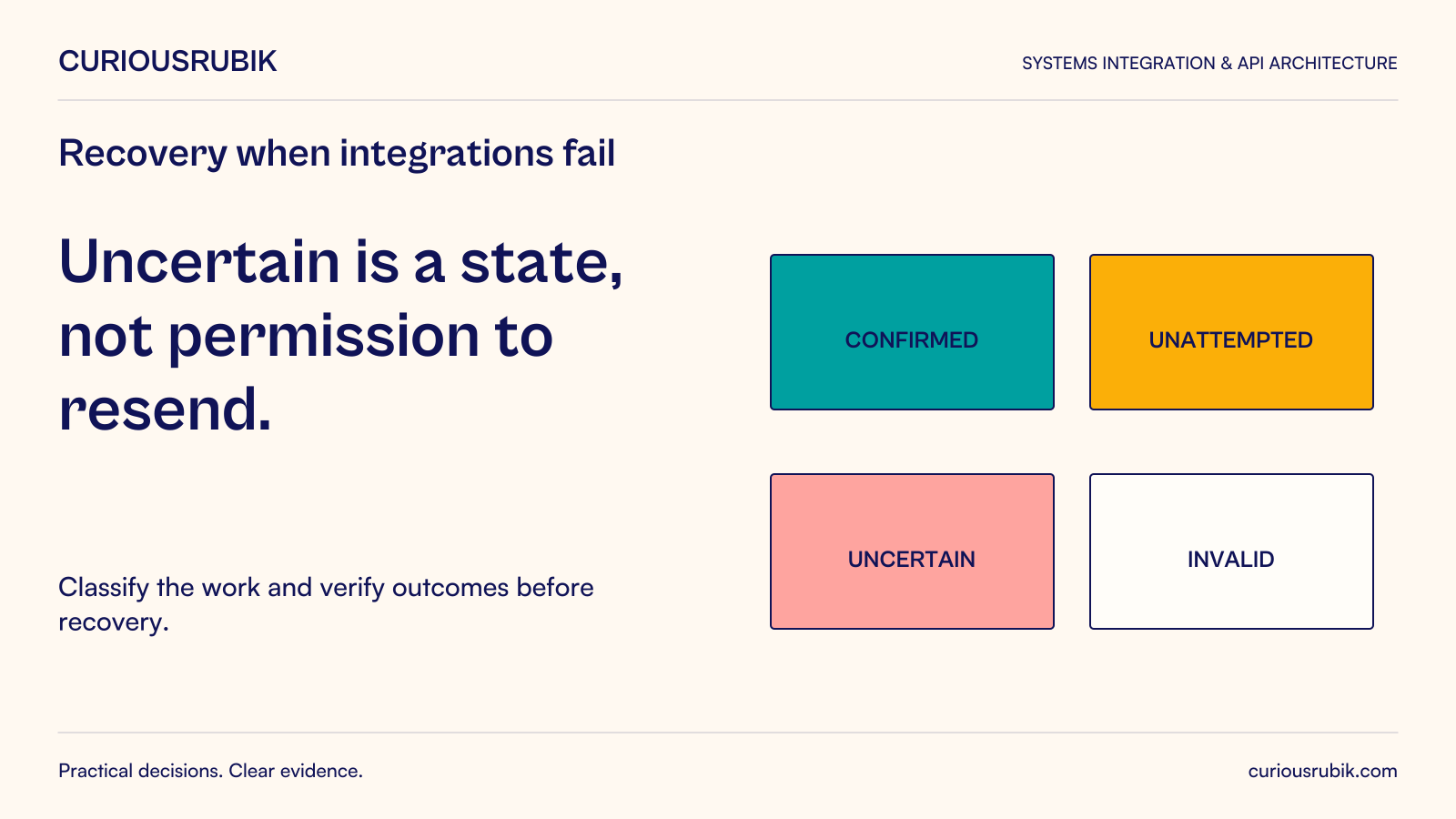
A recovery design should answer what happened before deciding what to retry. After a timeout or crash, some operations may be complete, some may be untouched, and others may have an uncertain outcome. Treating all failed messages as …
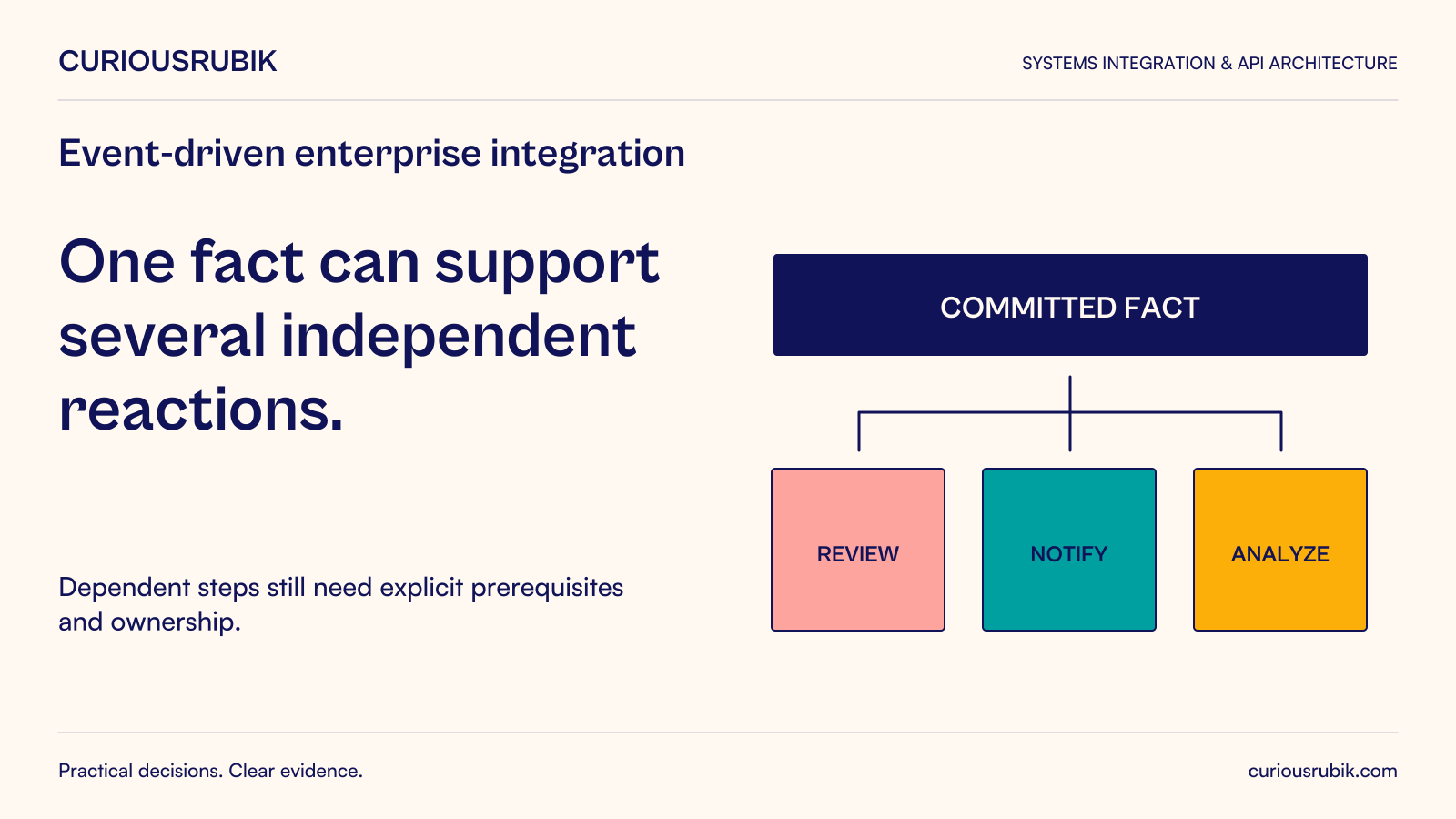
Event-driven architecture is worth considering when several independently owned processes need to react to the same business fact without forcing the originating process to wait for all of them. Its value can come from separating release …
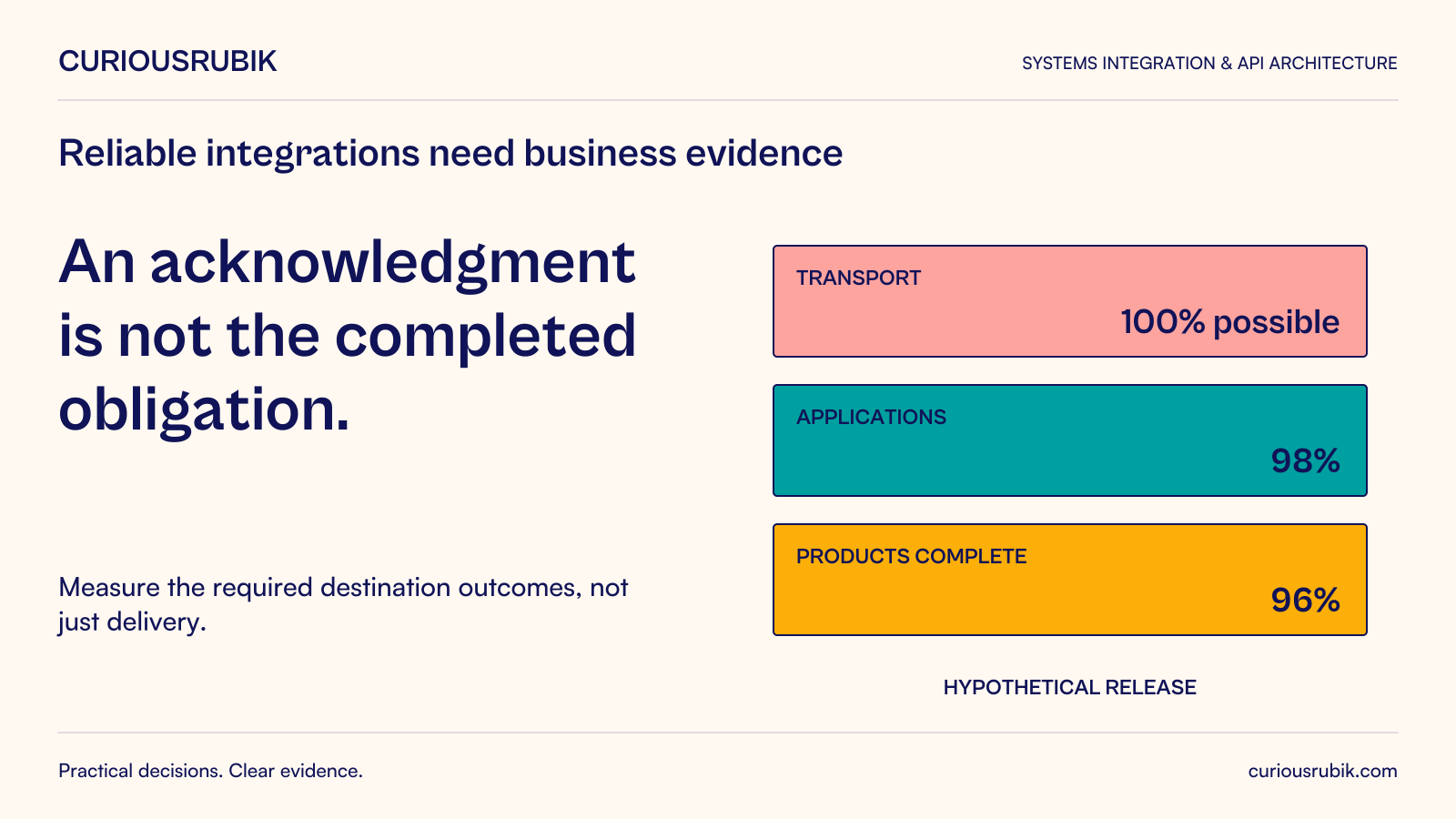
A reliable integration must establish that the intended business effect occurred, not merely that a message was sent. Transport acknowledgment, consumer processing, and verified destination state are separate milestones. The architecture …
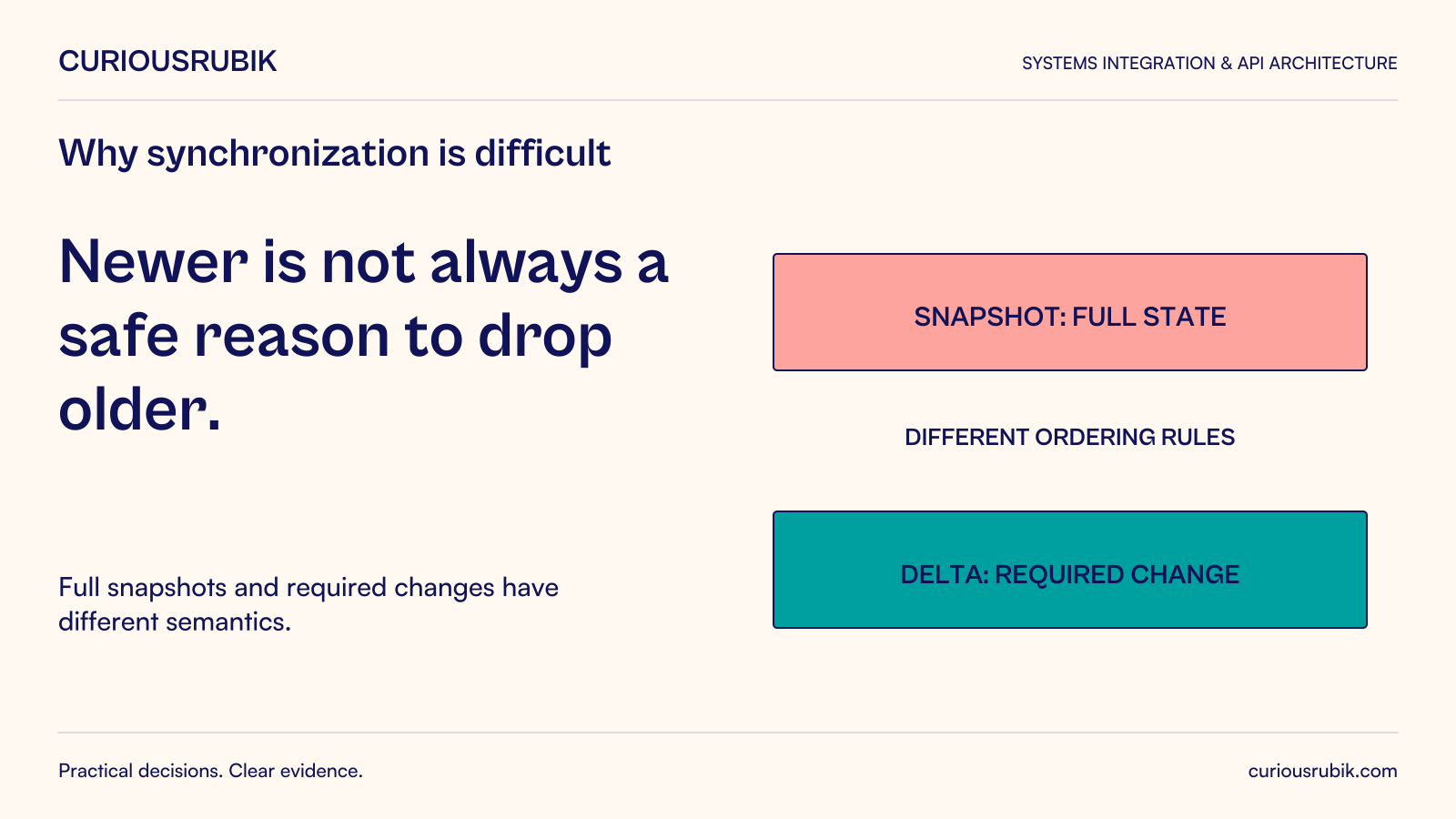
Data synchronization requires agreement about which state is authoritative, how changes are ordered, and how a destination recovers when its copy diverges. Moving records between applications is only the transport step. A connection can …
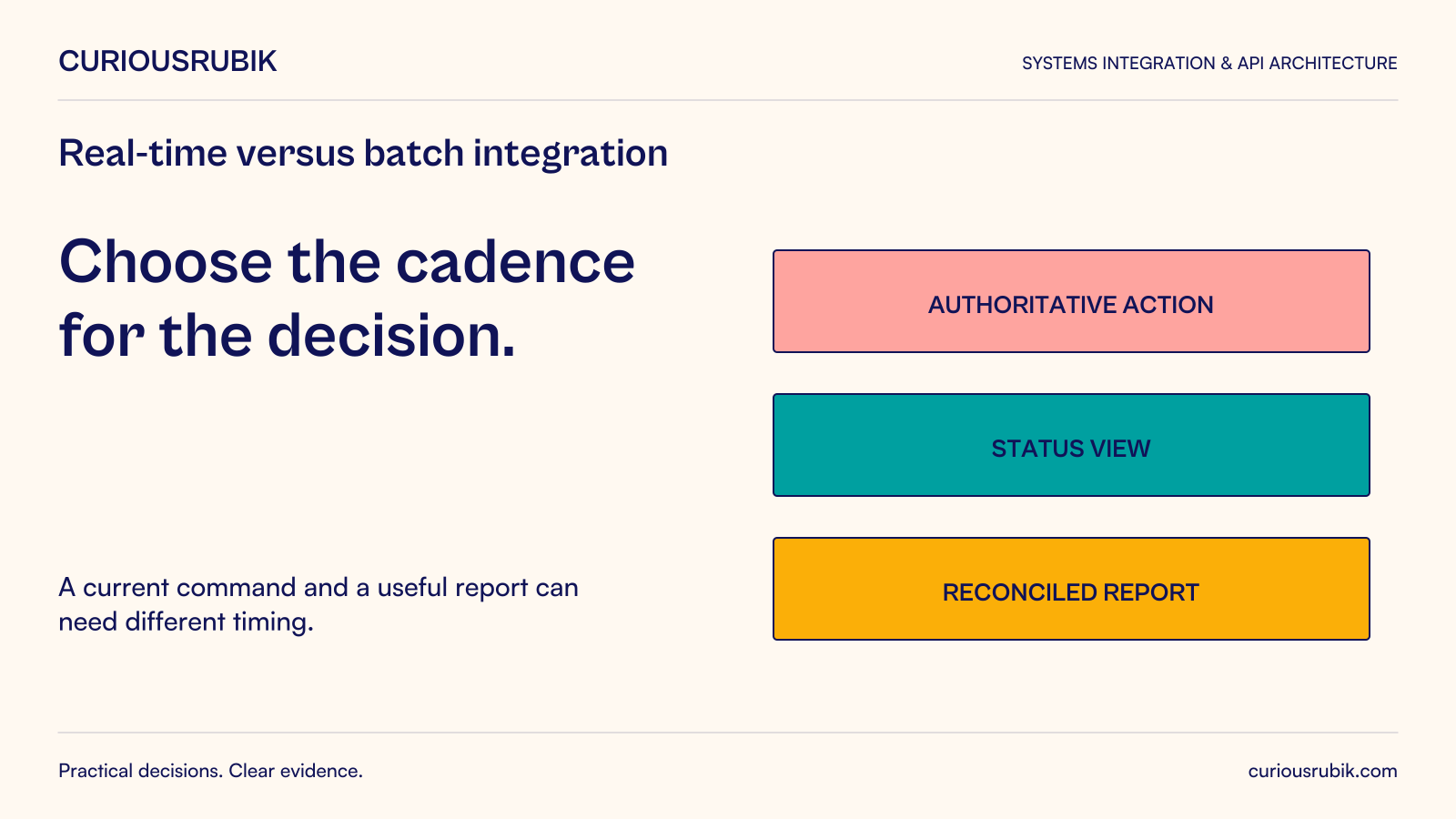
Choose an integration cadence from the latest time at which information remains useful for a specific action. “Real time” is not a sufficient requirement, and batch is not automatically too slow. The architecture should meet an explicit …