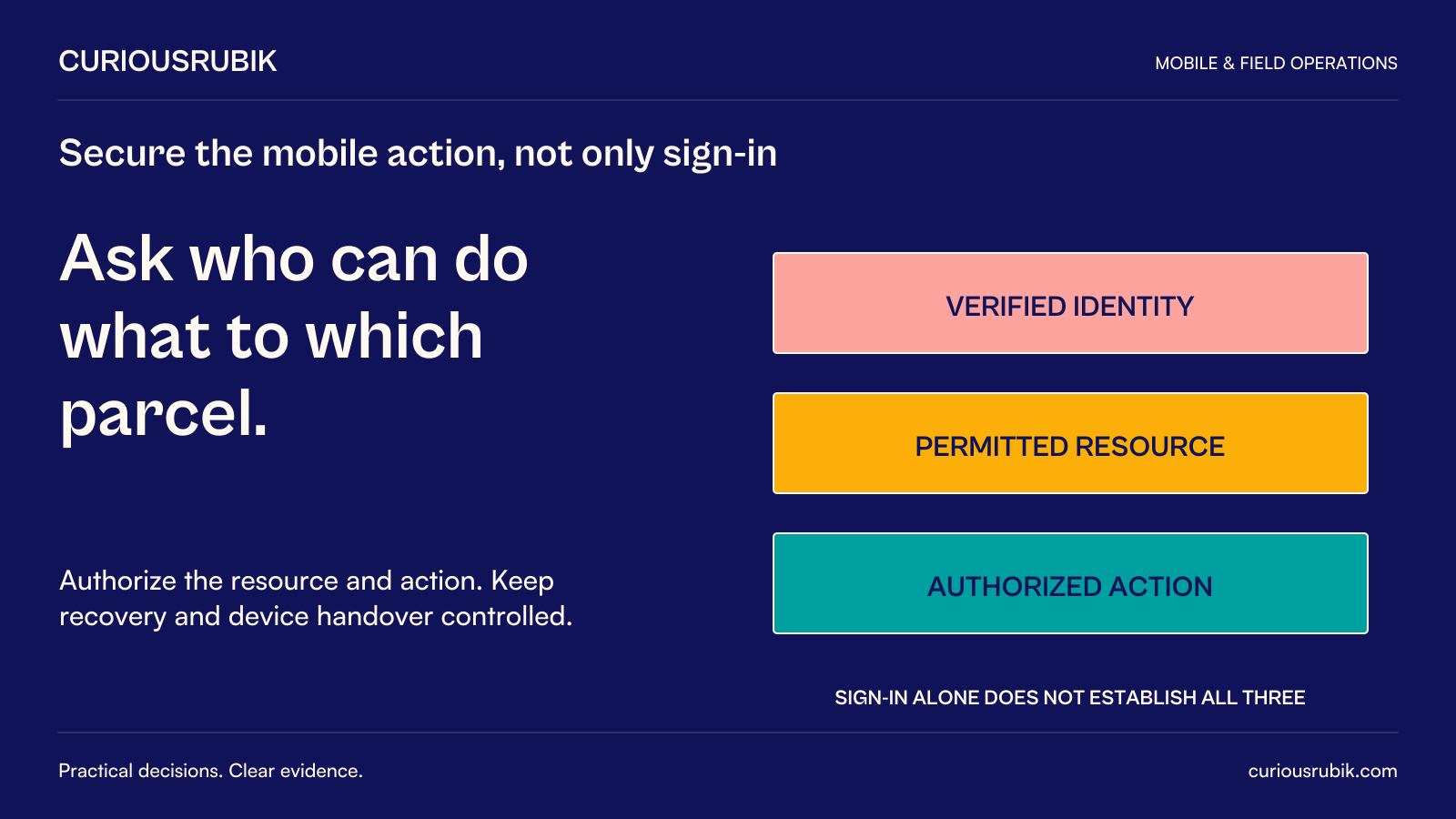
A secure mobile experience combines understandable user actions with controls that remain effective when a device is lost, an account changes, or a client sends an unexpected request. The design must account for who owns the device, which …
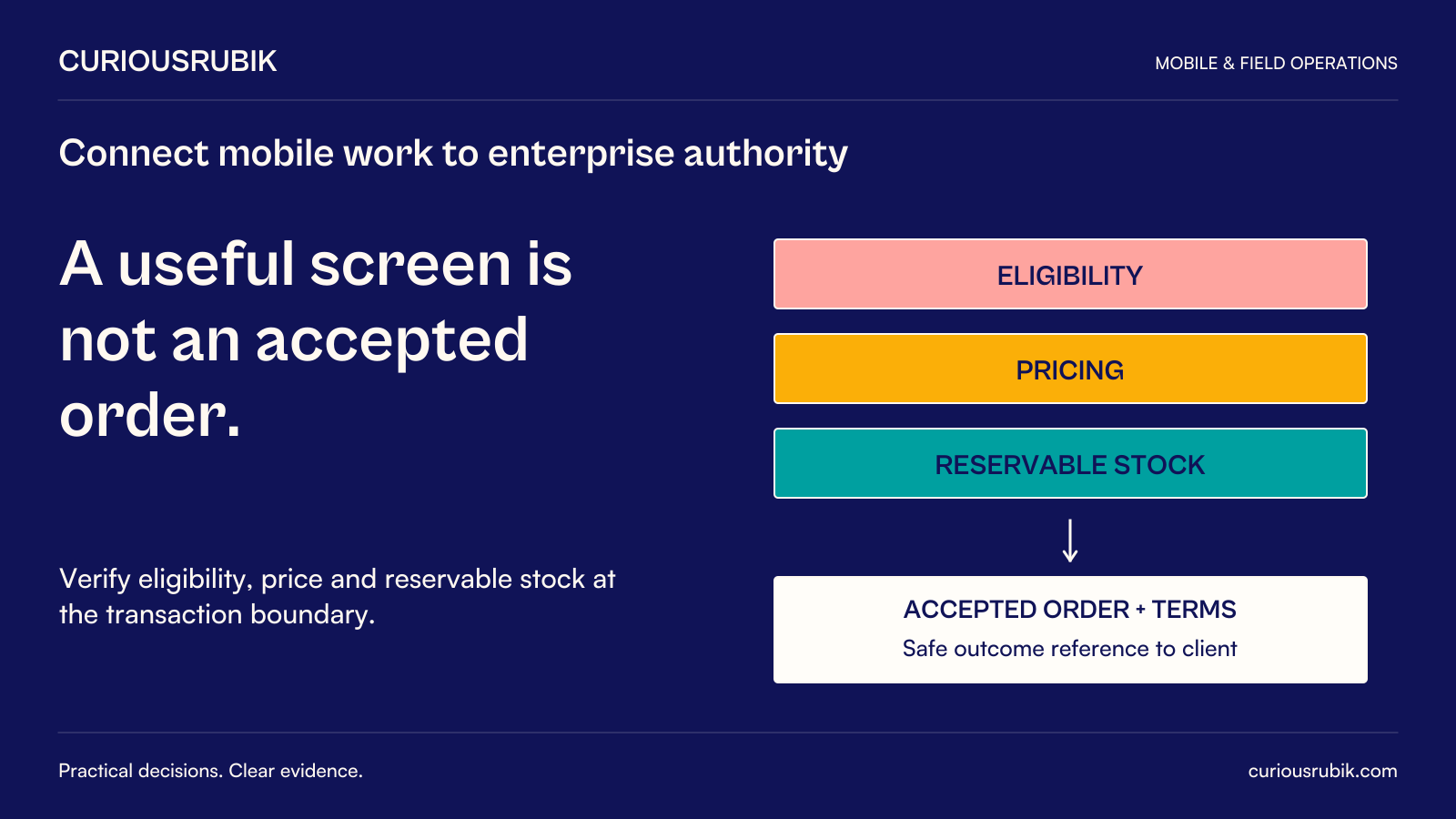
Mobile integration is difficult because a short user interaction can depend on several systems with different identities, business rules, response times, and release cycles. The phone may show one order or service request, while the …
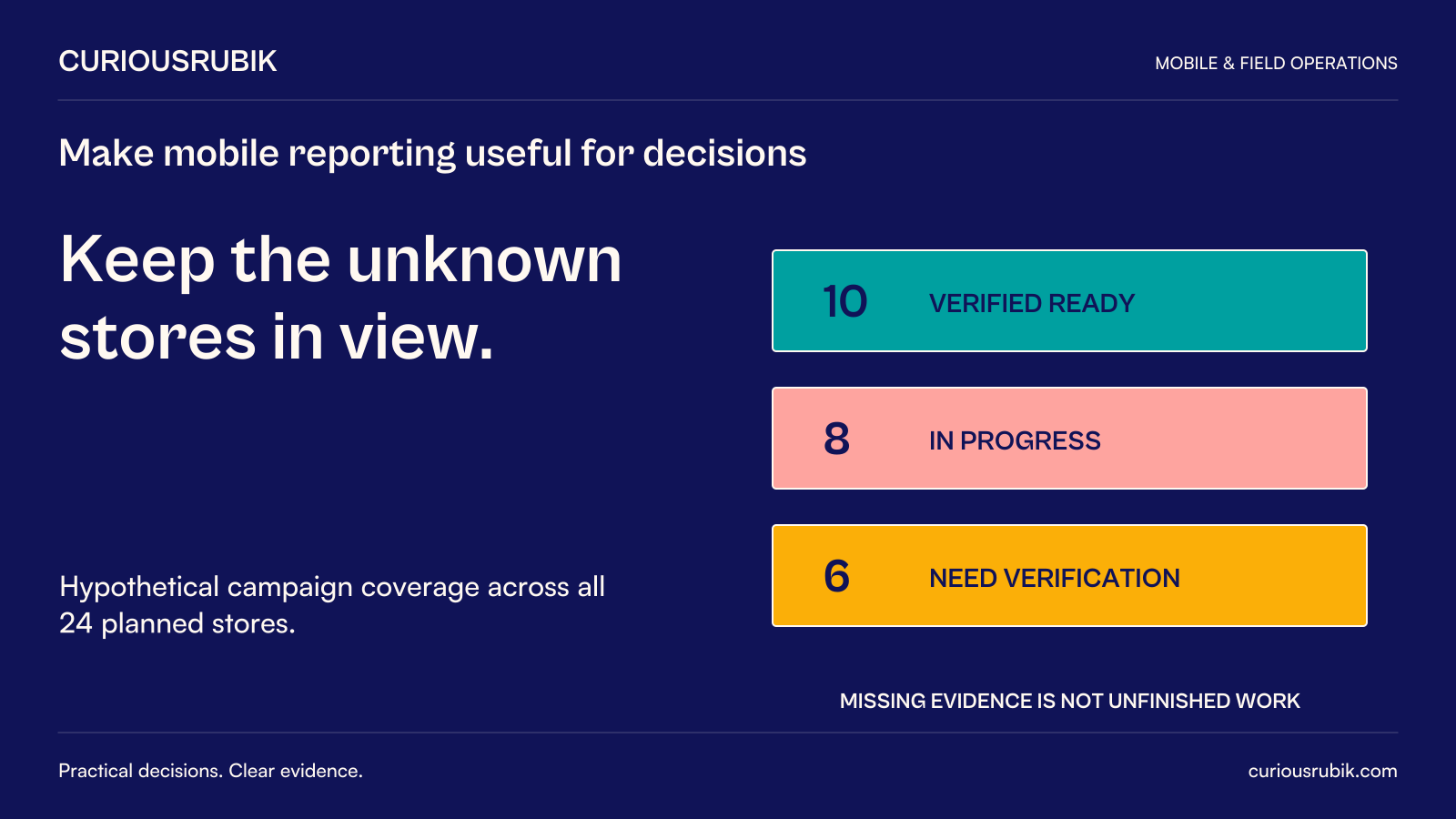
Mobile applications improve operational visibility when they capture trustworthy evidence close to the work and make its age, coverage, and meaning clear to the person deciding what happens next. Faster reporting helps only if the …
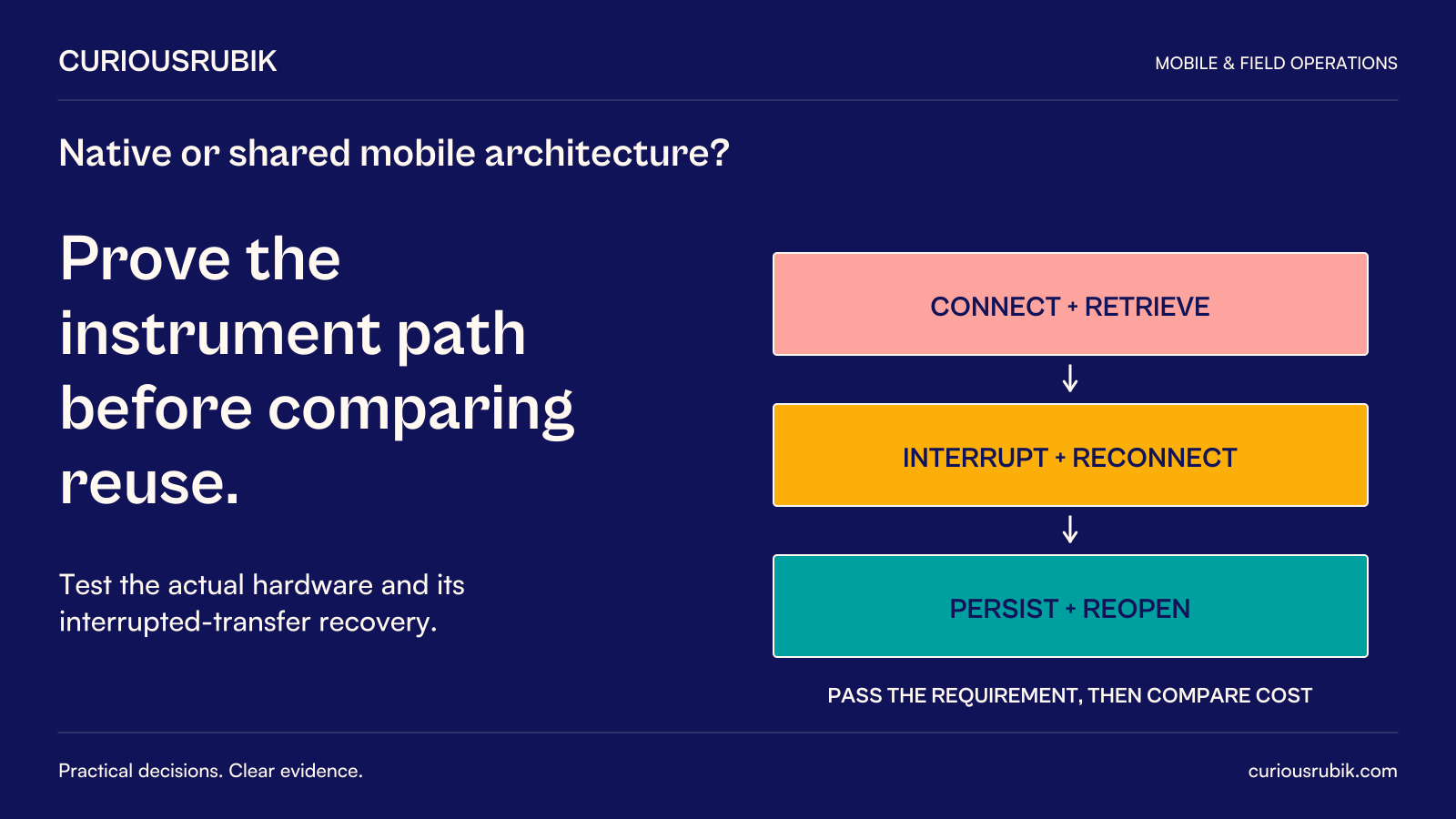
The native versus cross-platform decision should follow the application’s hardest operating requirement. A shared implementation can reduce duplicated work, while platform-specific development can give teams more direct control over …
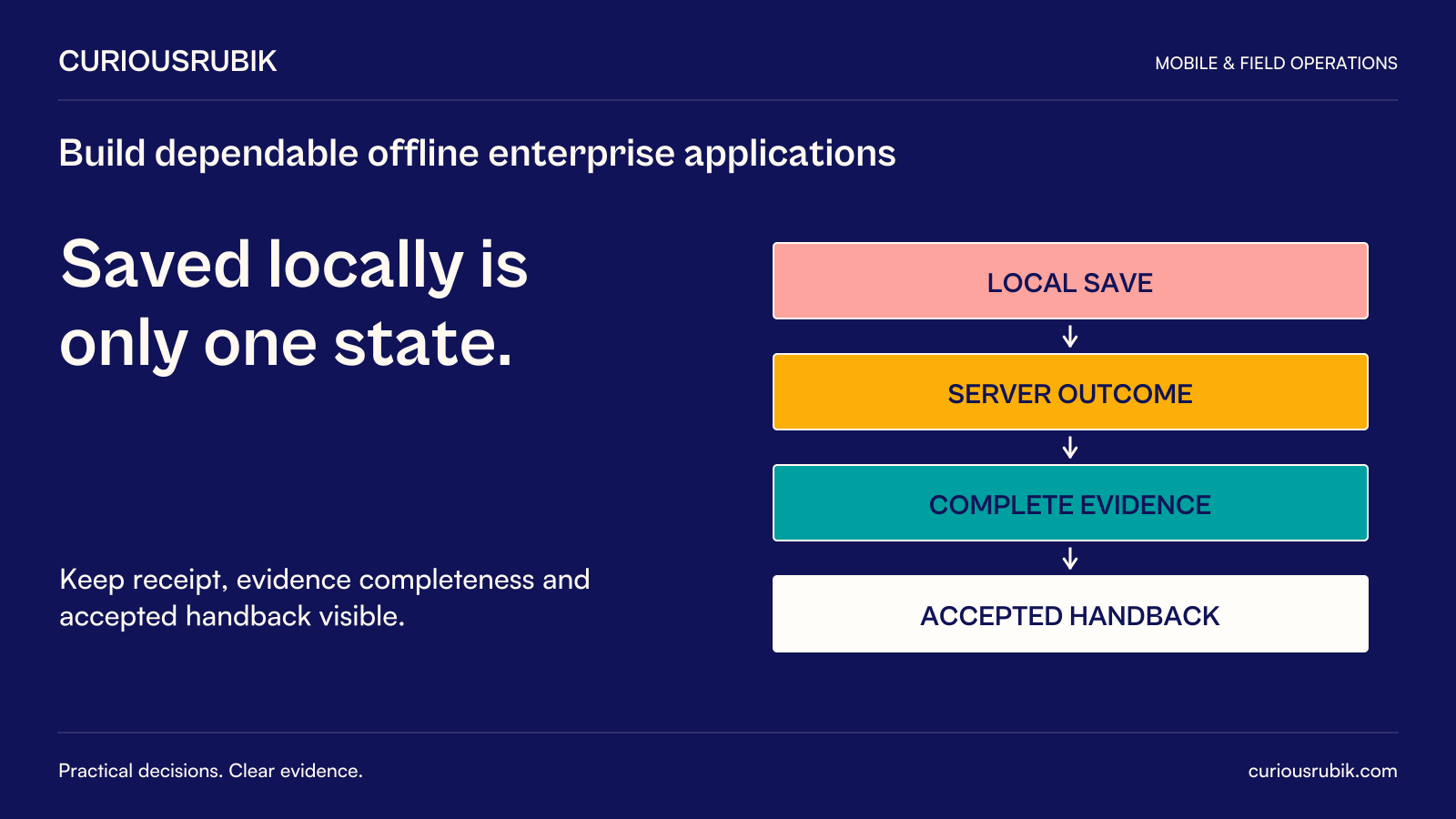
Offline-first applications matter when a loss of connectivity must not destroy work or leave employees guessing what the organization has received. Their defining design choice is to make permitted local work dependable, then reconcile it …
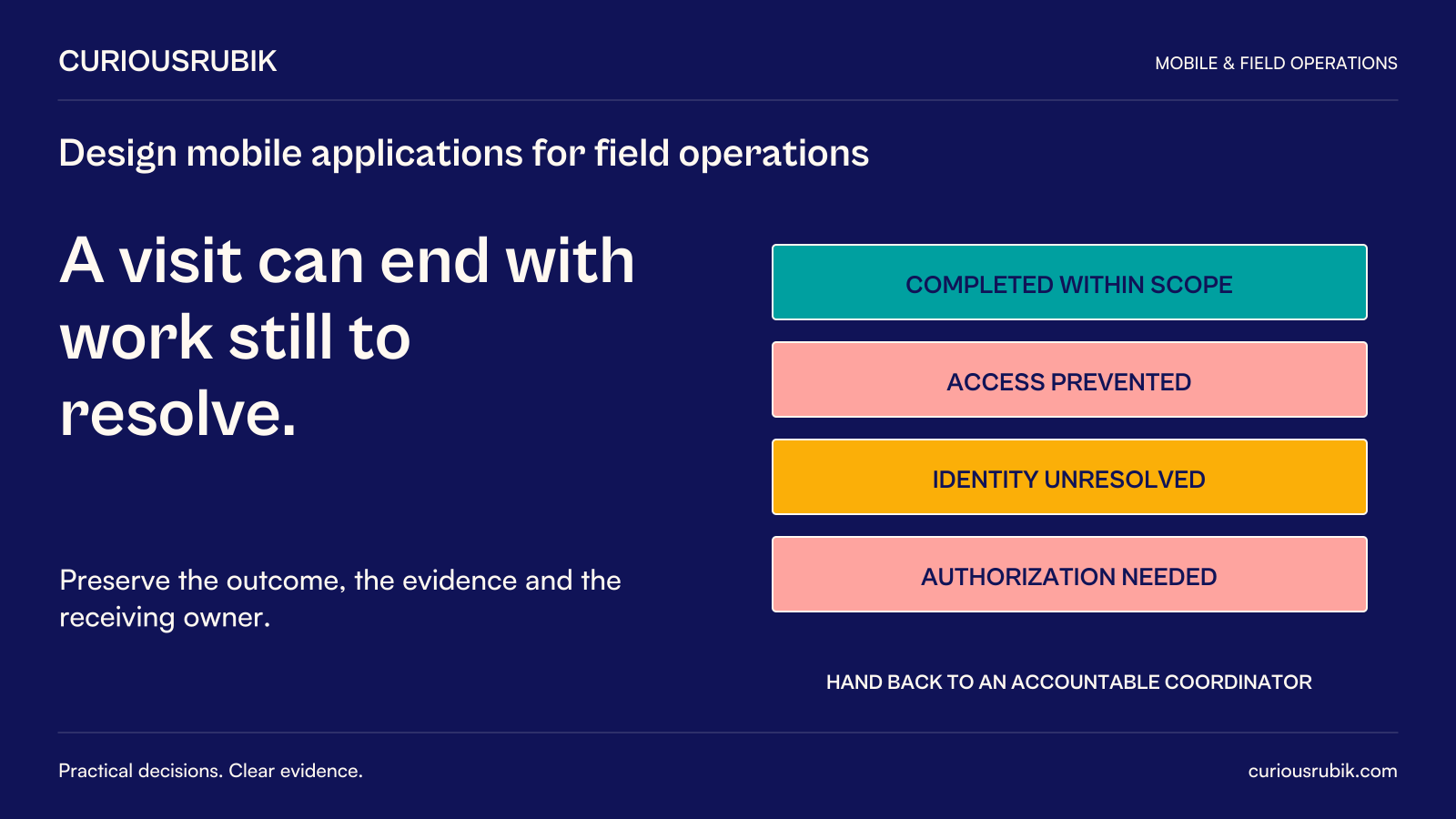
A field application should help a worker arrive prepared, understand the assignment, record what happened, and leave the next owner with a usable result. Designing only the on-site form misses much of that responsibility. A technically …
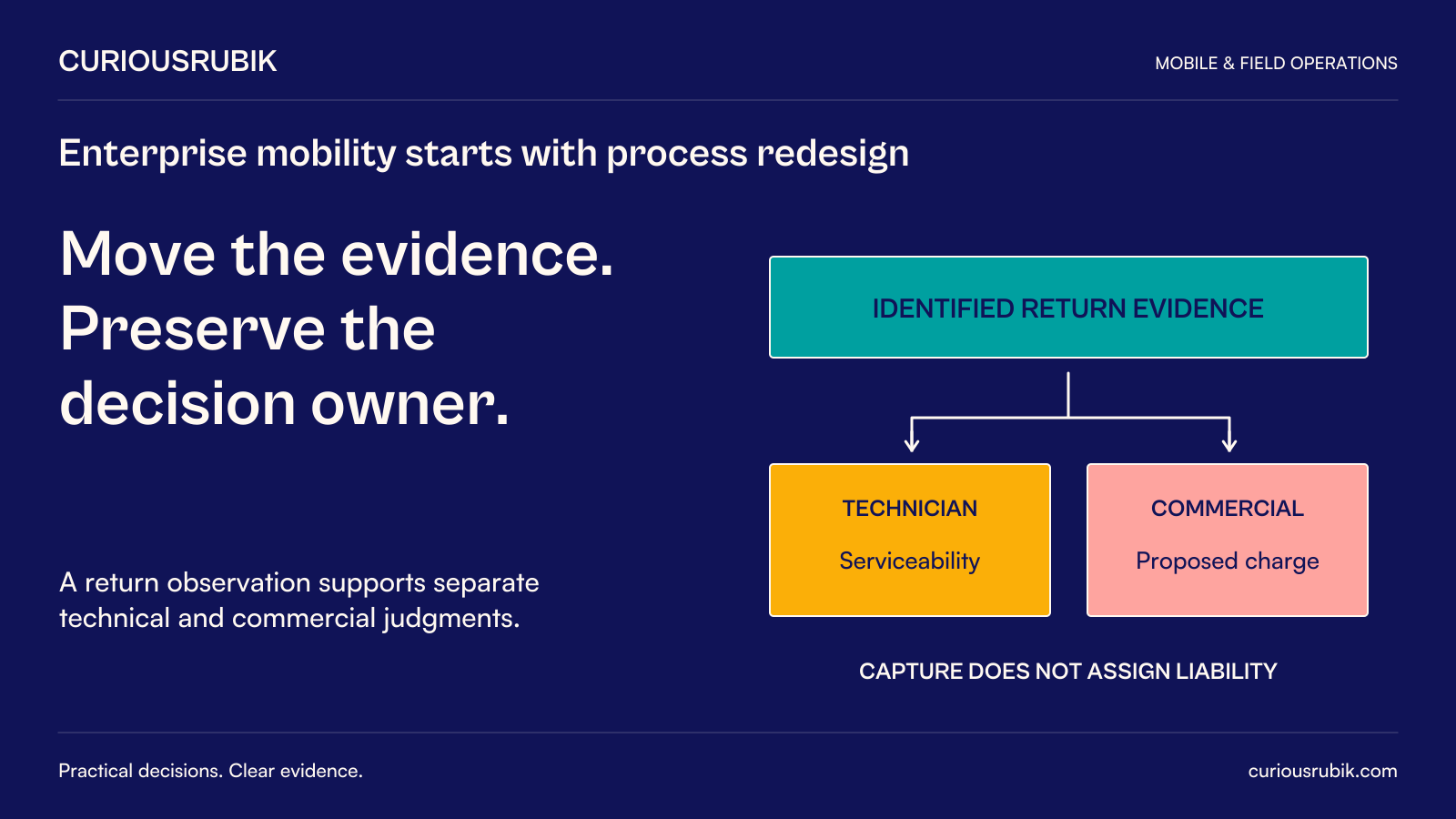
A mobile application changes an operation when it moves a useful decision closer to the place where work happens. Resizing an existing form can make information easier to reach, but it leaves the original delays, duplicate entry, and …
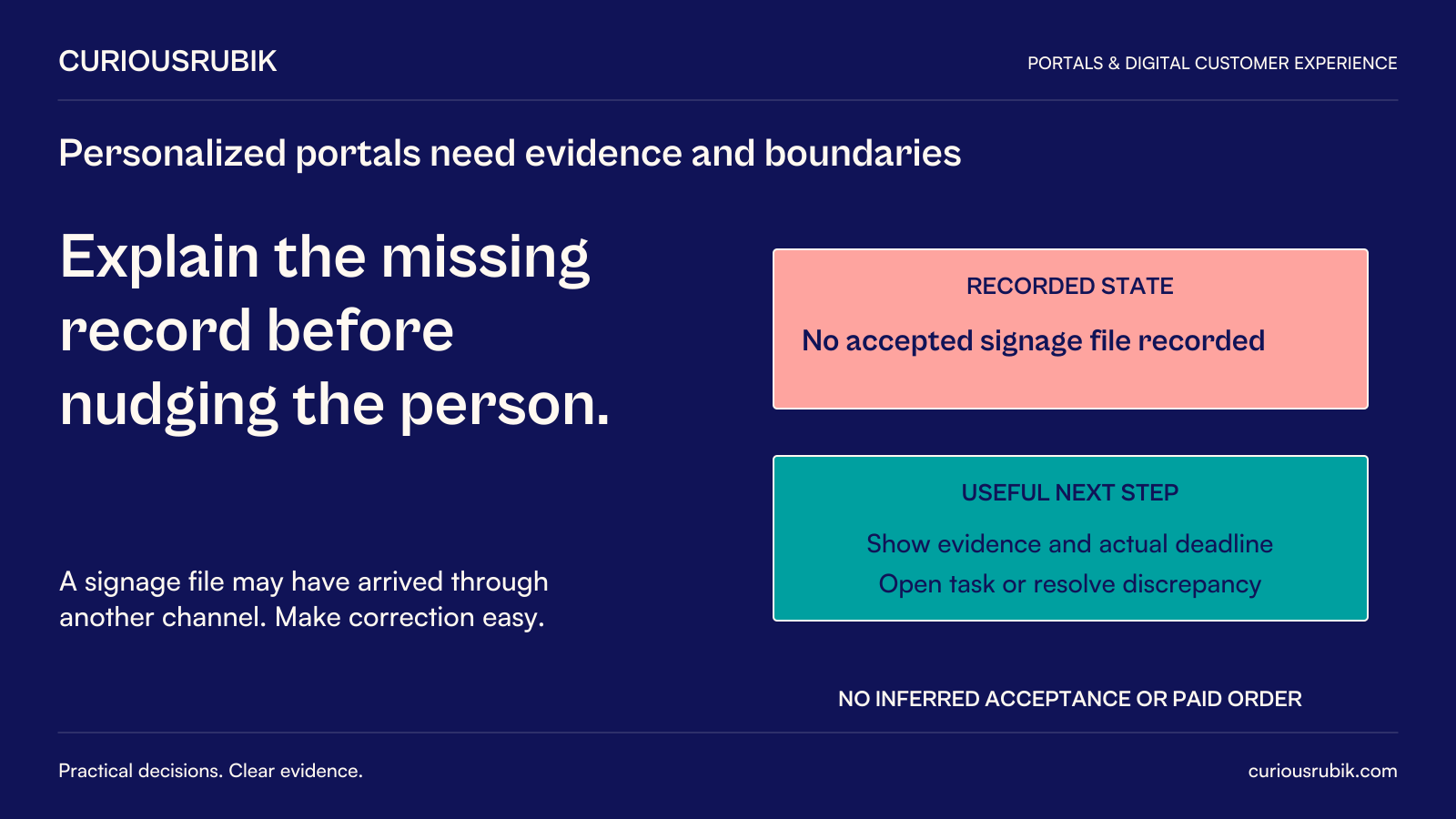
An enterprise portal can become more useful by helping a person identify the next relevant task rather than asking them to search a large menu. Personalization can focus the view. Intelligence can help interpret information. Proactive …
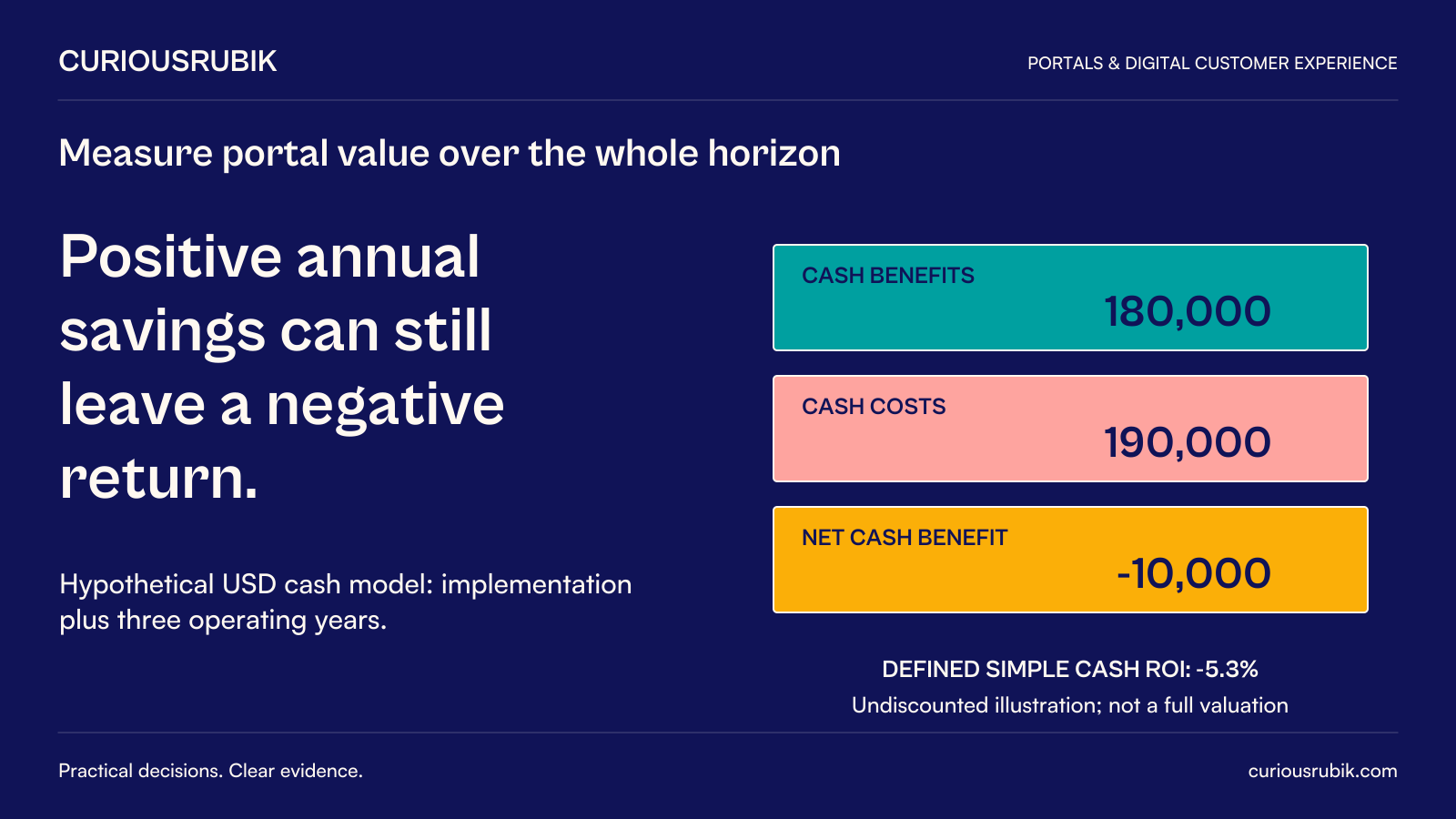
A portal business case can look attractive when every online task is counted as a saved service contact. The estimate becomes less convincing when some tasks still need help, the portal creates new support work and the supposedly avoided …
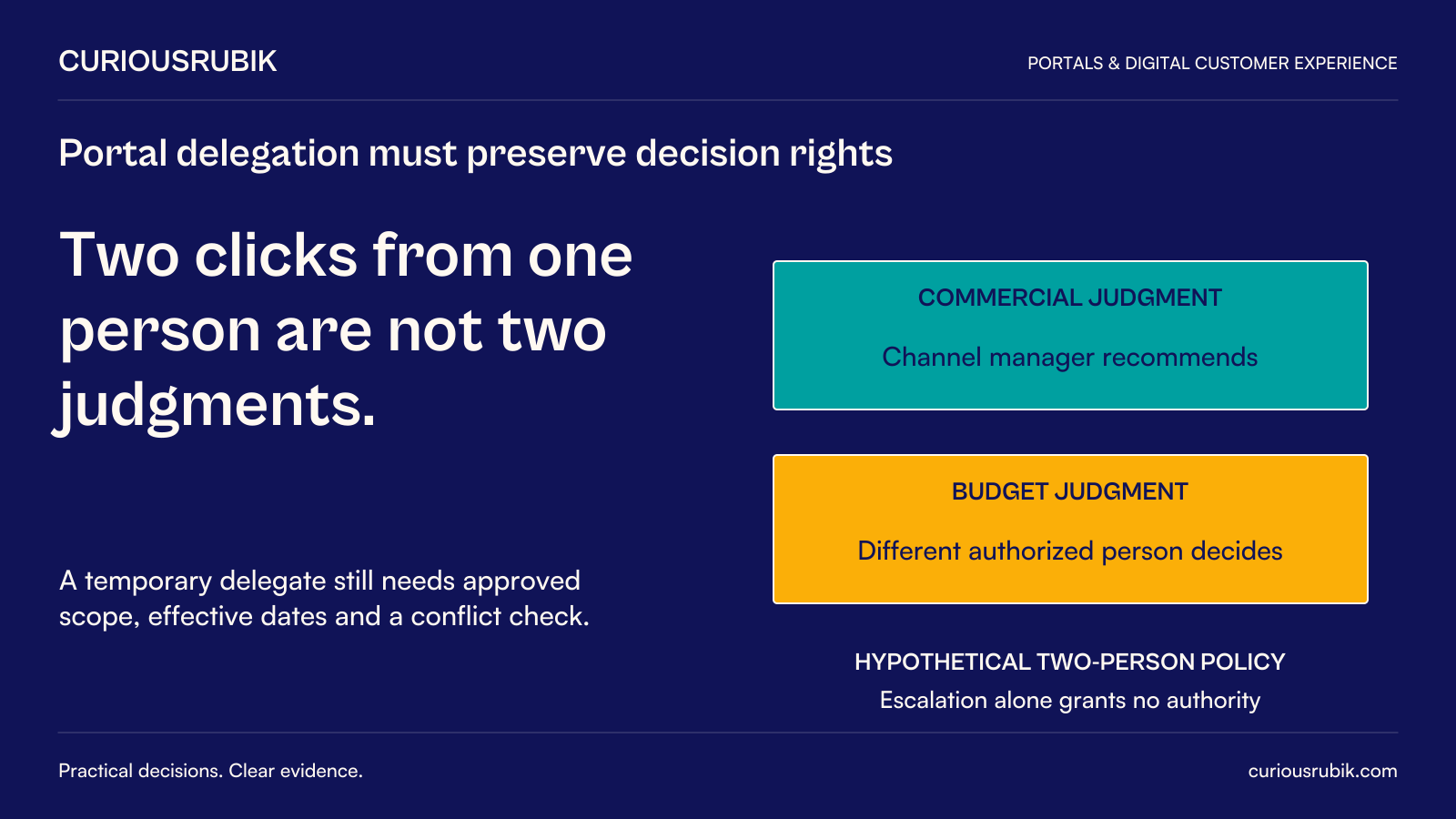
A portal role tells the application something about a person’s responsibilities. It does not automatically establish that the person may approve every request visible to them. Approval can depend on the organization represented, the type …