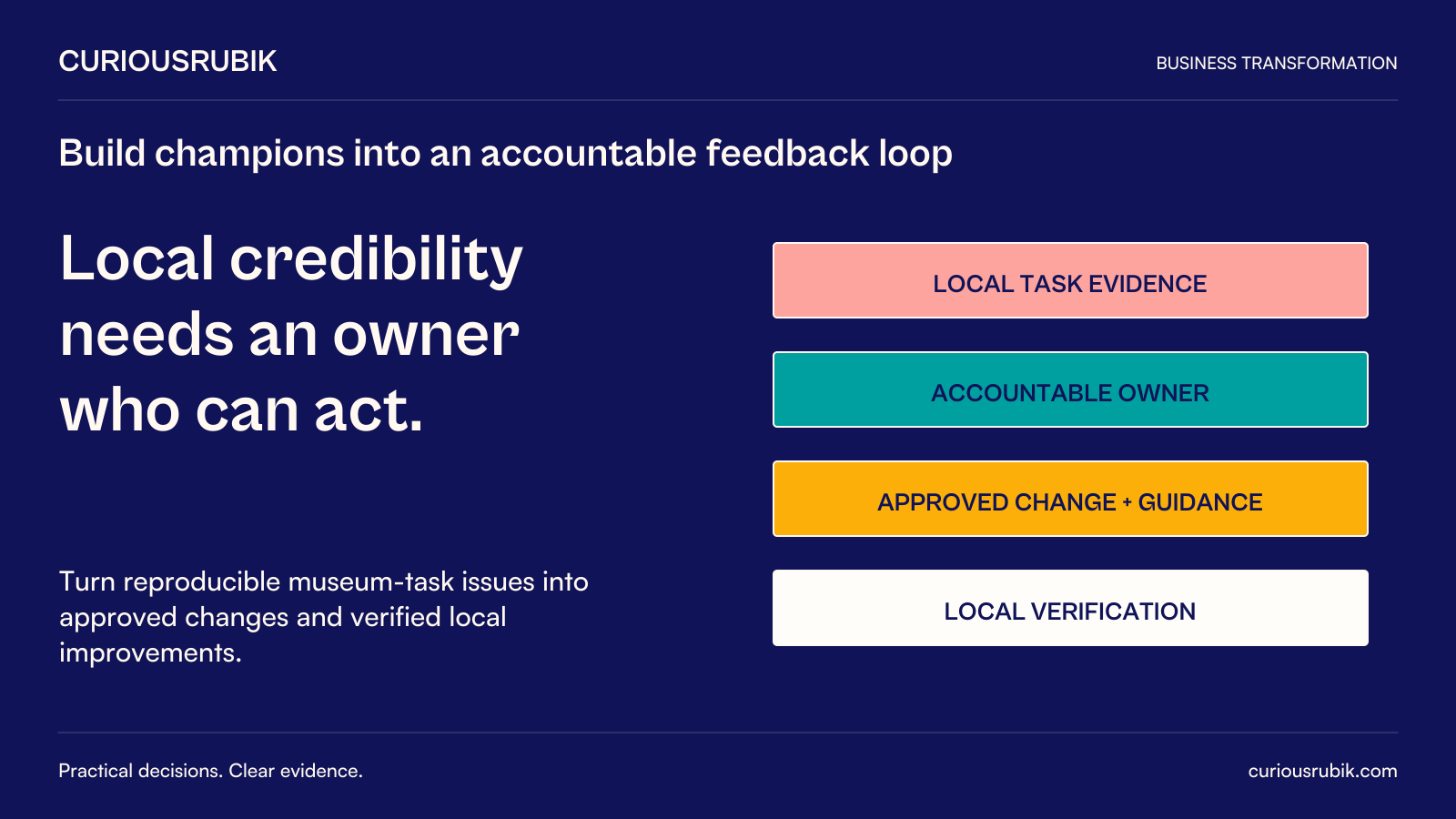
Change champions can help a technology program translate between the intended design and the work people actually do. Their value comes from credible local knowledge, practical support, and a route for feedback to change decisions. …
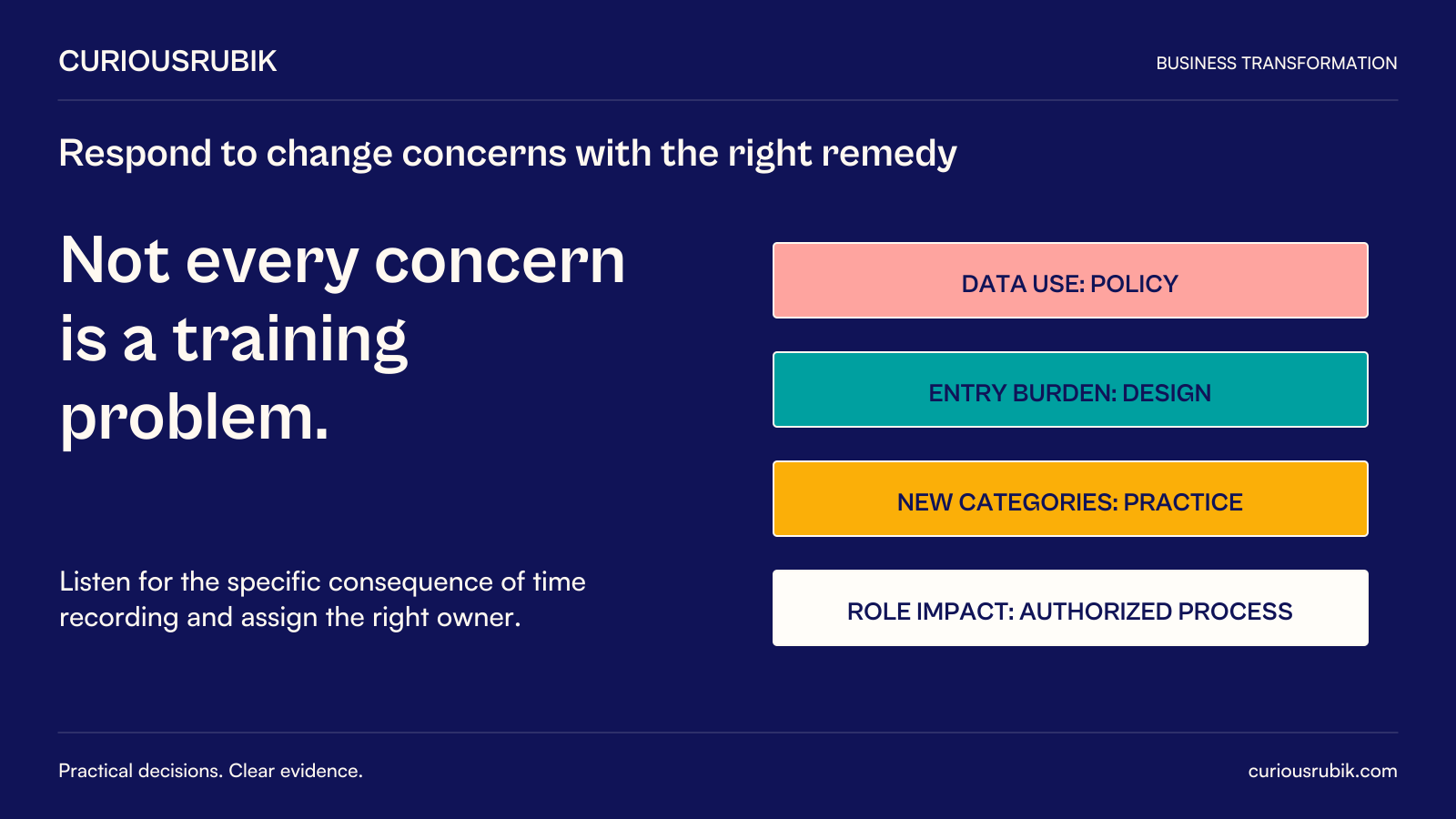
Employees may resist a new enterprise system because it changes more than the interface. It can expose work differently, alter professional discretion, redistribute administrative effort, or create uncertainty about how performance will be …
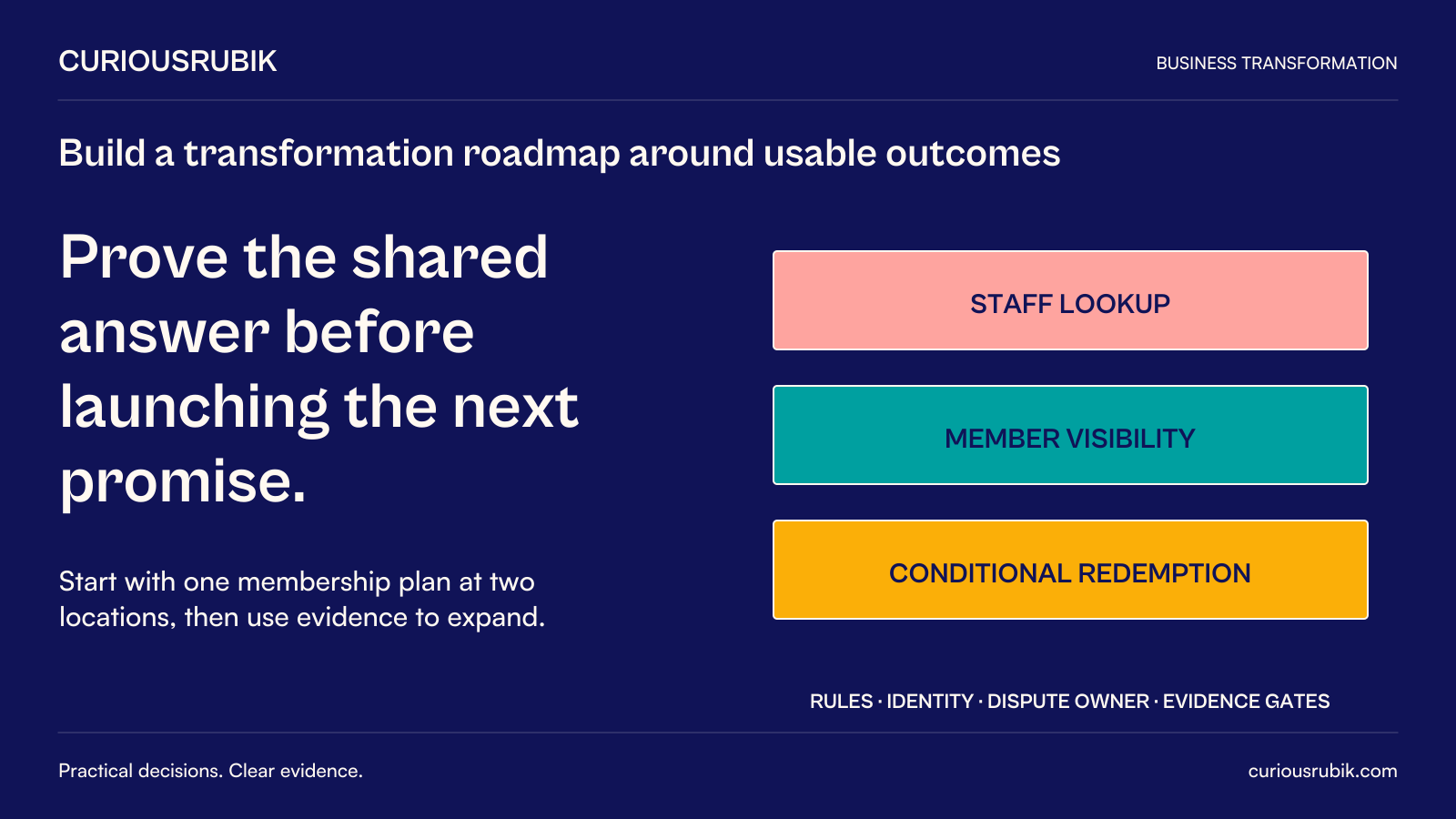
A digital transformation roadmap delivers value when it sequences complete operating improvements and the dependencies that make them possible. A list of platforms with launch dates describes planned delivery. It does not explain when …
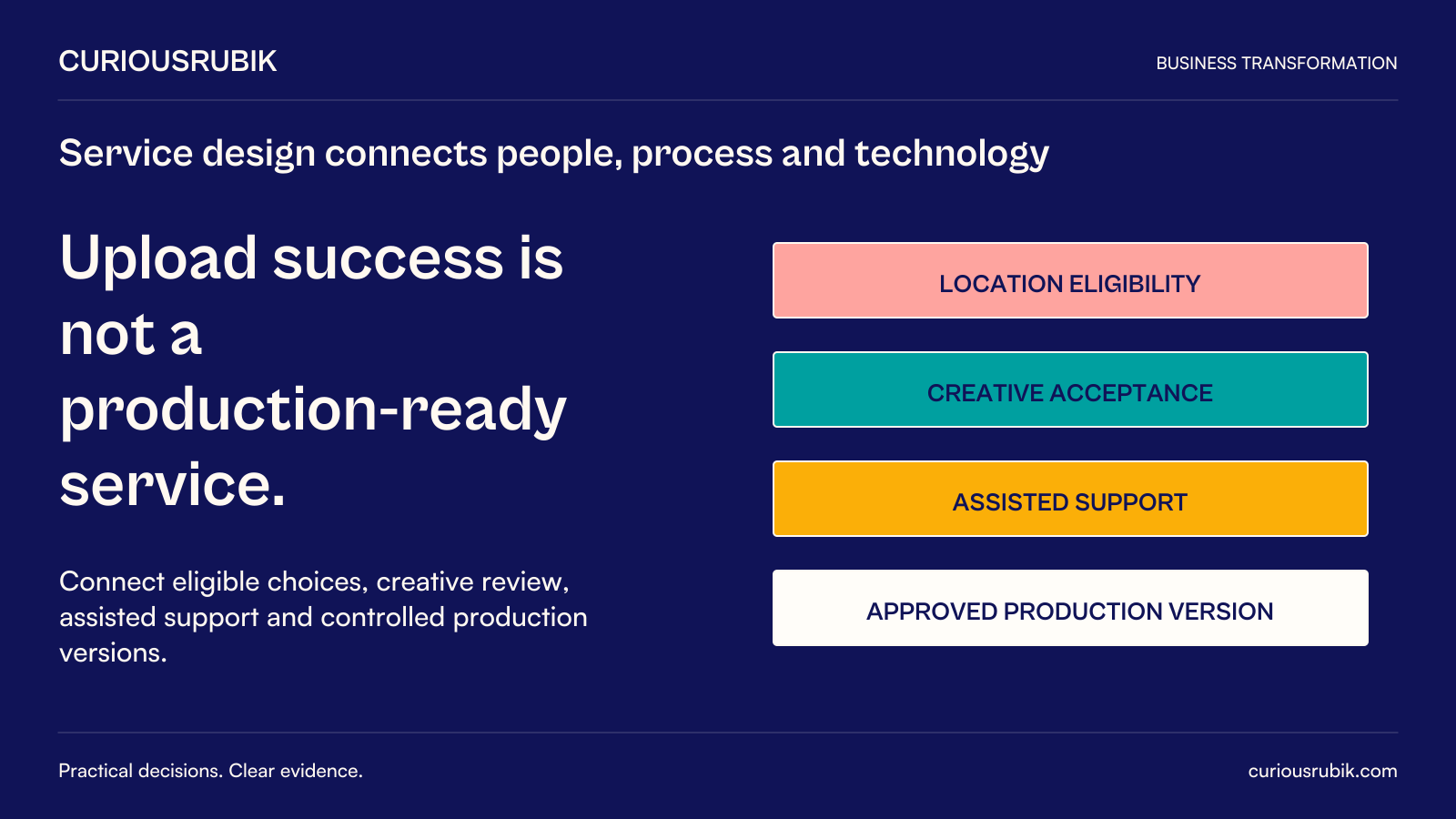
Technology can expand what a business is capable of doing. It can make shared information available sooner, enforce a rule consistently, or enable a service that was previously impractical. Transformation occurs when people and processes …
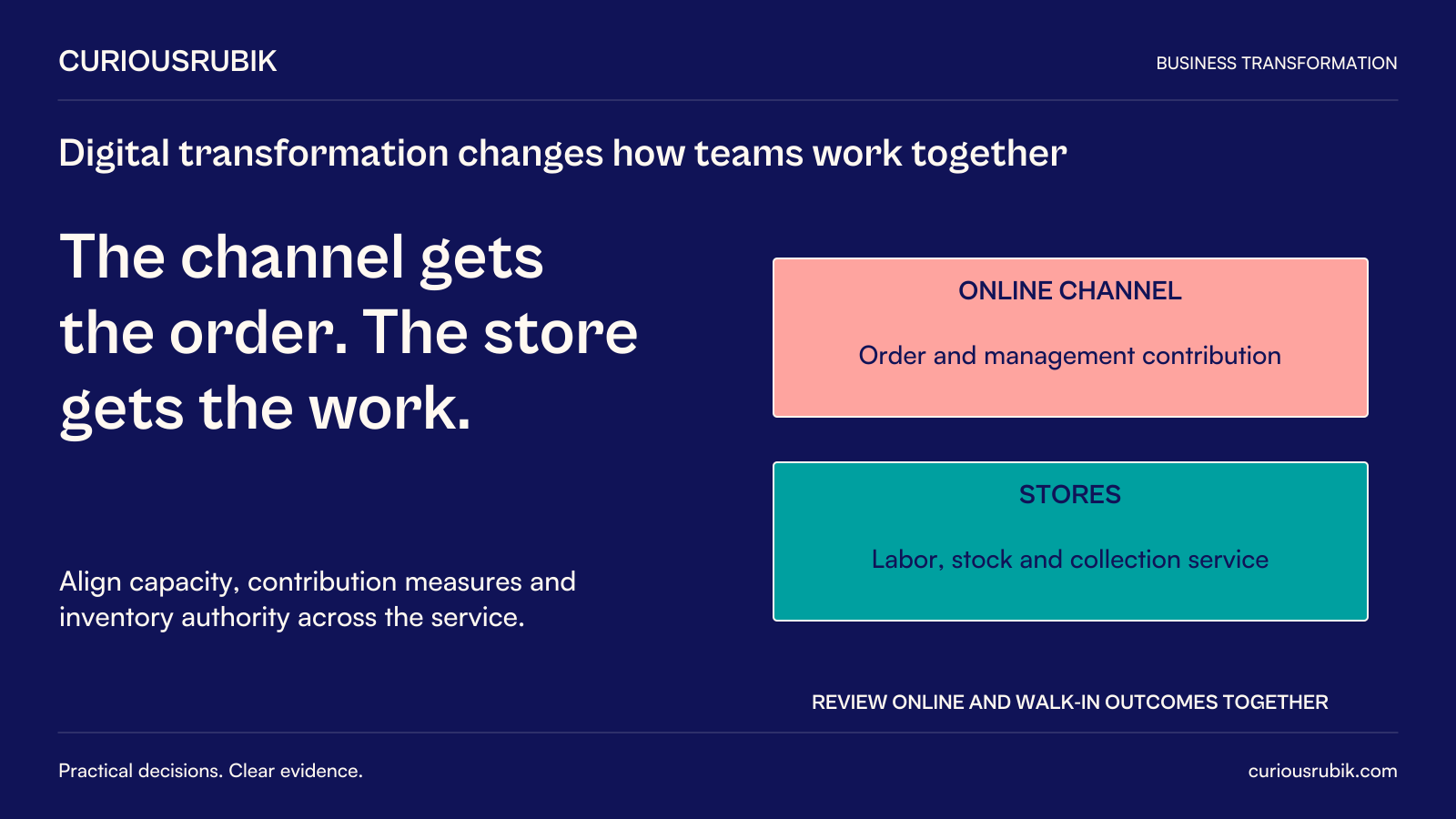
Digital transformation can fail when the new service requires departments to behave differently while their budgets, measures, and authority still reward the old behavior. A shared platform may expose work across the business, yet each …
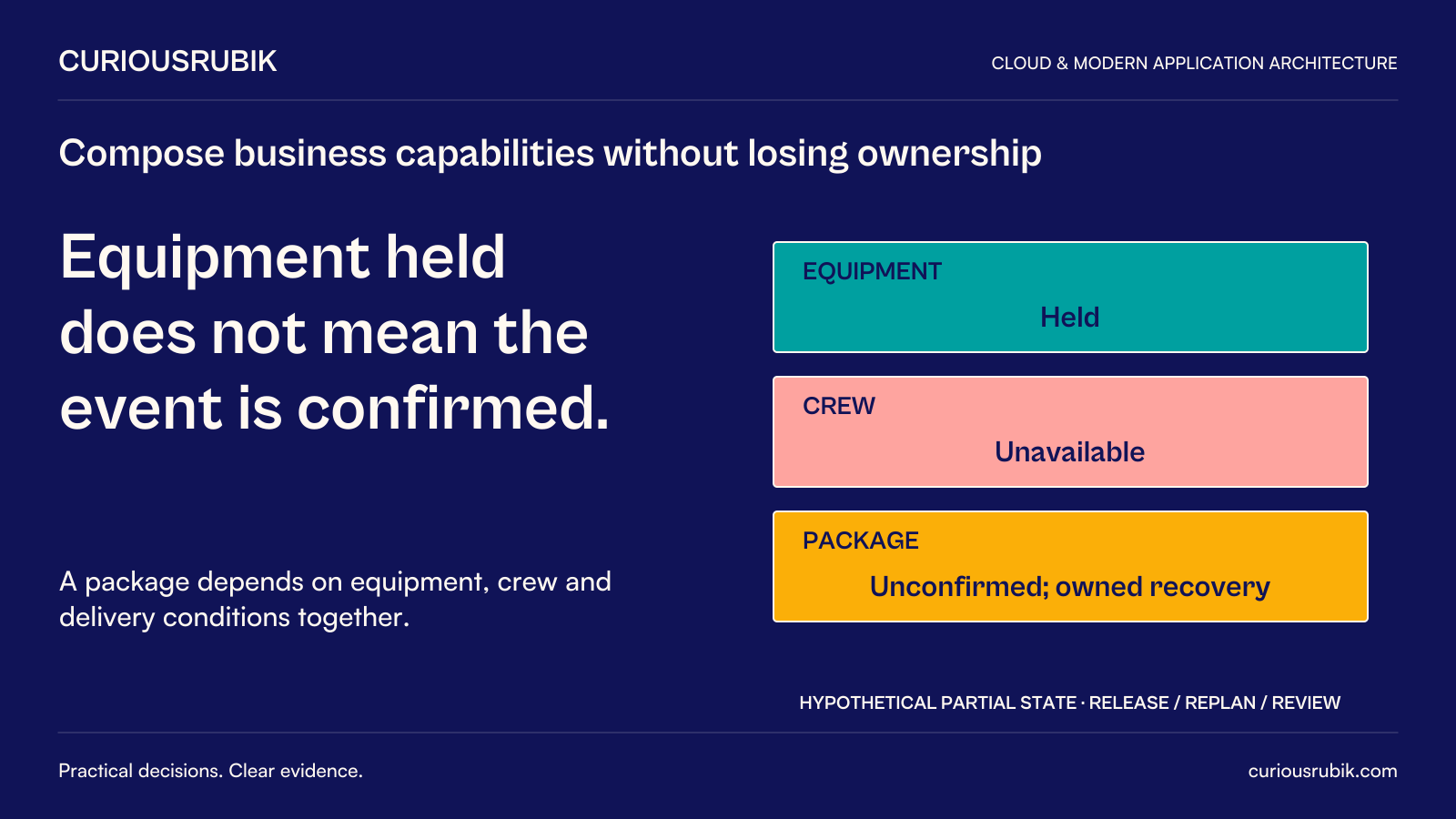
Composable architecture promises that an organization can combine existing capabilities to create or change a business service without rebuilding the whole application estate. The promise is attractive, but connecting components is only …
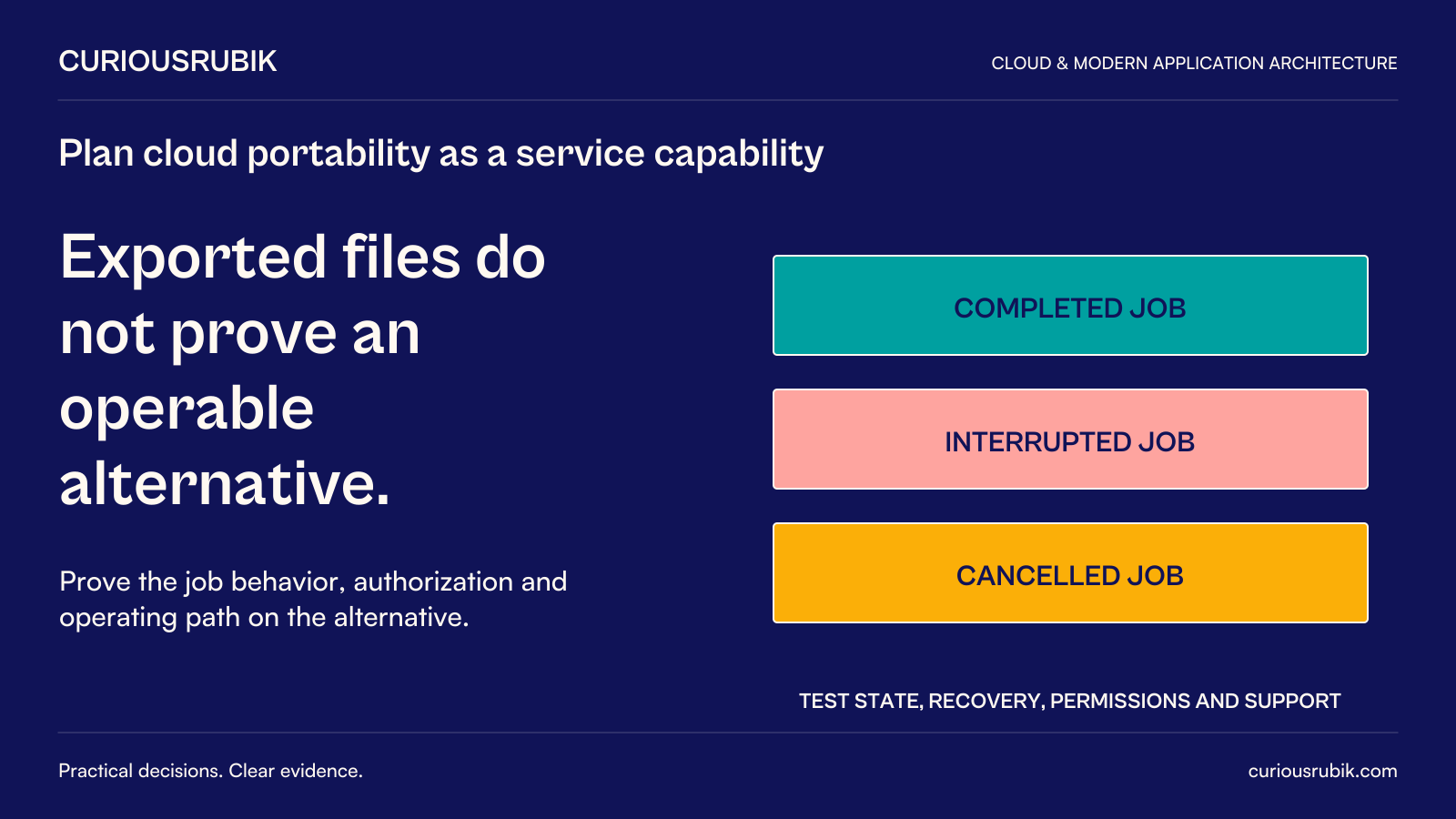
Vendor lock-in is not simply the use of a proprietary cloud feature. It is the difficulty and consequence of changing a dependency when the business needs to do so. A proprietary service can provide enough value to justify that dependency. …
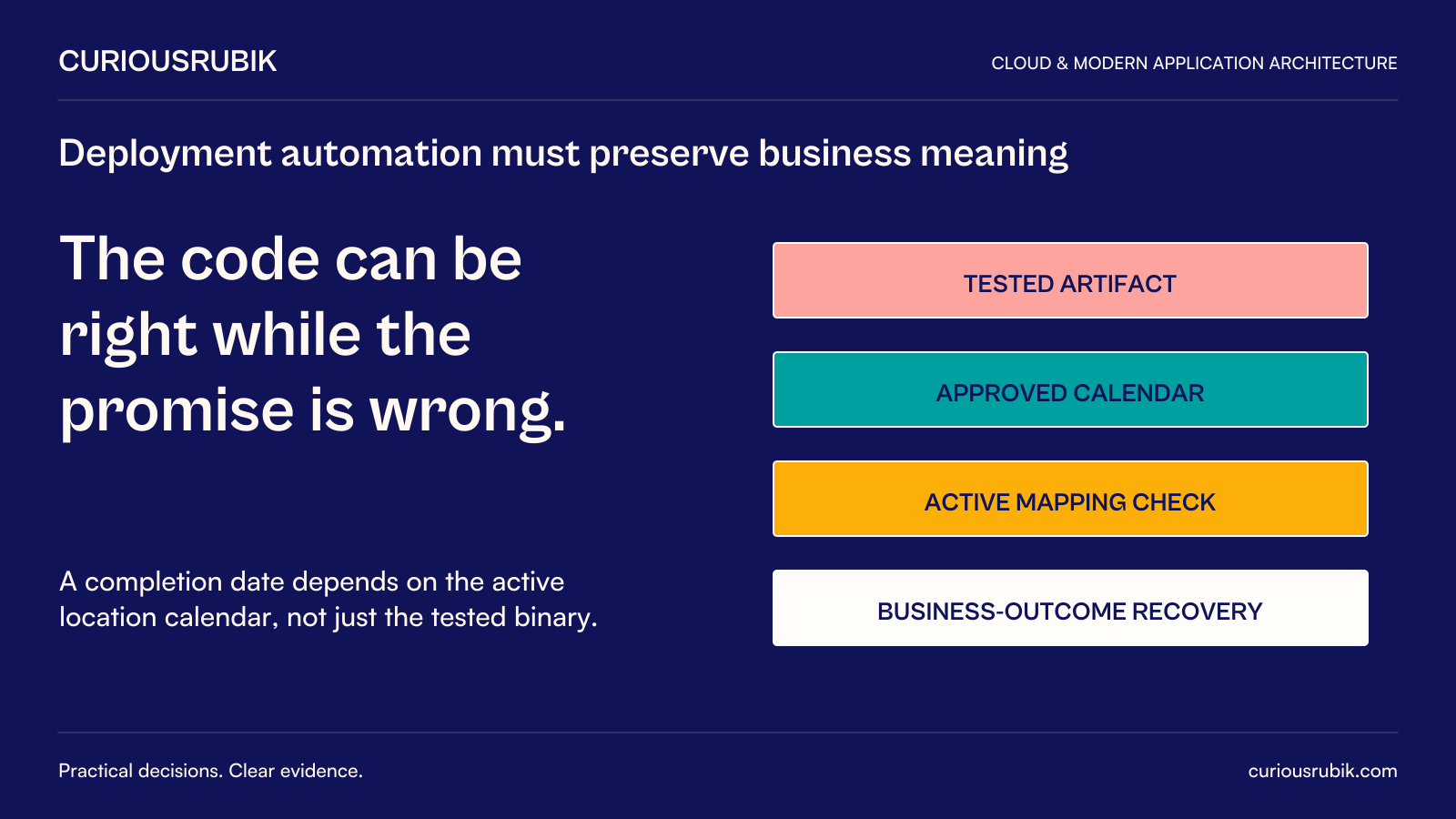
Enterprise software becomes unreliable when the path from a proposed change to a running service depends on undocumented steps, inconsistent environments and unclear responsibility after release. Faster deployment does not solve that …
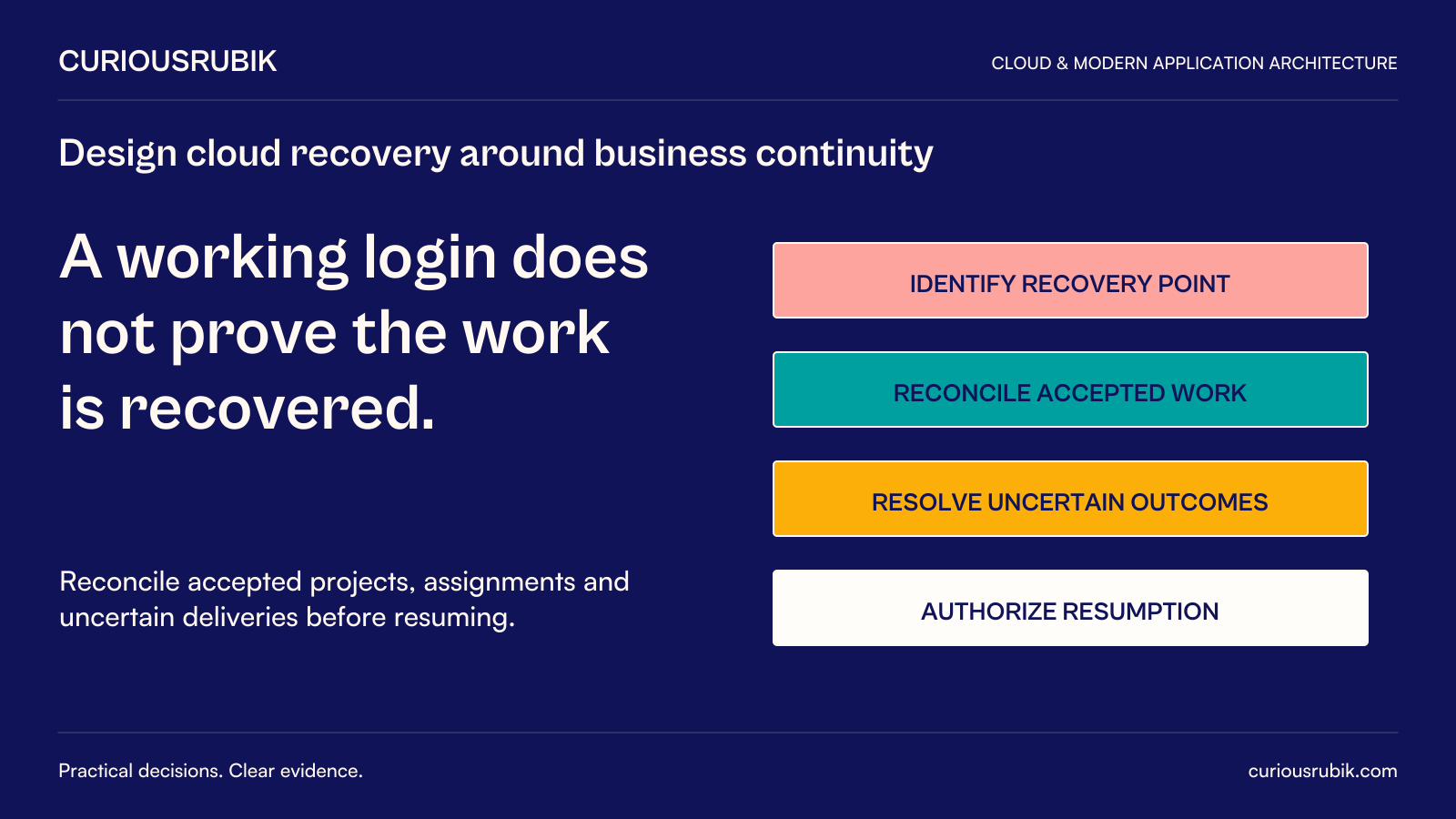
Continuous operations does not mean pretending an application will never fail. It means understanding which business activities must remain available, which can pause safely and how the organization will restore correct service when a …
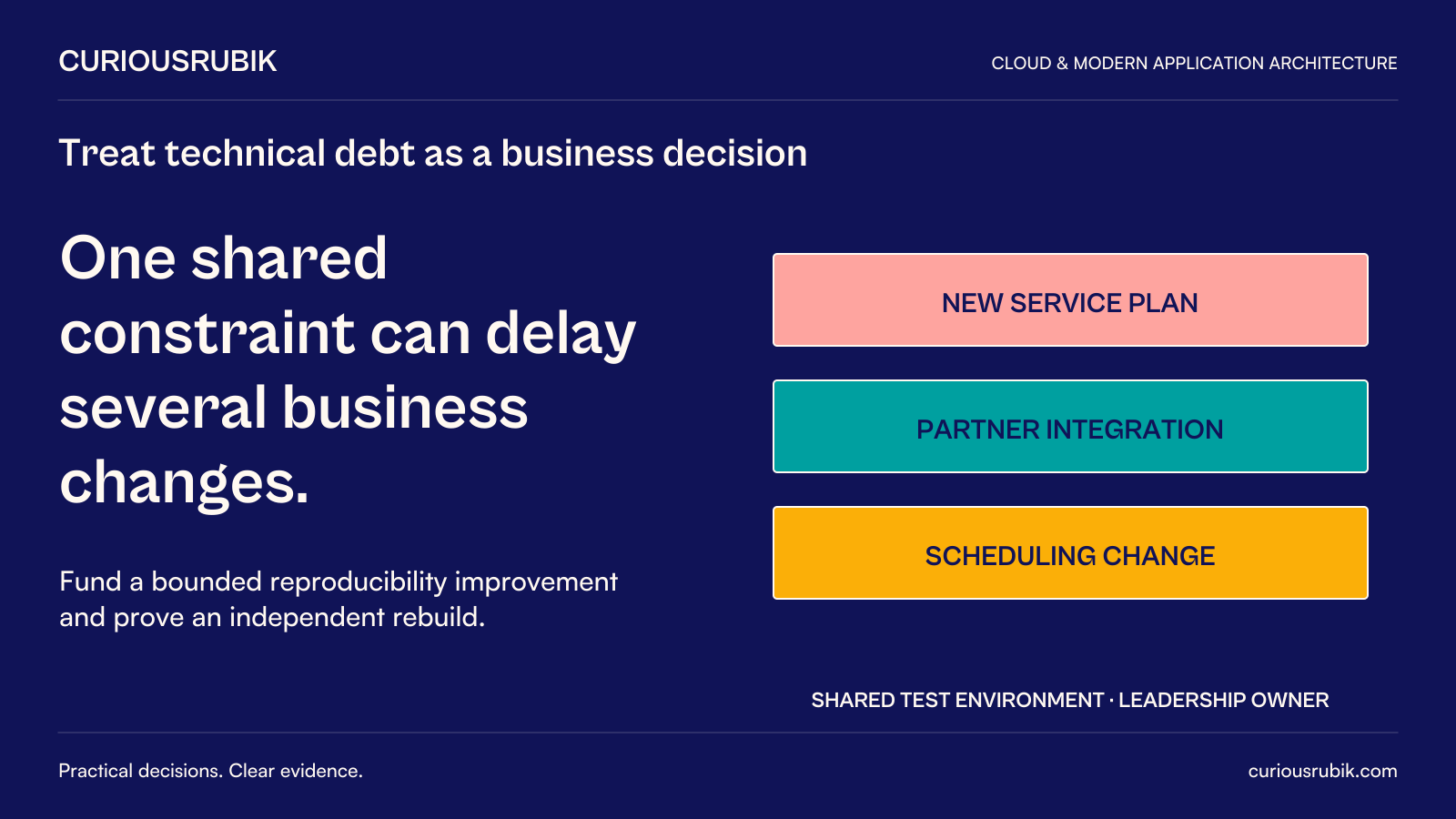
Technical debt becomes a leadership issue when the organization repeatedly pays for the same constraint but nobody has authority to change the conditions that preserve it. Delivery teams absorb extra work, business teams experience delay …