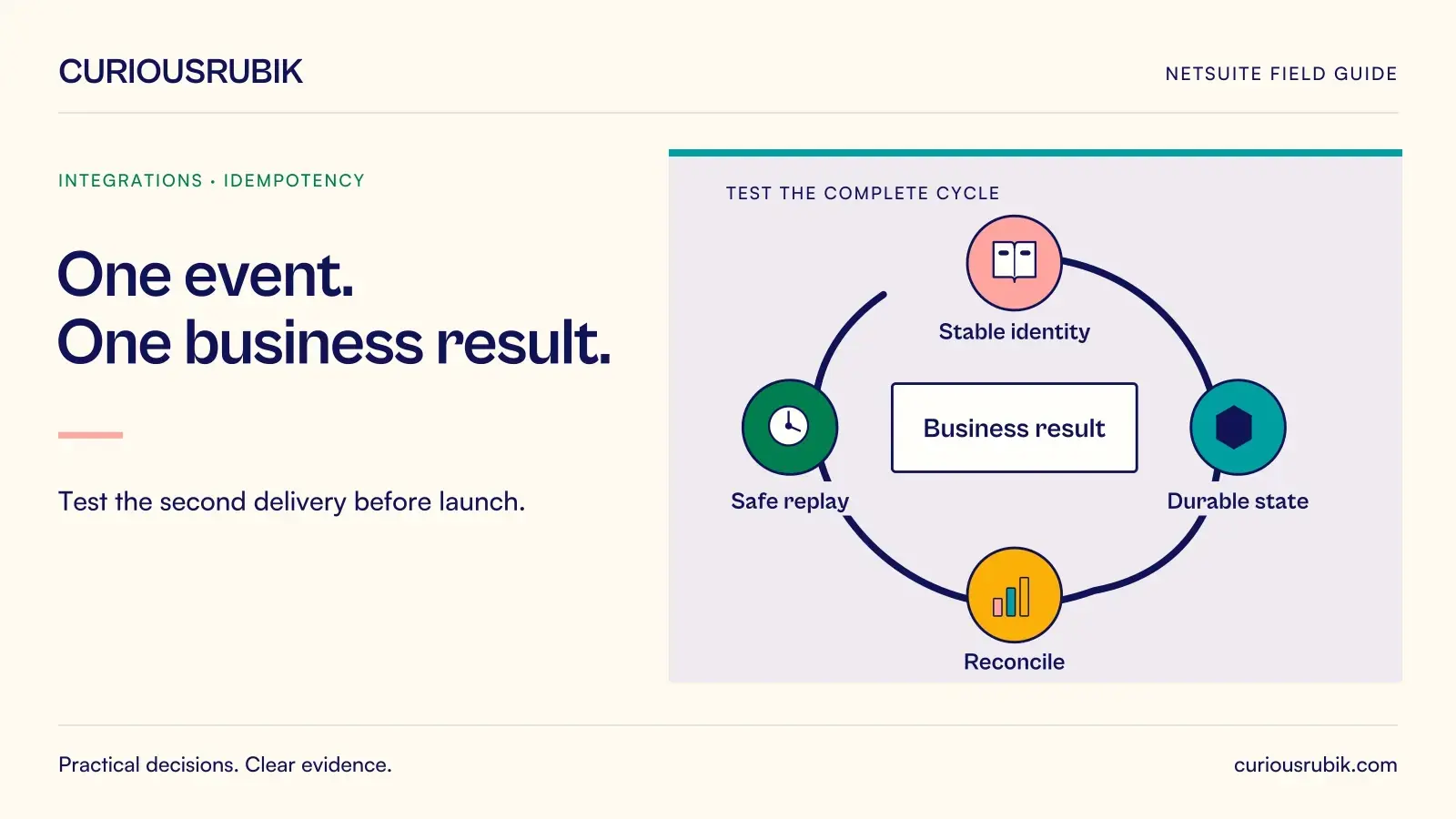
A timeout creates an awkward question: did NetSuite reject the request, or did it commit the transaction before the response was lost? If the integration treats both possibilities as a fresh request, a routine retry can become a duplicate …
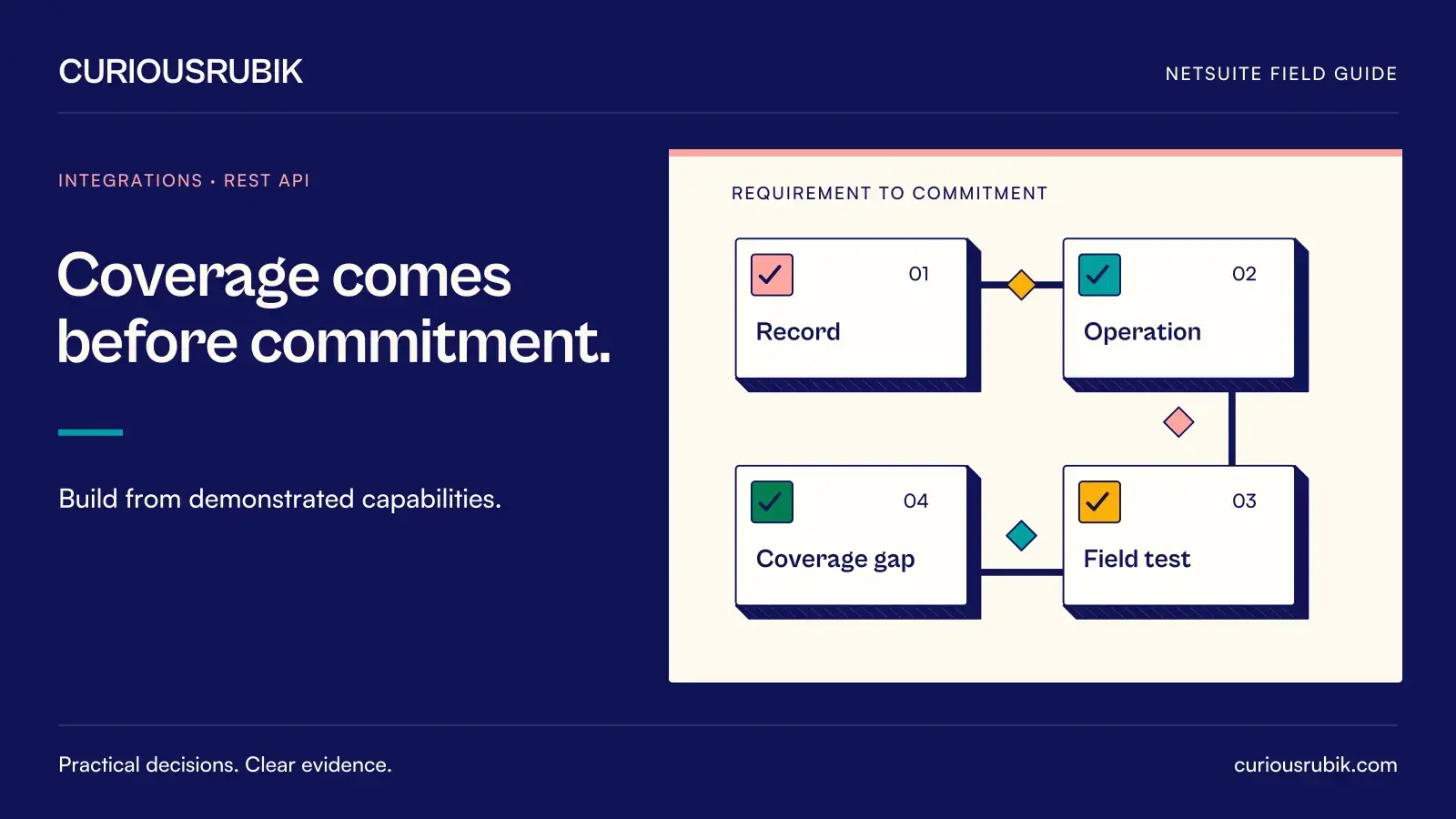
A supported record name is useful evidence, but it does not answer the implementation question. Can your intended role create that record with the required custom fields, update the right sublist line, and perform the business action your …
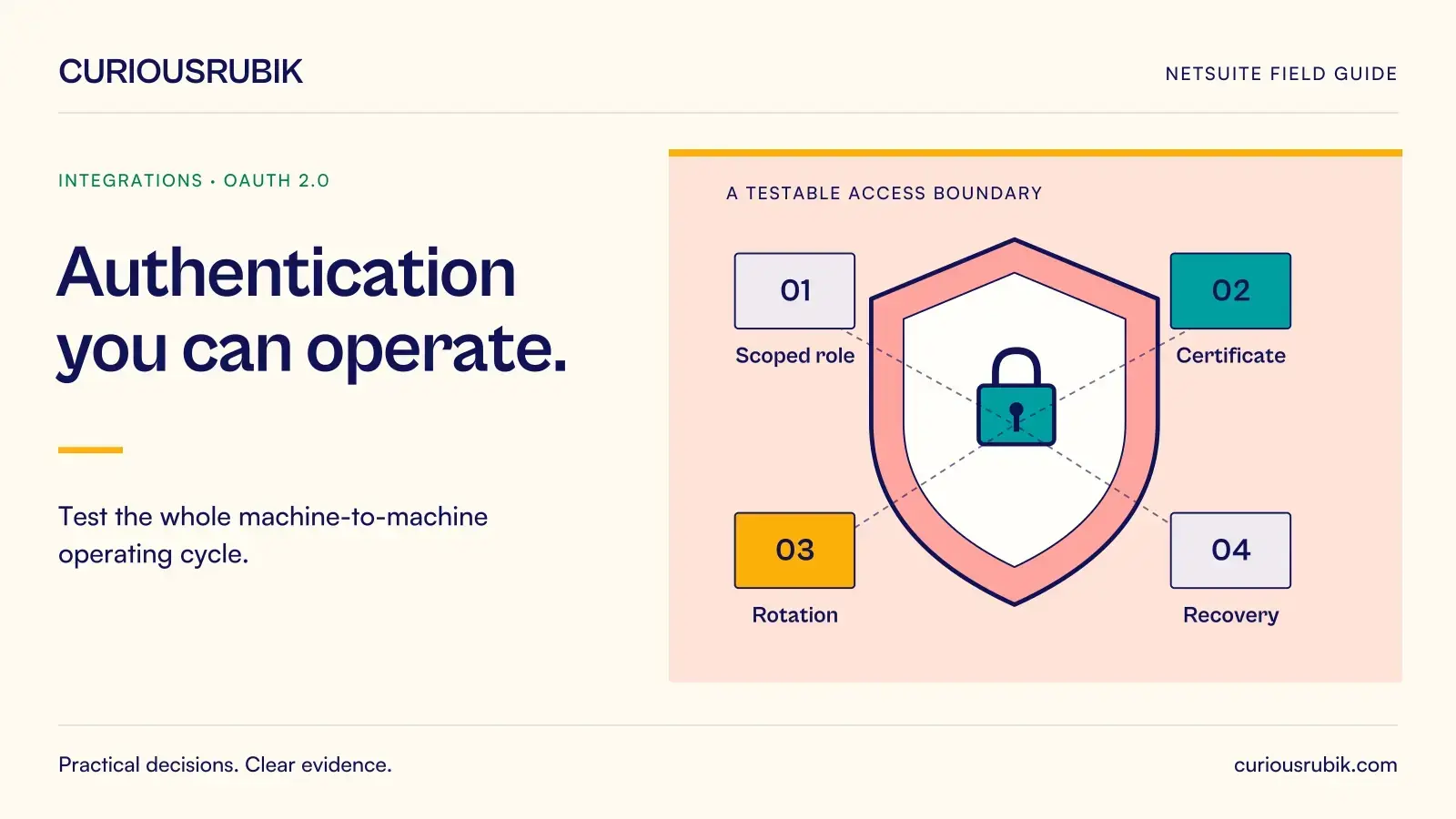
An integration can authenticate successfully and still be poorly prepared for production. Its role may be too broad, its certificate may expire without warning, or the only person who knows the recovery procedure may leave the team. …
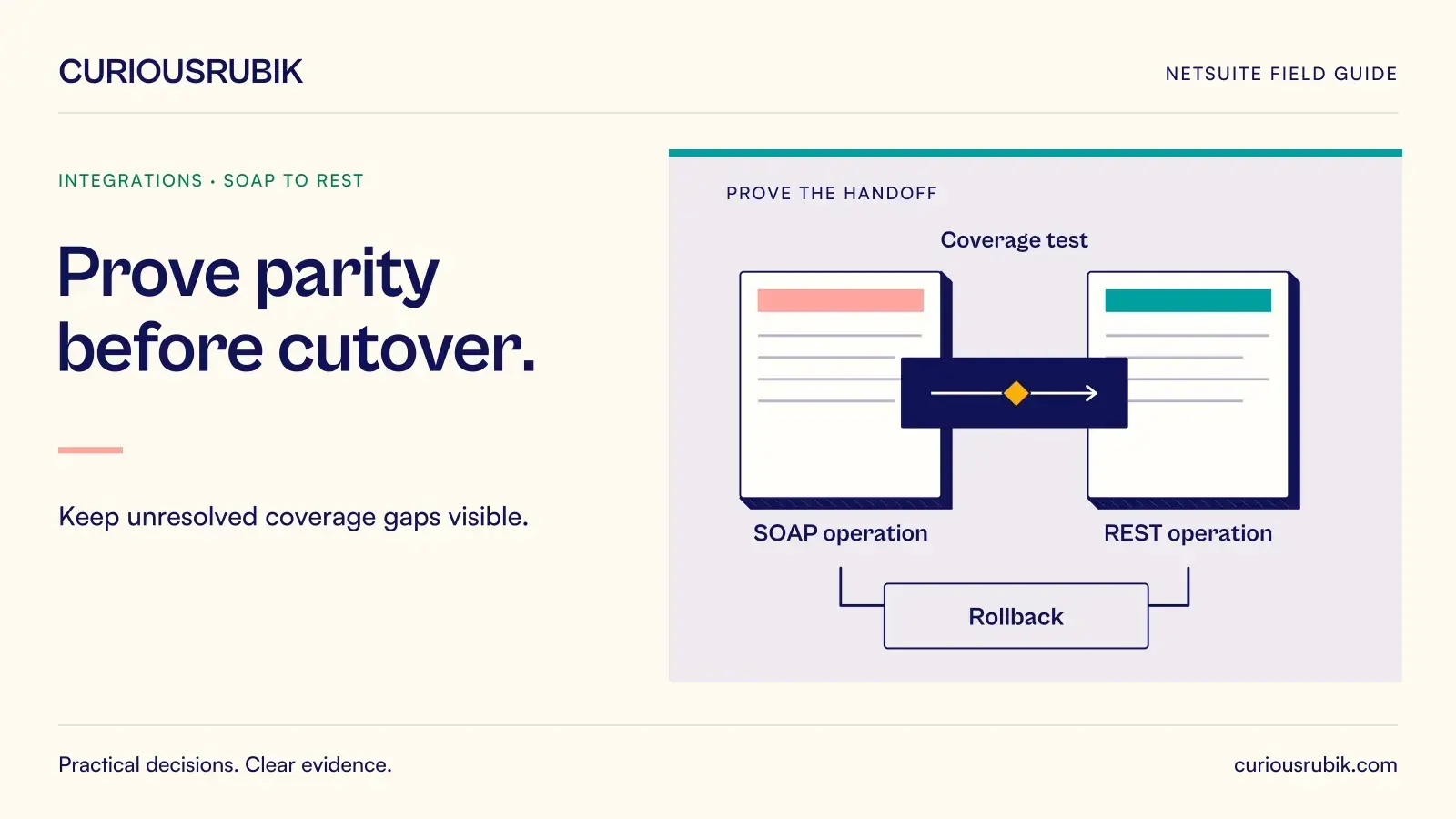
A NetSuite SOAP to REST migration is complete when the replacement supports the business process and the old route can be retired safely. Converting request formats is only part of that work. Record coverage, authentication, search …
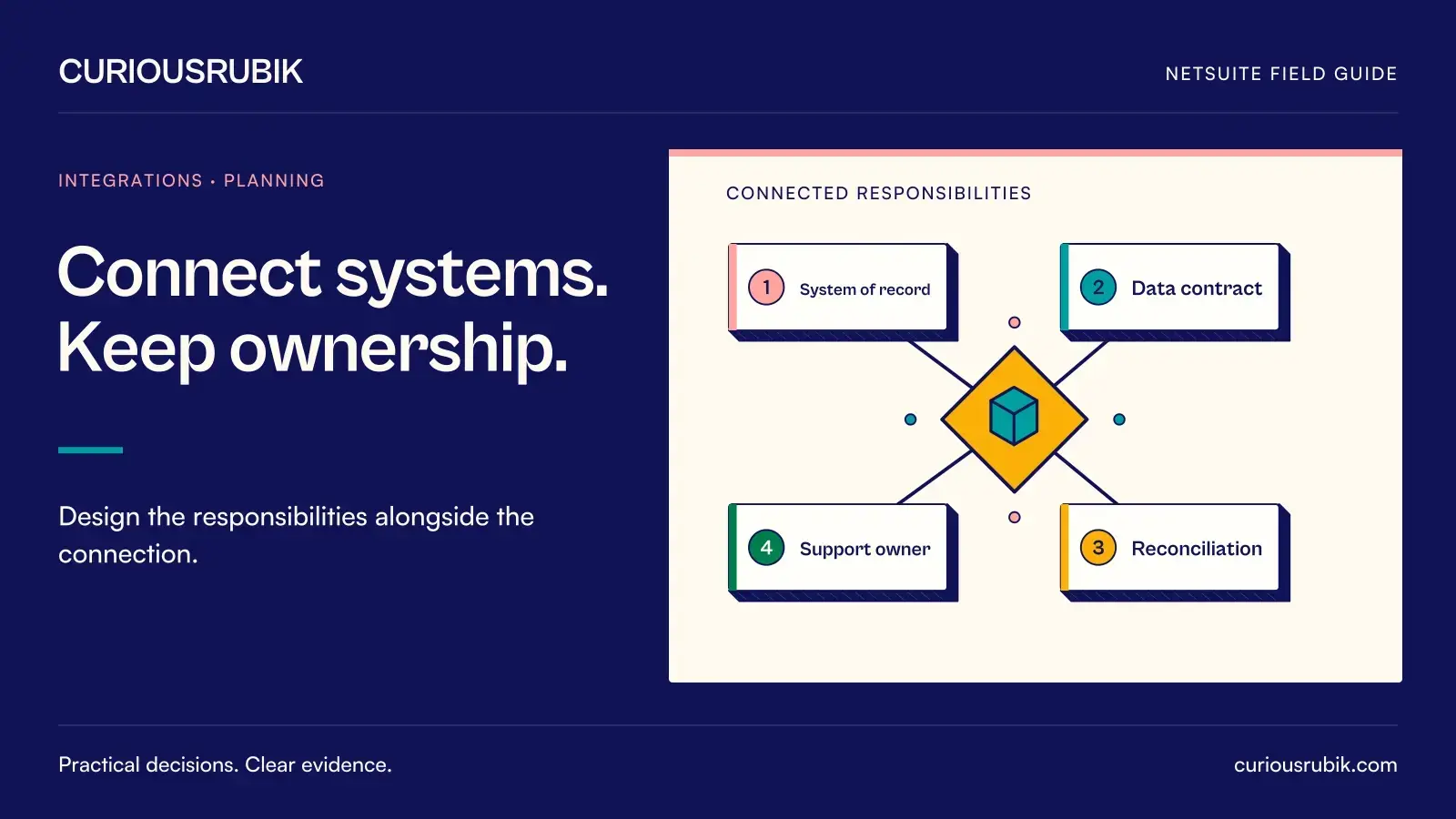
An integration plan should explain how the business knows its work is complete. Architecture diagrams and field mappings help, but they leave a gap if nobody can identify a missing order, approve a conflicting customer change, or reconcile …
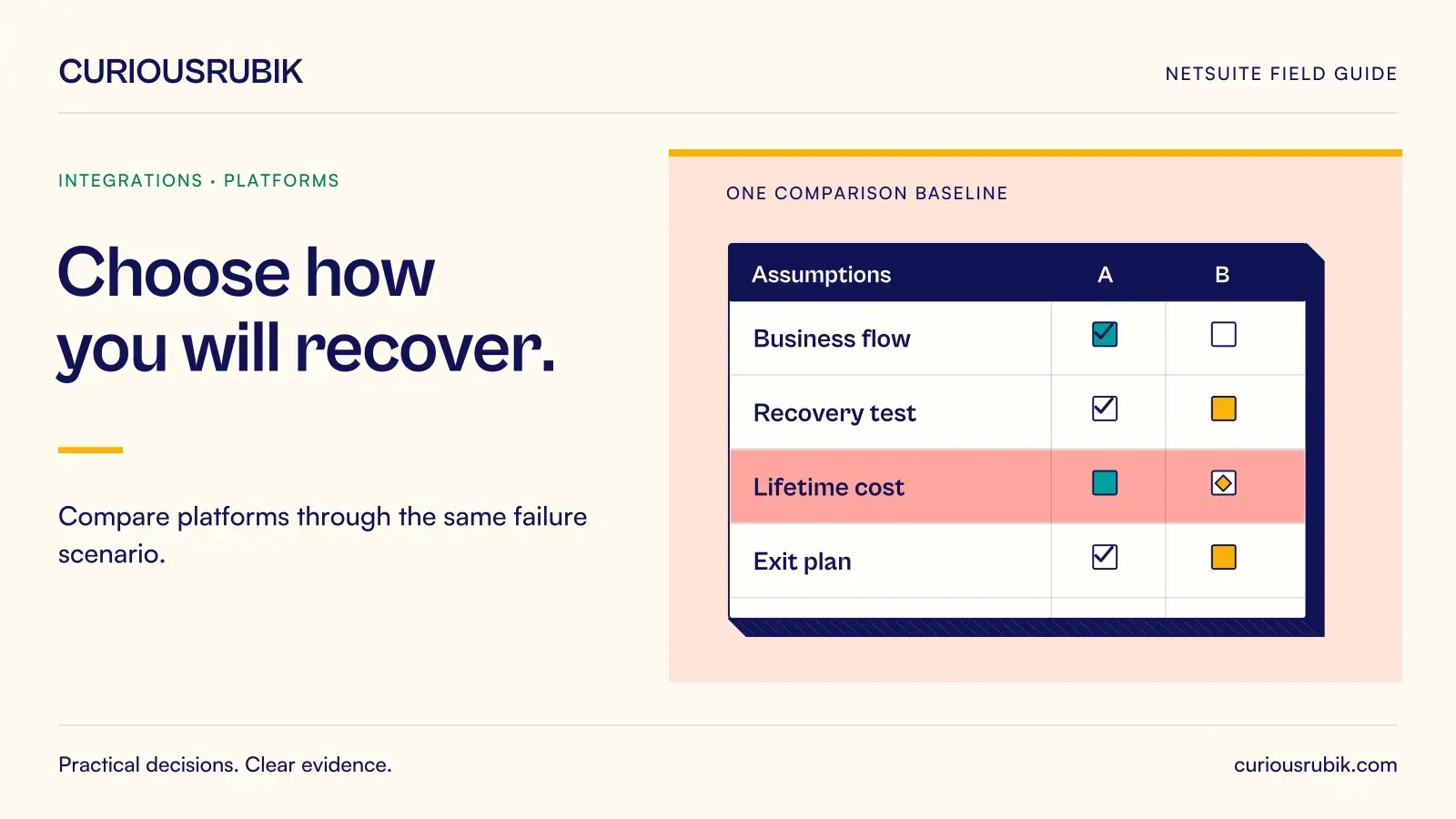
The most revealing integration question is often asked after the demo: who restores the business process when a record was created but the response disappeared? A connector list rarely answers it. Neither does an estimate covering only the …
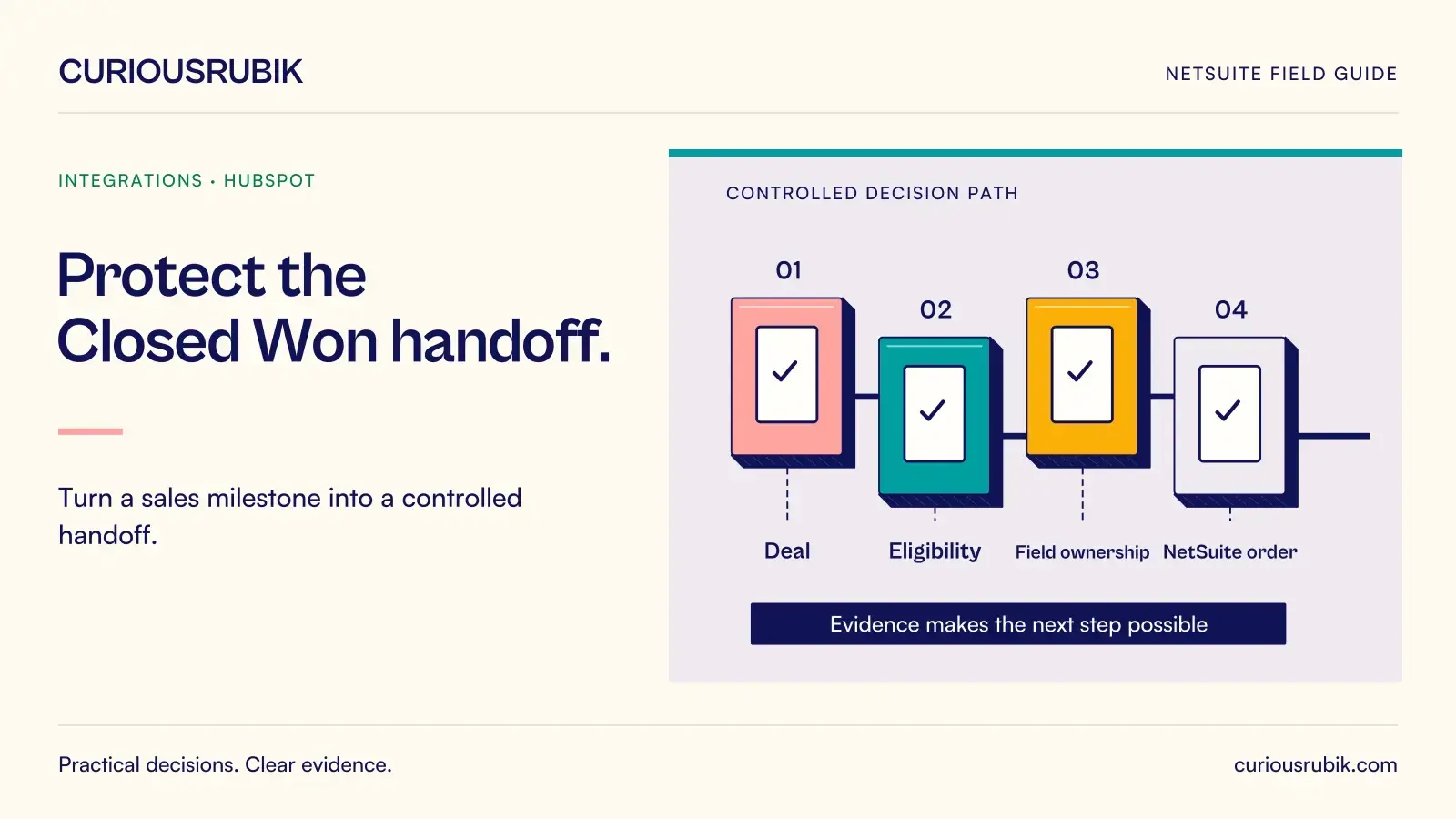
A deal reaches Closed Won, the sales team celebrates, and finance discovers that the customer has the wrong subsidiary, the order uses an inactive item, or the same deal has created two sales orders. These failures often begin with an …
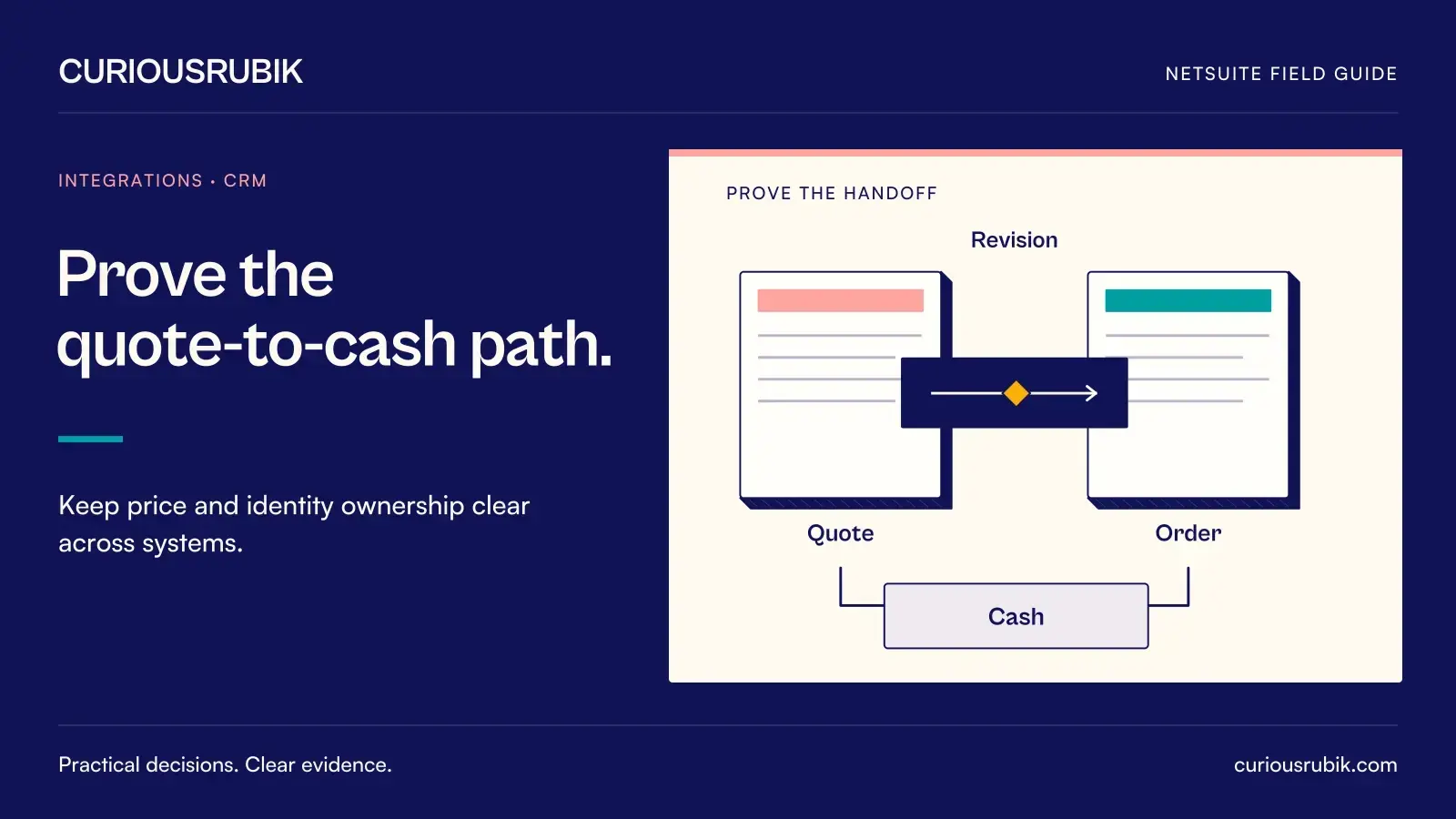
A quote-to-cash integration must prove entity routing, price ownership, quote changes, and accurate invoice visibility. A successful account sync leaves those decisions untested.
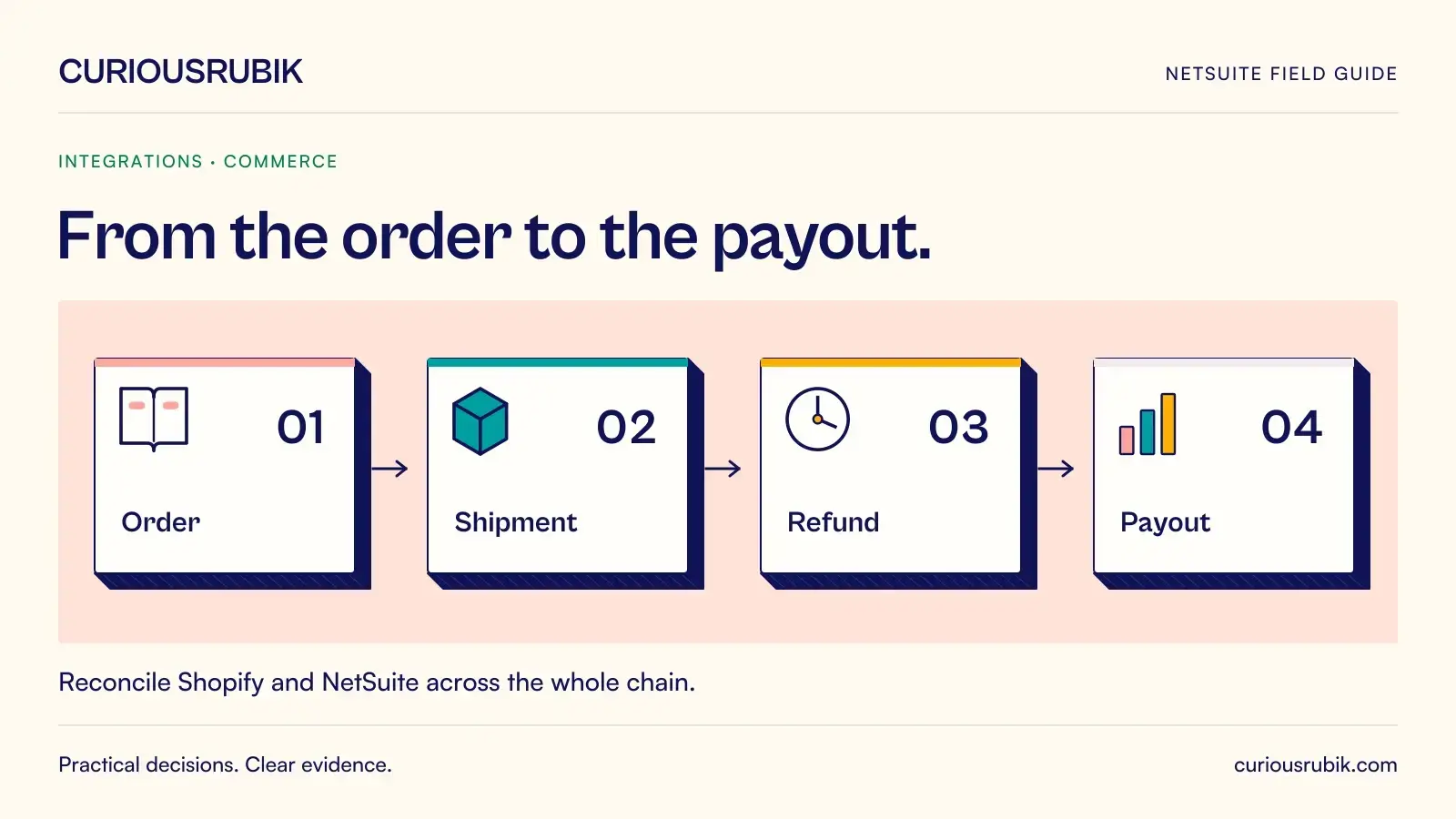
An imported order does not establish that ecommerce accounting is complete. Discount allocations, late refunds, and payouts combining several order dates need their own reconciliation controls.
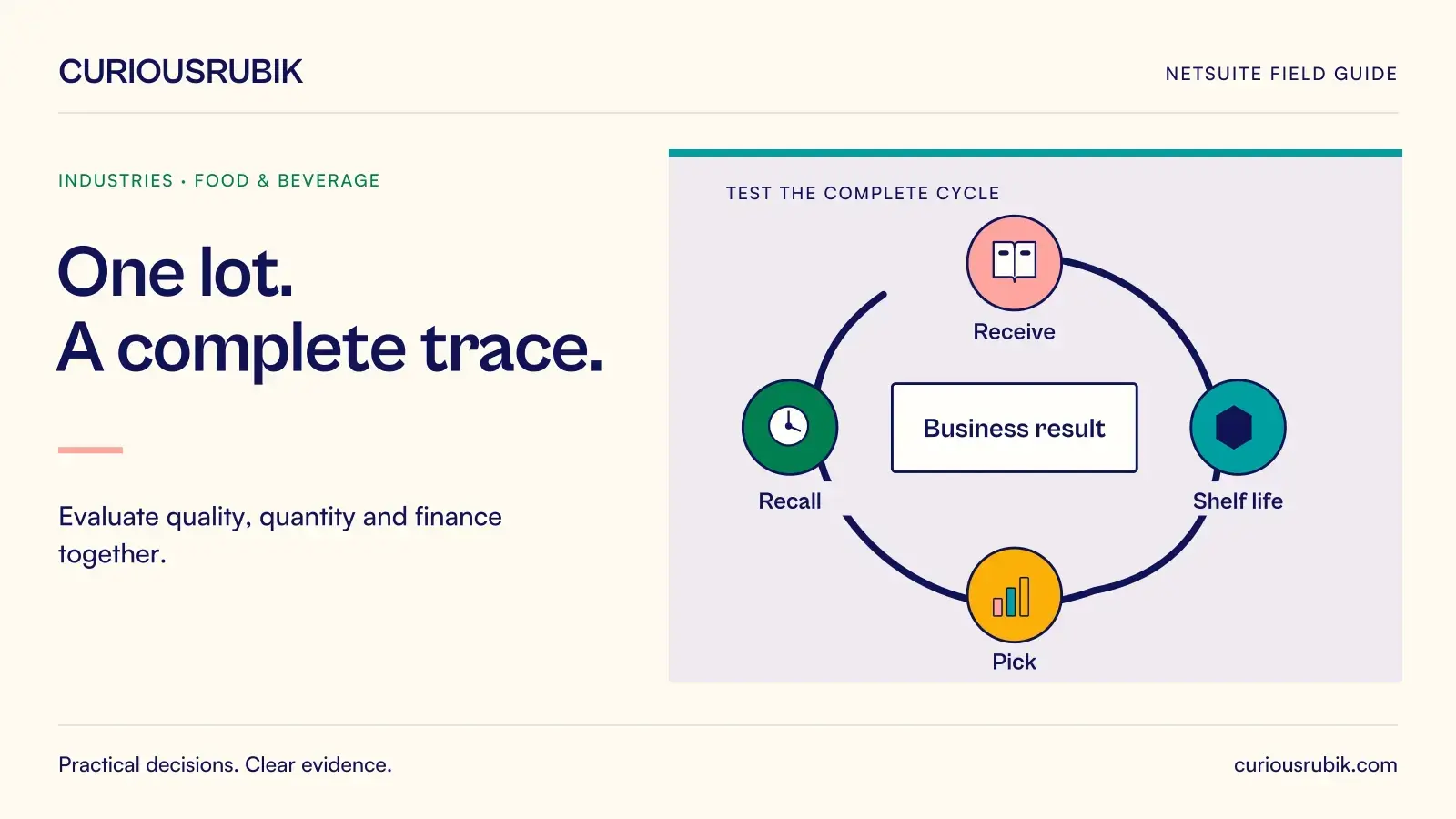
Food and beverage inventory carries more than a quantity and a cost. Lot identity, date information, release status, and customer shelf-life requirements can determine whether goods may be used or shipped. A correct stock total can …